
Last updated November 15, 2026
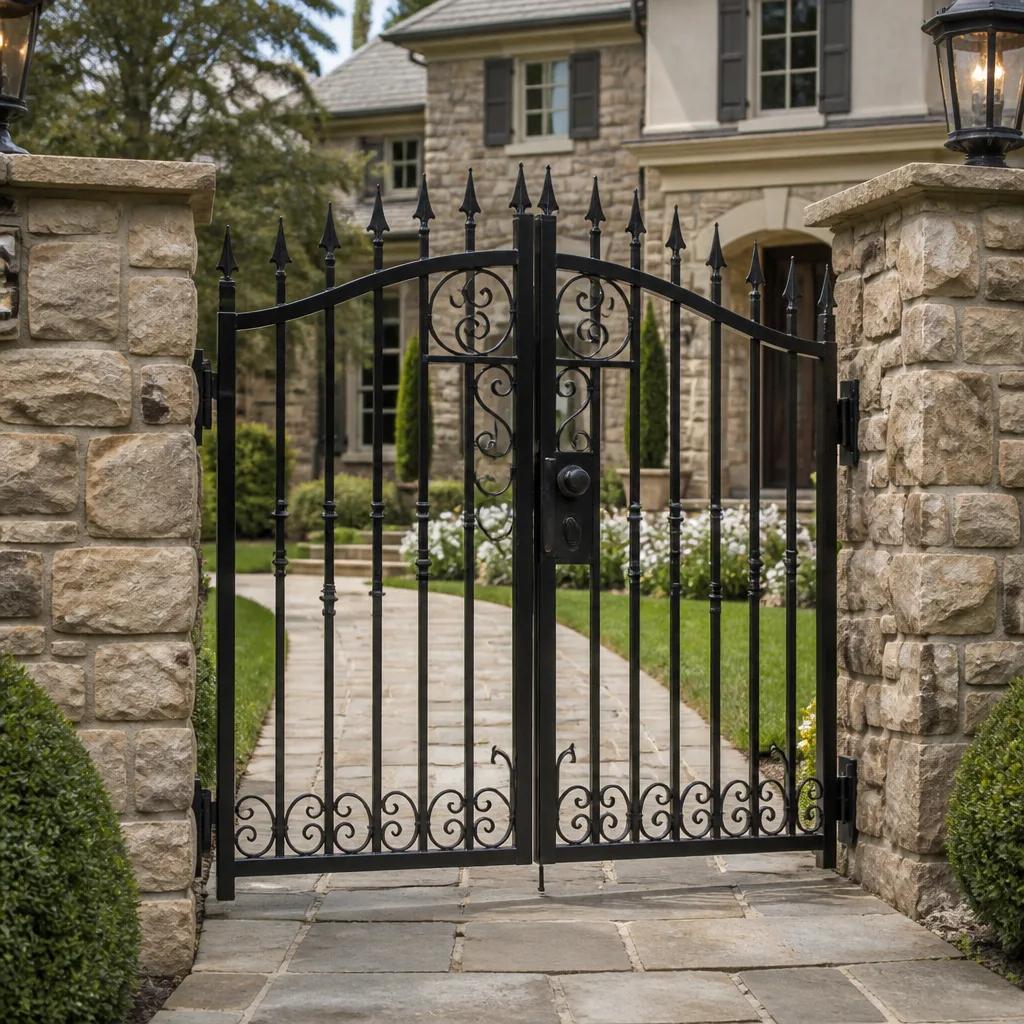 Wrought iron
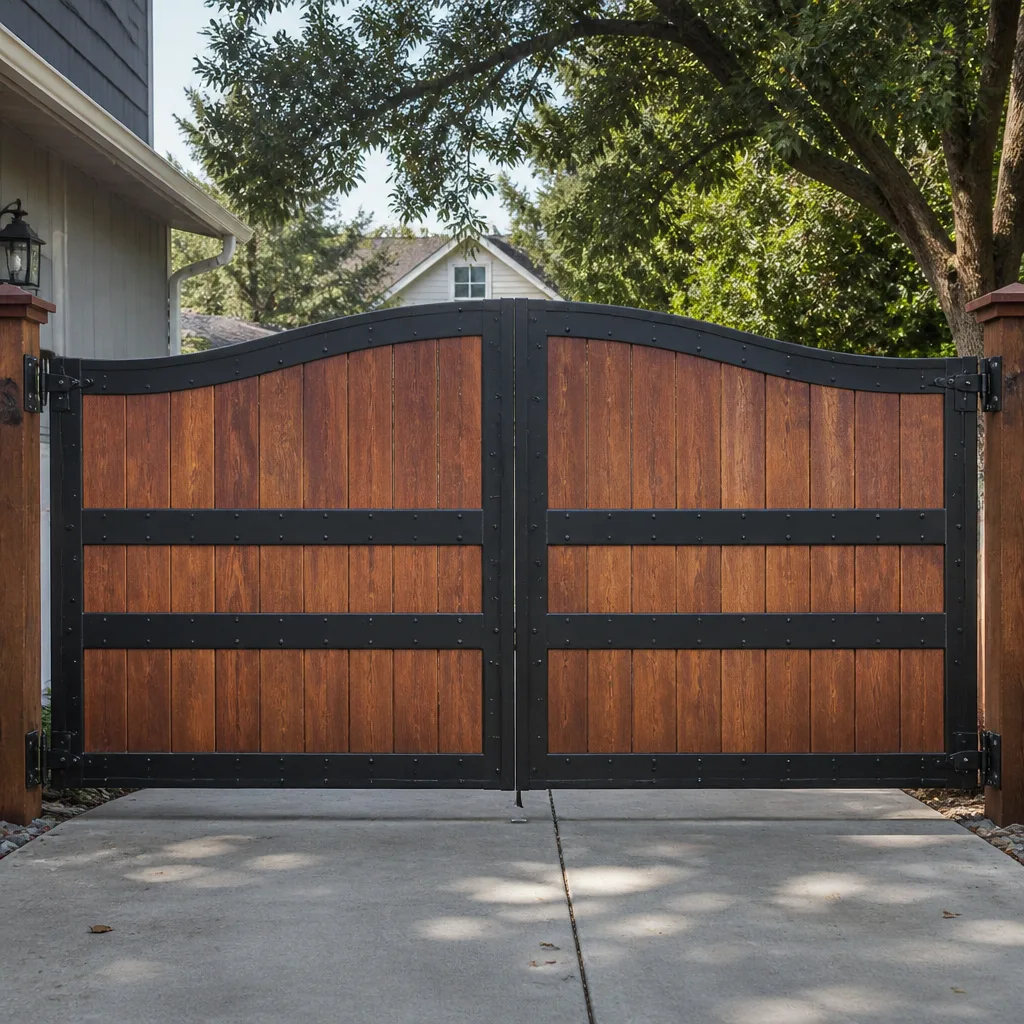 Wood & steel frame
 Farm & ranch
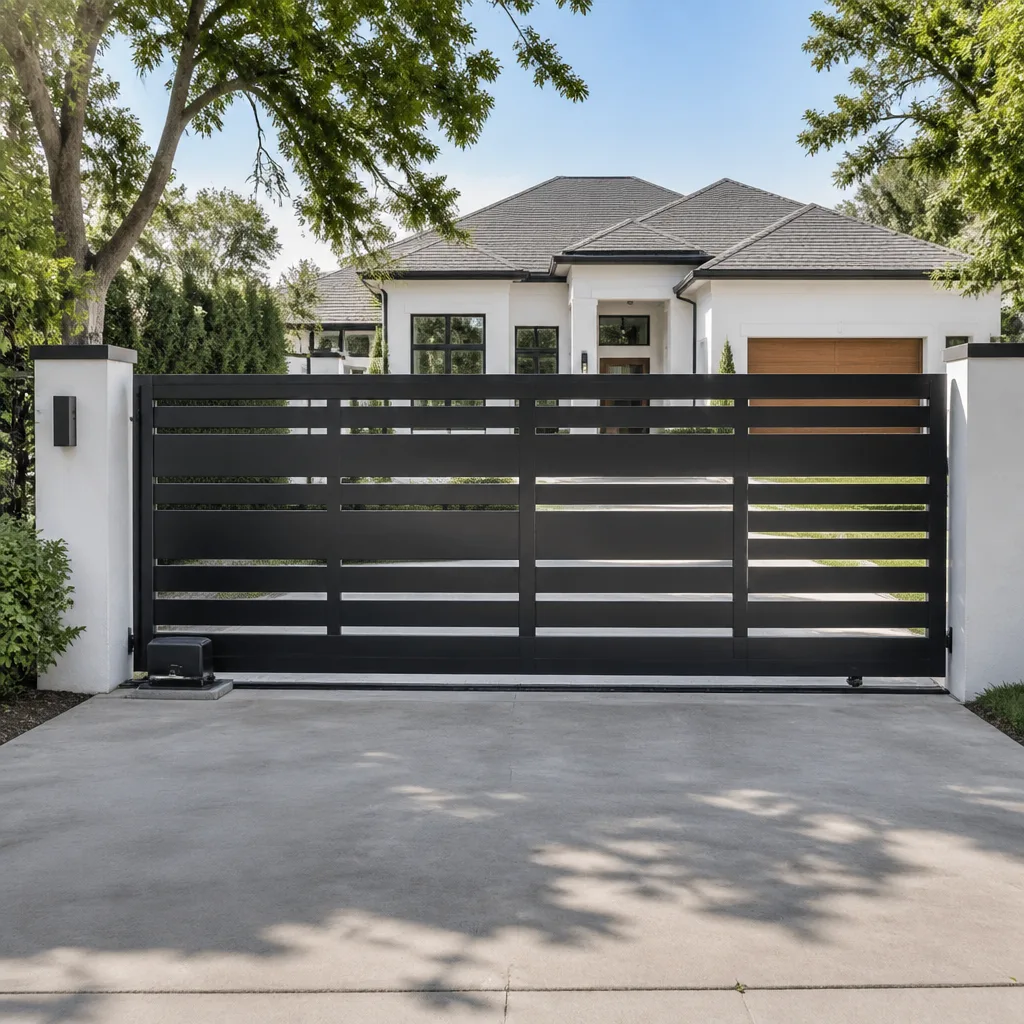 Sliding driveway gates
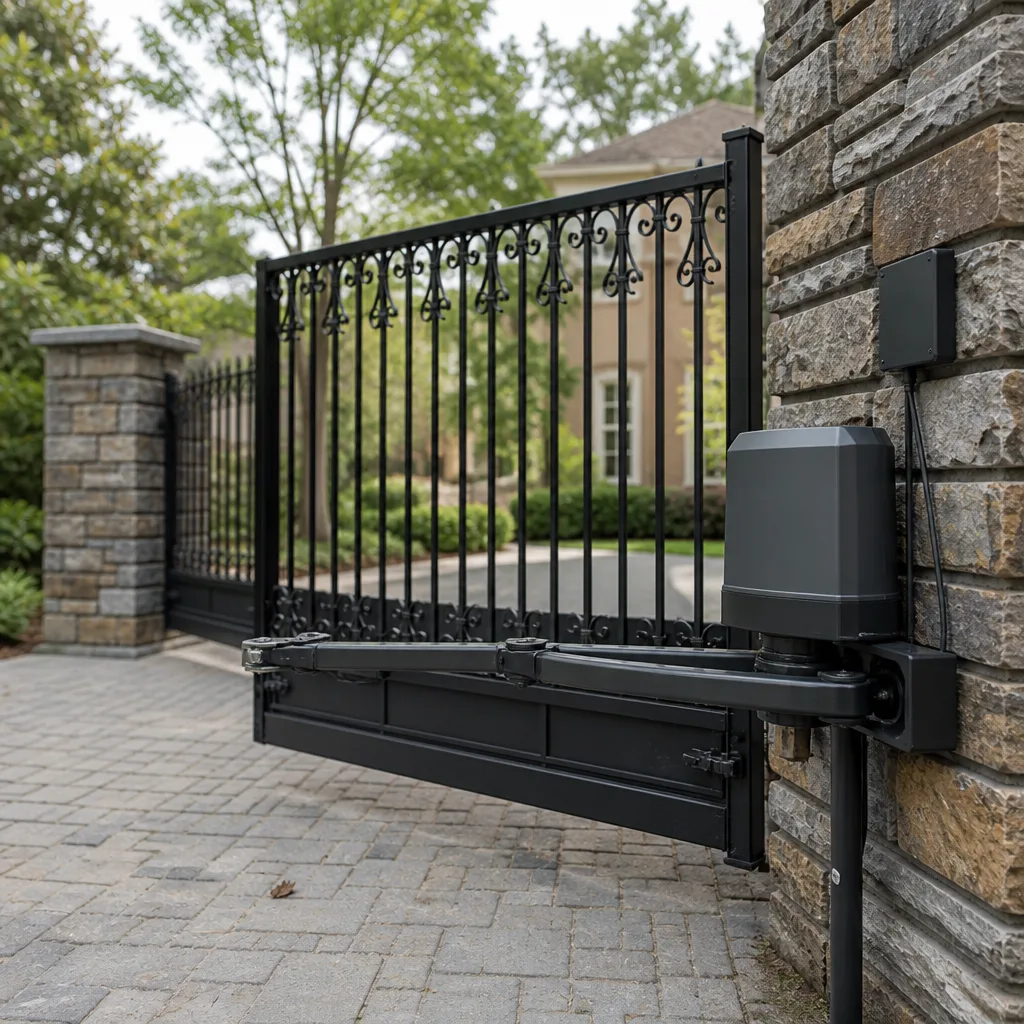 LiftMaster operators
Free on-site gate assessment - hinges, posts, and your LiftMaster or Nice gate operator checked before anything is quoted
The assessment is free and the quote is the invoice.
Get your free estimateThe Complete Guide to Gate Repair in Alexandria
Most Alexandria homeowners who call for “gate repair” don’t yet know whether their problem is mechanical, electrical, hydraulic, or access-control. And neither does the generalist they hired. That’s the quiet reason so many driveway gates in this city get patched, adjusted, and patched again without ever getting fixed. A gate is a system, not a part, and the first job is figuring out which system you actually own. This guide maps the five main gate types, shows you how to identify yours before you call anyone, explains why Alexandria’s clay soil breaks gates in ways other Northern Virginia suburbs don’t see, and gives you the exact questions that separate a gate specialist from a handyman with a wrench.
Quick Answer
Gate repair in Alexandria means diagnosing which of five system types you have – manual swing, manual slide, automated swing, automated slide, or access-controlled entry – before any work starts, because each type fails differently and needs a different specialist. Most “gate won’t open” calls trace to one of three things: a misaligned gate from soil or footing shift, a failed operator component, or an access-control signal problem. A dedicated gate technician identifies the type and the failure first, then quotes a written price before touching anything. We work on the brand you already have, from LiftMaster and FAAC to Elite and Mighty Mule, so the diagnosis isn’t shaped by what someone wants to sell you.
Styles & brands we work with
- Wrought iron
- Wood & steel frame
- Farm & ranch
- Sliding driveway gates
- LiftMaster operators
Table of Contents
- How Do You Identify Which of the Five Gate System Types You Have?
- Why Does Alexandria’s Clay Soil Break Gates Differently?
- Repair vs. Recalibration: Which Does Your Gate Actually Need?
- Brand-Specific Repair: How Servicing a LiftMaster Differs from a FAAC or Elite
- What Goes Wrong Inside an Electric Gate Operator?
- Red Flags: Generalist vs. Gate Specialist
- The Step-by-Step Diagnostic Sequence a Specialist Runs
- What Commercial and HOA Properties Need to Know
How Do You Identify Which of the Five Gate System Types You Have?
Before you call anyone in Alexandria, walk out and look at your gate. You need three answers: does it swing or slide, is it manual or powered, and is there any access-control hardware – a keypad, card reader, intercom, or phone-entry unit. Those three answers place your gate in one of five categories, and each category has its own failure patterns and its own repair path.
- Manual swing gate. The most common residential type in older Alexandria neighborhoods. Hinges, latches, posts, and the gate frame carry all the load. Failures show up as sagging, dragging, or a latch that won’t catch.
- Manual slide gate. The gate rolls or slides along a track or on rollers. Failures concentrate in the track, the rollers, and the posts holding the track.
- Automated swing gate. An operator arm or underground unit drives the gate. Failures split between the mechanical gate (hinges, posts) and the operator (motor, board, sensors).
- Automated slide gate. A rack-and-pinion or chain operator moves the gate. Failures involve the operator, the rack, the safety edges, and the track.
- Access-controlled entry. An automated gate plus a keypad, card reader, intercom, or telephone entry system. Failures can live in the access hardware rather than the gate itself.
Knowing your type matters because it tells you what kind of specialist to call. A manual gate with a dragging hinge is a mechanical job. An automated gate that won’t respond to a remote is an operator or access-control job. A slide gate that jumps the track is a structural job. When a caller in Alexandria can tell us “it’s a slide gate with a LiftMaster operator and a keypad,” the conversation gets shorter and the diagnosis gets sharper. When they can’t, the first thing any honest technician does is figure it out on-site – and that identification step is exactly where a generalist tends to guess wrong.
Why Does Alexandria’s Clay Soil Break Gates Differently?
Alexandria sits on a lot of heavy clay, and clay does two things to a gate that sandy or loamy soil doesn’t. It expands when it holds water and shrinks when it dries, and that cycle moves gate posts seasonally. A post that was perfectly set can shift a fraction of an inch a year, and over enough seasons that fraction turns into a gate that drags, sags, or won’t line up with its latch. This is why gate problems in Alexandria are so often misread as hardware failures when the real problem is below grade.
Clay also holds water against a post footing longer than faster-draining soil does. That’s hard on wood posts, on the concrete around the footing, and on the metal hardware attached at the base. In practice, this produces a pattern we see on Alexandria properties again and again:
- A gate that worked all spring starts catching its latch by late summer as the clay dries and shrinks.
- A swing gate that sags on one side after a wet stretch, because one post is holding more moisture than the other.
- An automated gate that works fine but trips its obstruction sensor intermittently, because the gate is binding slightly on a post that has shifted a fraction of an inch.
- A slide gate whose track is no longer level because one end of the footing has moved.
The reason this matters before you call a repair company is that the wrong fix makes it worse. Replacing a perfectly good hinge doesn’t help if the post has shifted. Cranking up the operator’s force setting to push through a slight bind can burn out the motor over time. The right approach in Alexandria is to check the posts and the footing first when a gate acts up seasonally, then work outward to the hardware and the operator. It’s the opposite of how it gets done by someone who’s used to a different kind of soil. Our technicians have up to 12 years of experience working with these ground conditions, and that experience shows up in the diagnostic order, not in the sales pitch.
Repair vs. Recalibration: Which Does Your Gate Actually Need?
This is the single most expensive confusion in gate service, and it’s the one that costs Alexandria homeowners the most in repeat visits. A gate that needs recalibration isn’t broken. A gate that needs repair won’t be fixed by recalibration. If you can tell the difference before calling, you save yourself the cycle of “fixed” gates that fail again in two weeks.
Recalibration is what an automated gate operator needs when its limits, force settings, or sensor positions have drifted out of alignment with the physical gate. The system is fine; its instructions are off. Repair is what a gate needs when a physical component has actually failed – a hinge is broken, a motor has burned out, a wiring connection is loose, a rack is stripped.
The signs point differently:
- Leans toward recalibration: The gate worked fine until recently, nothing is visibly broken, the operator tries to move it but stops short or reverses, the gate reaches the closed position but doesn’t latch, or the obstruction sensor trips when nothing is in the way.
- Leans toward repair: There’s a visible break, crack, or missing fastener; the operator makes no attempt to move the gate; the gate binds mechanically when moved by hand; the motor hums but the gate doesn’t move; there’s a burnt smell near the operator; or the gate has come off its track.
Here’s what actually happens in Alexandria: a homeowner with a slightly binding gate calls a generalist, the generalist checks the control board, finds nothing obviously wrong, and recalibrates the operator. The gate works for a week, then fails again because the underlying bind is still there and the operator’s limits get pushed out by the mechanical load. Meanwhile the homeowner has paid for a service call, been told the gate is “fine now,” and lost confidence in the system.
The right order is always to check the mechanical gate before trusting the electronic diagnosis. A technician who only knows operators will recalibrate a mechanical problem. A gate specialist checks hinges, posts, rollers, tracks, and the frame first, then moves to the electronics. From the motor to the hinge – that’s the only diagnostic sequence that gets it right the first time.
Brand-Specific Repair: How Servicing a LiftMaster Differs from a FAAC or Elite
Gate operators are not interchangeable, and a repair that’s routine on one brand can be a completely different job on another. This isn’t brand loyalty – it’s how the equipment is designed. LiftMaster, FAAC, Elite, Mighty Mule, and the other major brands in the market each build operators around different architectures, different sensor layouts, different limit-setting methods, and different parts. A technician who knows one brand intimately and another brand only superficially will guess, and guessing on an automated gate is how small problems turn into operator replacements.
Some concrete differences that come up in Alexandria:
- LiftMaster operators commonly use a learn-style setup for limits and force, and their control boards expose faults differently than European-designed operators. A symptom that looks like a sensor failure on a LiftMaster is often a wiring or limit issue instead.
- FAAC operators lean toward hydraulic or electromechanical drive designs depending on the model, and the repair path for a hydraulic unit is different from a standard electromechanical unit. Diagnosis has to account for the drive type first.
- Elite operators are common on residential and light-commercial swing gates and have their own limit and sensor conventions. Service procedures that work on another brand don’t translate directly.
- Mighty Mule operators are often installed on residential driveways by homeowners or general contractors, which means the installation itself may not follow best practice – a repair visit sometimes turns into a proper-installation conversation.
We’re factory-familiar with nine major gate brands – LiftMaster, FAAC, BFT, Linear, Viking, Ghost Controls, DoorKing, Elite, and Mighty Mule – which covers virtually any system an Alexandria homeowner or property manager is likely to already own. That matters because it means we diagnose the actual problem on the brand you have, rather than prescribing a brand switch. Brand-agnostic service is the difference between fixing your gate and replacing your gate. If your system is one of the nine, you don’t need to hunt for a brand-specific technician – you just need one who knows the range.
What Goes Wrong Inside an Electric Gate Operator?
An electric gate is two systems in one housing: the mechanical gate and the powered operator. Most electric gate repair calls in Alexandria start with “the gate won’t open” and end with a diagnosis in one of five categories. Knowing them helps you describe the symptom accurately on the phone, which shortens the visit.
- The operator gets no power. Tripped breaker, failed transformer, or a wiring fault. The operator is silent – no hum, no light, no response to any input.
- The operator has power but no signal. The remote, keypad, or access-control unit isn’t sending a valid open command. The operator may click or light up but not move.
- The operator tries to move but stops or reverses. Usually a limit setting, force setting, or obstruction sensor issue – sometimes triggered by a mechanical bind on the gate.
- The operator runs but the gate doesn’t move. A mechanical disconnect between the operator and the gate: a stripped gear, a broken arm, a failed chain or rack.
- The operator works but the safety system doesn’t. Safety edges, photo eyes, or loop detectors failing, which means the gate may move on a person or vehicle.
Safety edges and photo eyes are a legal and physical safety item, not an optional accessory. On any automated gate in Alexandria, the safety system is what keeps the gate from closing on a child, a pet, or a vehicle. If your safety edges aren’t testing correctly, stop using the gate until a technician has looked at it. This isn’t a DIY adjustment – the wiring runs at line voltage in most systems, and setting a safety edge incorrectly can be worse than leaving it disabled.
Wiring and power are the most common point where homeowners are tempted to intervene, and the most common point where they shouldn’t. If you see a damaged cable, a sparking connection, or an operator that tripped a breaker, the right move is to stop and call. A trained technician carries the right tools and knows what a live gate operator looks like internally. For electric gate repair in Alexandria, the diagnostic visit is where the whole answer comes together – our free estimate process gets a technician out to look at the actual system, not just describe possible causes over the phone.
Red Flags: Generalist vs. Gate Specialist
The gate repair market in Alexandria includes dedicated specialists and a larger number of general contractors, handymen, and garage door companies who take gate work “on the side.” A side-service gate repair is fine for a manual gate with a squeaky hinge. It’s a real risk on an automated or access-controlled system, where the wrong diagnosis is expensive and the wrong repair is unsafe. These are the red flags worth watching for before you let anyone work on your gate:
- They can’t say which brands they service. A gate specialist can list the major operators they work on without checking. A generalist will say “we handle everything” and mean it loosely.
- They lead with a brand switch. If the first recommendation is to replace your working operator with a different brand, you’re talking to a sales conversation, not a diagnostic one.
- They don’t ask about the gate type first. Anyone serious about gate repair starts with swing or slide, manual or powered, before discussing price.
- They quote a full operator replacement before checking the gate’s mechanical alignment. The most common misdiagnosis in the trade is calling a mechanical bind an electronic failure.
- They treat the access-control hardware as someone else’s problem. A gate specialist handles the keypad or intercom as part of the system, not as a subcontract to another company.
- They can’t explain the safety edge test. If a technician can’t describe how they’ll verify the safety system, they don’t work on automated gates often enough.
- They don’t put the price in writing before starting. Every legitimate repair starts with a written estimate you agree to before work begins.
Specific questions worth asking on the first call: Which brands do you work on regularly? Are you checking the gate’s mechanical alignment before the operator? Do you service the access-control hardware yourself? How do you test the safety edges? Will you give me a written price before starting? A dedicated gate company answers all five without hesitation. A generalist usually answers two or three and hedges on the rest.
The Step-by-Step Diagnostic Sequence a Specialist Runs
This is what a proper gate diagnostic looks like in Alexandria, in order. Knowing the sequence helps you understand what a technician is doing and why it matters that they do it in this order rather than starting at the control board.
- Identify the gate type and operator brand. Swing or slide, manual or powered, brand and model if available. This shapes everything that follows.
- Walk the gate by hand. Disconnect or disengage the operator and move the gate manually. Any drag, bind, or hard spot points to a mechanical issue that has to be solved first.
- Check the posts and the footing. In Alexandria’s clay soil, this step is non-negotiable. A post that has shifted will cause a bind that looks like an operator failure.
- Inspect the hinges, rollers, track, and latch. Look for worn parts, missing fasteners, or visible damage anywhere in the mechanical path.
- Test the operator with no load. Re-engage the operator and test it. This isolates an operator problem from a gate problem.
- Test every input. Remote, keypad, intercom, loop detector, and any other trigger. This reveals access-control issues separately from operator issues.
- Test the safety system. Safety edges, photo eyes, and any obstruction sensors. Non-negotiable before the gate is left in service.
- Test the fail-safe behavior. What does the gate do on a power loss or a manual release? A proper install returns to a predictable state. An improper one does whatever it can.
- Write the estimate. The written price covers the actual diagnosis and gets your agreement before any repair starts.
If any step is skipped, you can assume the diagnosis is incomplete. Skipping step three – the posts and footing – is the most common shortcut in Alexandria, and it’s the reason so many repairs don’t hold. Skipping step seven is the most dangerous, because it leaves a safety system in an untested state.
What Commercial and HOA Properties Need to Know
Property managers and HOA boards in Alexandria tend to inherit gate systems rather than choose them, and the systems have often been serviced by whoever was on the vendor list when the gate was installed. That’s fine until a gate fails during a busy entry period and the wrong vendor shows up. For commercial and multi-unit properties, the diagnostic discipline matters even more because downtime affects residents, tenants, and deliveries.
Three things separate commercial gate service from residential:
- Access-control integration. Telephone entry systems like DoorKing units work alongside the gate operator, and the two systems have to be diagnosed together. A gate that “doesn’t respond to a resident’s code” can be an operator problem or a telephone entry problem – or both.
- Volume of triggers. A commercial gate handles far more cycles per day than a residential driveway, so mechanical wear happens faster and safety systems get tested more often. That’s a maintenance reality, not a failure mode.
- Documented repairs. HOA boards and property managers need written records of what was found, what was replaced, and what still needs attention. A written estimate is the start of that record, not just a formality.
For any access-controlled entry in Alexandria – apartment buildings, gated communities, business parks, storage facilities – the gate specialist you want is the one who handles both the operator and the access hardware in one visit. Splitting the job between two vendors is where things fall through. We handle residential driveways and commercial multi-unit properties under one service model, so the diagnosis covers the whole system – electric gate repair and mechanical repair together, on the equipment you already own.
Common Mistakes to Avoid
- Calling before identifying your gate type. Two minutes of checking swing versus slide, manual versus powered, will save you a wrong-vendor visit. Most “no-fault-found” gate calls in Alexandria are really “wrong diagnostic path” calls.
- Assuming the operator is the problem because it’s the electronic part. The electronic part is what makes noise and lights up, so it gets blamed. The mechanical gate is the more common root cause.
- Accepting a recalibration as a fix. Recalibration that follows a mechanical bind just postpones the failure. If your gate was “fixed” twice in a year without a mechanical check, that’s the pattern.
- Ignoring seasonal timing. Alexandria’s clay soil shifts with moisture. A gate that acts up in late summer and works fine in spring is telling you something about the posts, not the controls.
- Letting a generalist disable a safety feature to make the gate work. A safety edge or photo eye that keeps tripping isn’t a nuisance to override – it’s a warning that needs a real diagnostic. Never accept a “just disconnected for now” safety fix.
- Working on the wiring yourself. Gate operator wiring runs at line voltage. Splicing, chasing a loose connection, or replacing a photo eye without proper training is a genuine shock and fire risk. A trained technician is not optional for this part of the job.
- Hiring based on a brand pitch. If the first visit turns into a conversation about switching to a better brand, you’re not talking to a repair specialist. You’re talking to someone who wants to sell an operator rather than fix the one you have.
See the difference
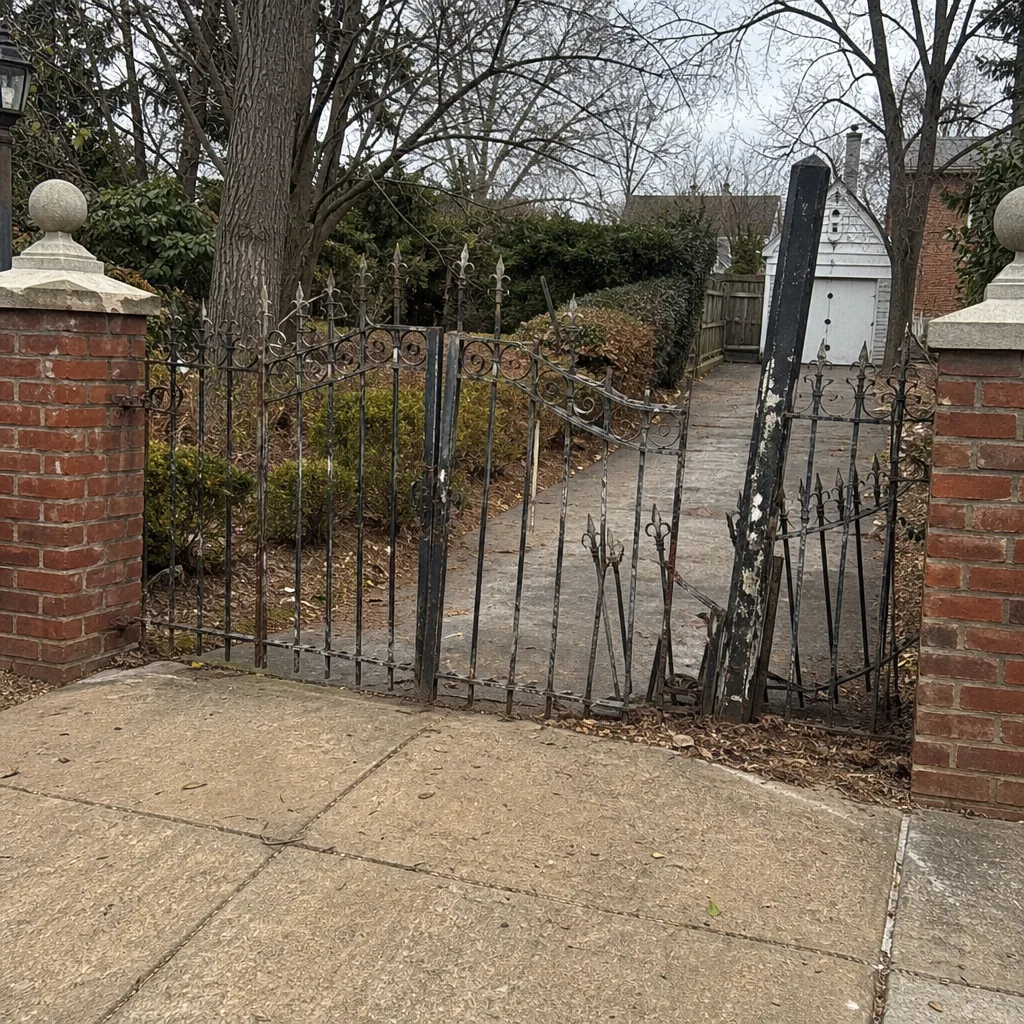 Before
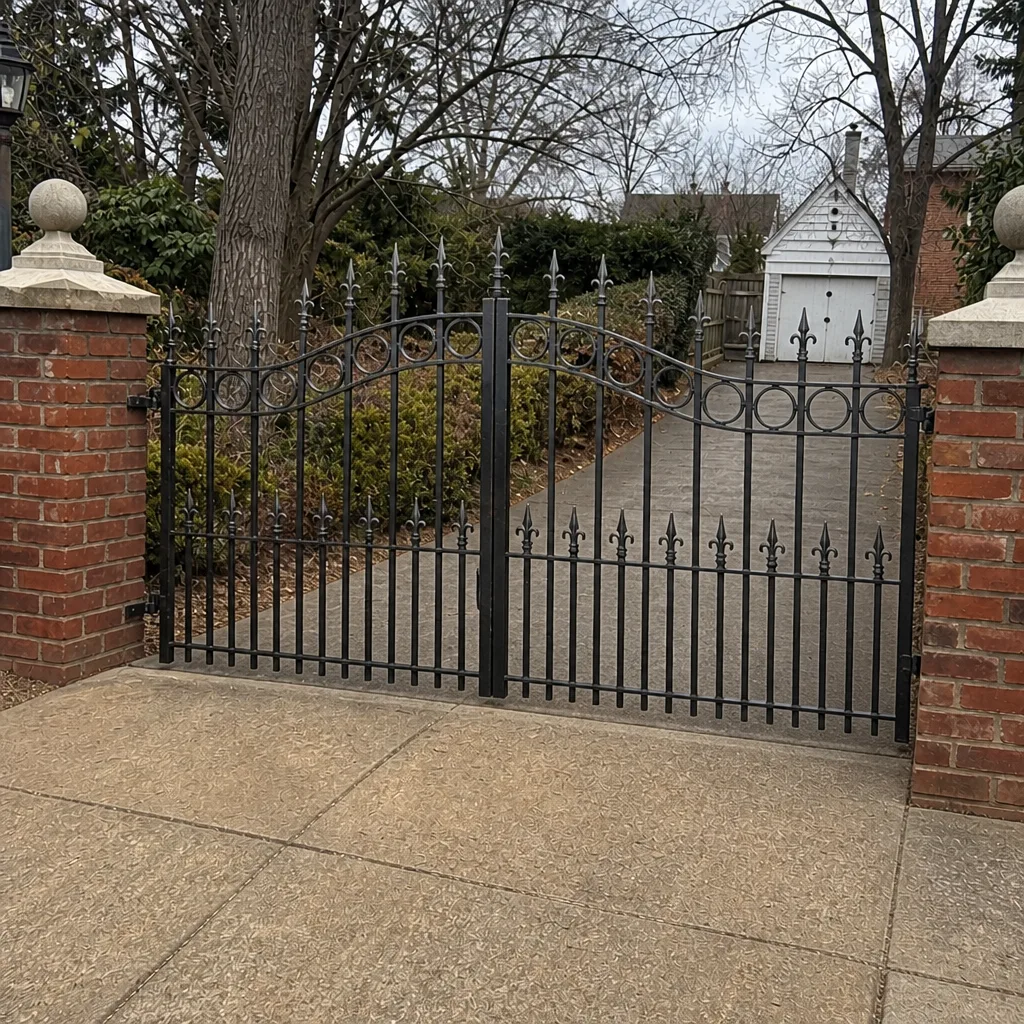 After
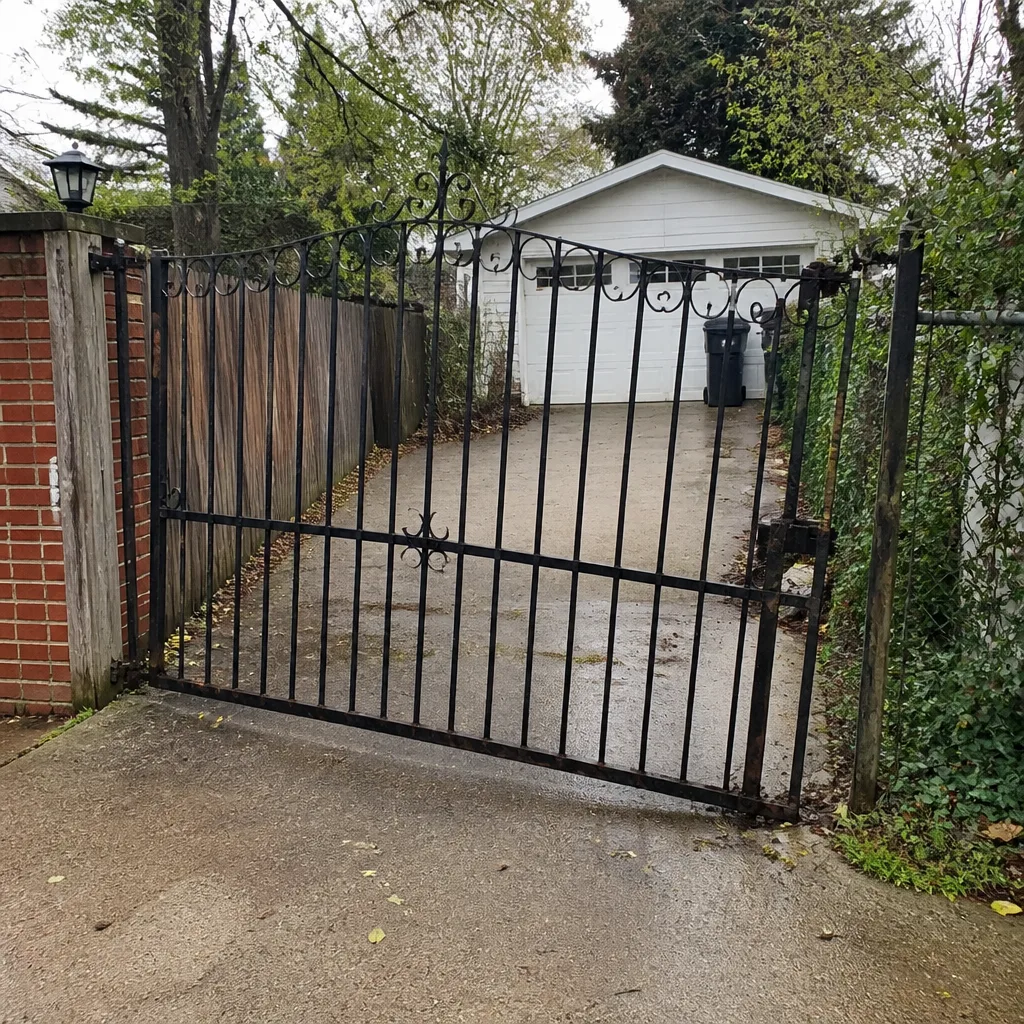 Before
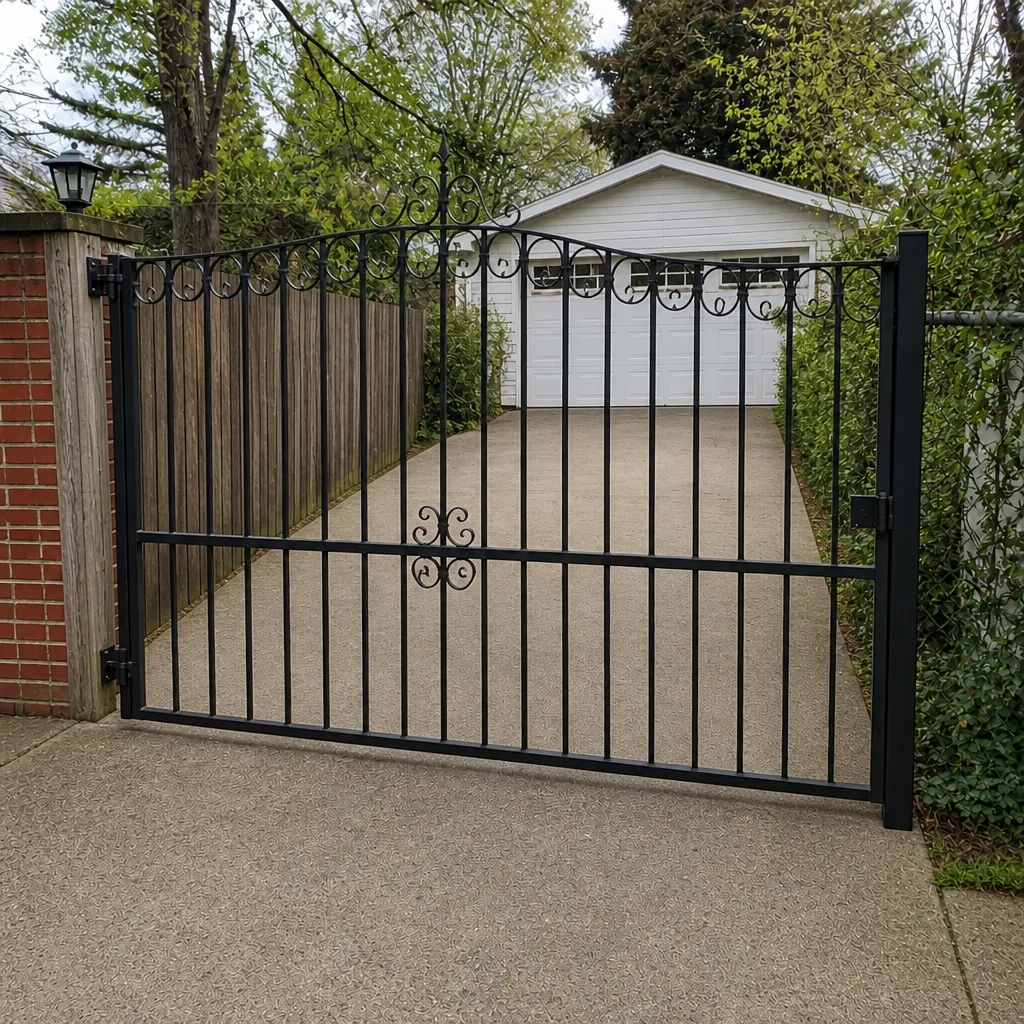 After
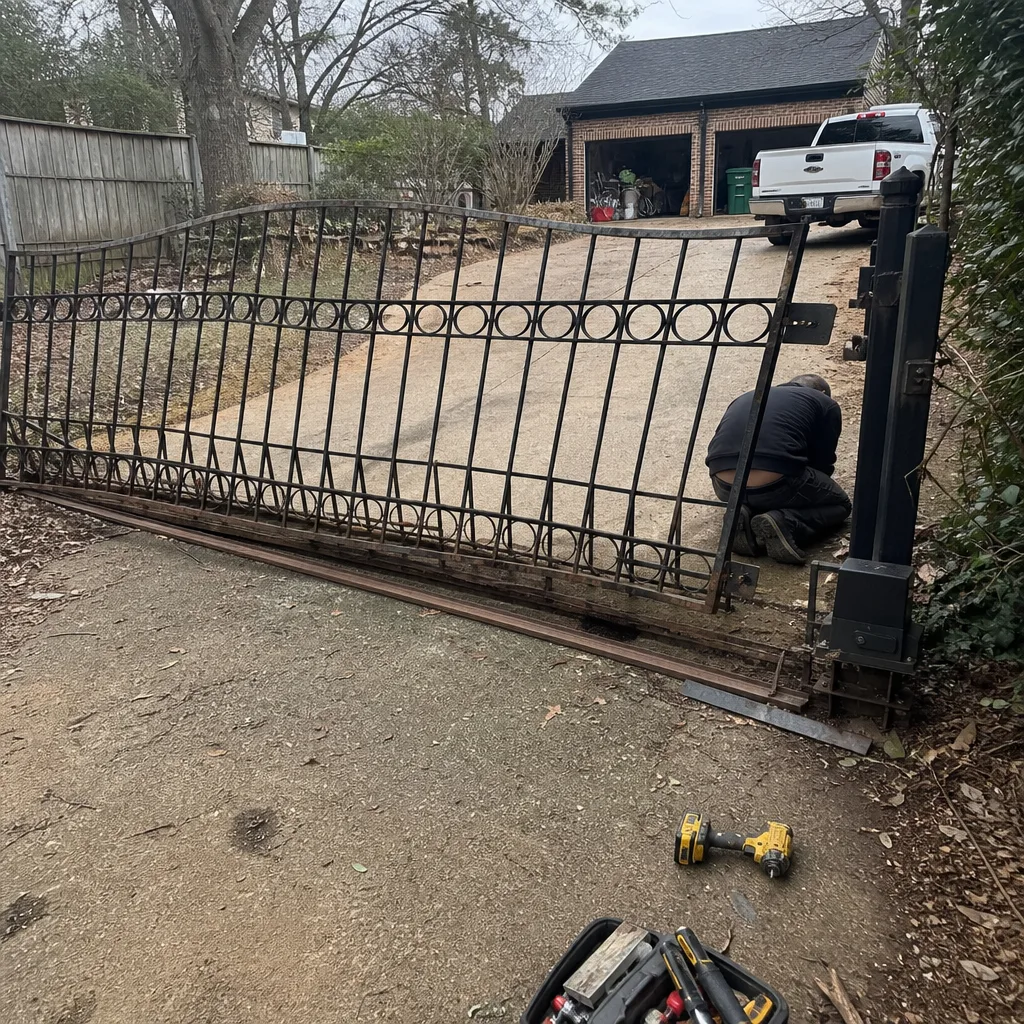 Before
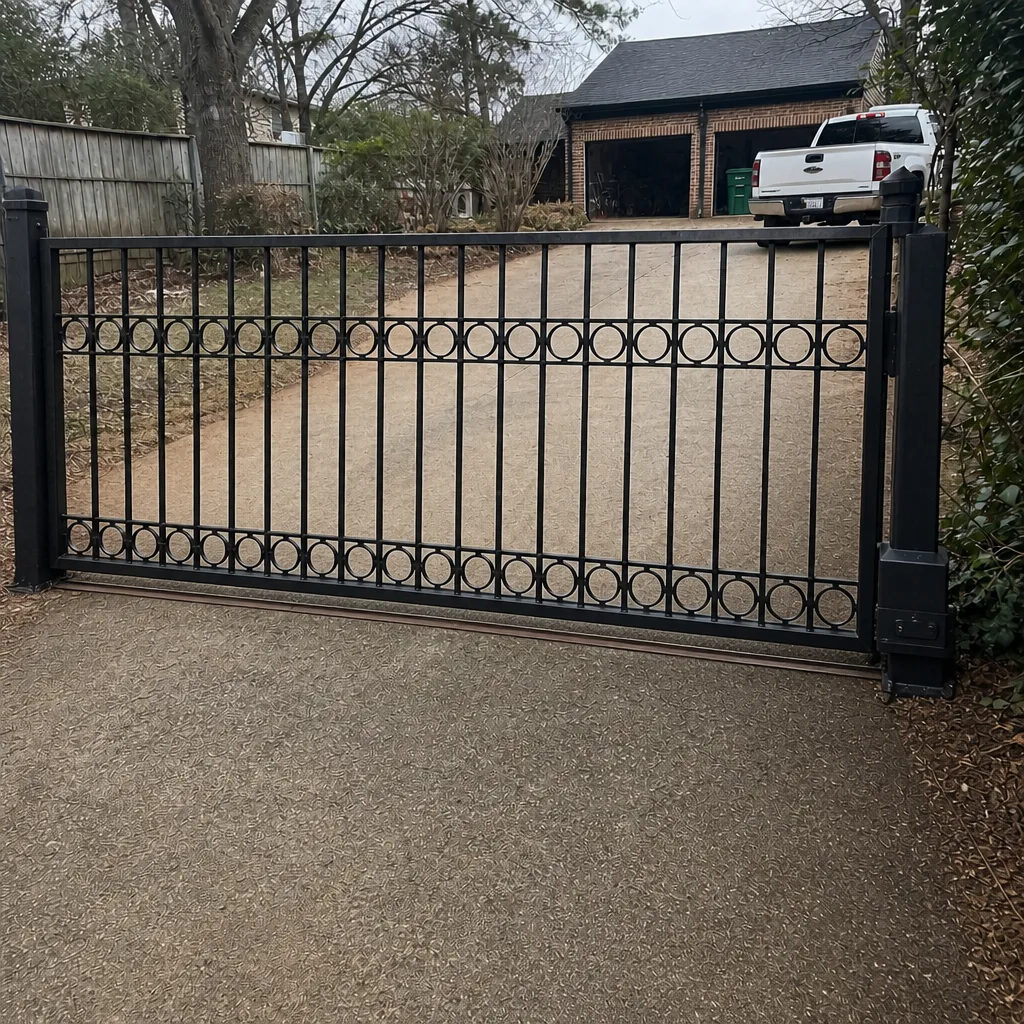 After
When to Call a Professional
Some gate issues are safe to note and schedule. Others warrant a call the same day. You should call for a professional gate repair when any of these is true: the gate has come off its track or is visibly leaning; the operator trips the breaker or shows a burning smell; the safety edges or photo eyes aren’t testing correctly; the operator runs but the gate doesn’t move; a hinge, post, or frame is cracked, broken, or loose; or the gate has hurt someone or damaged a vehicle. If you’re a property manager and the entry has become a safety concern for residents, that’s also a same-day call – access-controlled entry failures affect everyone using the property. On the other hand, a gate that’s slightly slow, slightly noisy, or intermittently failing on one remote is worth scheduling but not an emergency. If you’re not sure which category you’re in, call and describe the symptom – we can usually tell you over the phone whether it’s urgent or whether it can wait for a scheduled visit. Alexandria Gate Repair offers free estimates in Alexandria – call (888) 356-9186. We answer 24/7. Fast dispatch from 7am to 7pm, Sunday through Friday. Every repair starts with a written price you agree to before any work begins.
Frequently Asked Questions
Gate repair in Alexandria is priced per job from a written estimate after a technician diagnoses the system, so there’s no single number that fits every gate – a manual gate hinge adjustment and an automated slide gate operator repair are entirely different jobs. The estimate is free, and the written price is what you pay – we quote and agree to it before any work starts. Call (888) 356-9186 for an exact quote – estimates are free.
Often yes for repair and diagnostic calls, especially when the discussion starts with the gate type and the symptom. Same-day availability depends on the schedule and the specific failure, but the diagnostic visit is the fastest way to get a solid answer. For new gate installation and full operator replacement, the job is measured and scheduled rather than same-day. Call (888) 356-9186. We answer 24/7. Fast dispatch from 7am to 7pm, Sunday through Friday.
We’re factory-familiar with nine major gate automation brands: LiftMaster, FAAC, BFT, Linear, Viking, Ghost Controls, DoorKing, Elite, and Mighty Mule. That covers virtually any system you’re likely to already own in Alexandria, and it means we diagnose the actual problem on the brand you have rather than recommending a brand switch. Call (888) 356-9186 for an exact quote – estimates are free.
Yes. On any automated gate, safety edges, photo eyes, and the power connection are part of the system we diagnose and repair, not accessories treated separately. We test the safety system on every automated gate visit before leaving the property. Call (888) 356-9186 for an exact quote – estimates are free.
Alexandria’s clay-heavy soil shrinks as it dries, and that seasonal movement shifts gate posts and footings just enough to create a bind that looks like a hardware or operator failure. A gate that works in spring and drags by late summer is usually telling you about the posts and the footing, not the controls, and the right repair starts there. Call (888) 356-9186 for an exact quote – estimates are free.
Yes, we work on everything from residential driveway gates to commercial and multi-unit property entries, including access-controlled systems with telephone entry hardware like DoorKing. One call covers the operator, the gate structure, and the access hardware. Call (888) 356-9186 for an exact quote – estimates are free.
The Bottom Line
Gate repair in Alexandria isn’t one service – it’s a diagnostic discipline, and the diagnosis is where nearly every repair goes right or wrong. Identify your gate type first. Check the posts and footing before trusting an electronic diagnosis, especially given this city’s clay soil. Don’t let a recalibration stand in for a repair. Choose a specialist who works on the brand you already have rather than one who wants to switch you. And never let anyone – generalist or otherwise – work on gate operator wiring or disable a safety edge. If your gate won’t open, won’t close, or was never installed right, we fix it. Call (888) 356-9186. We answer 24/7. Fast dispatch from 7am to 7pm, Sunday through Friday. Every estimate is free, and the price is quoted and agreed before any work starts – one call covers it.
Written by the team at Alexandria Gate Repair.