
Last updated November 15, 2026
 Wrought iron
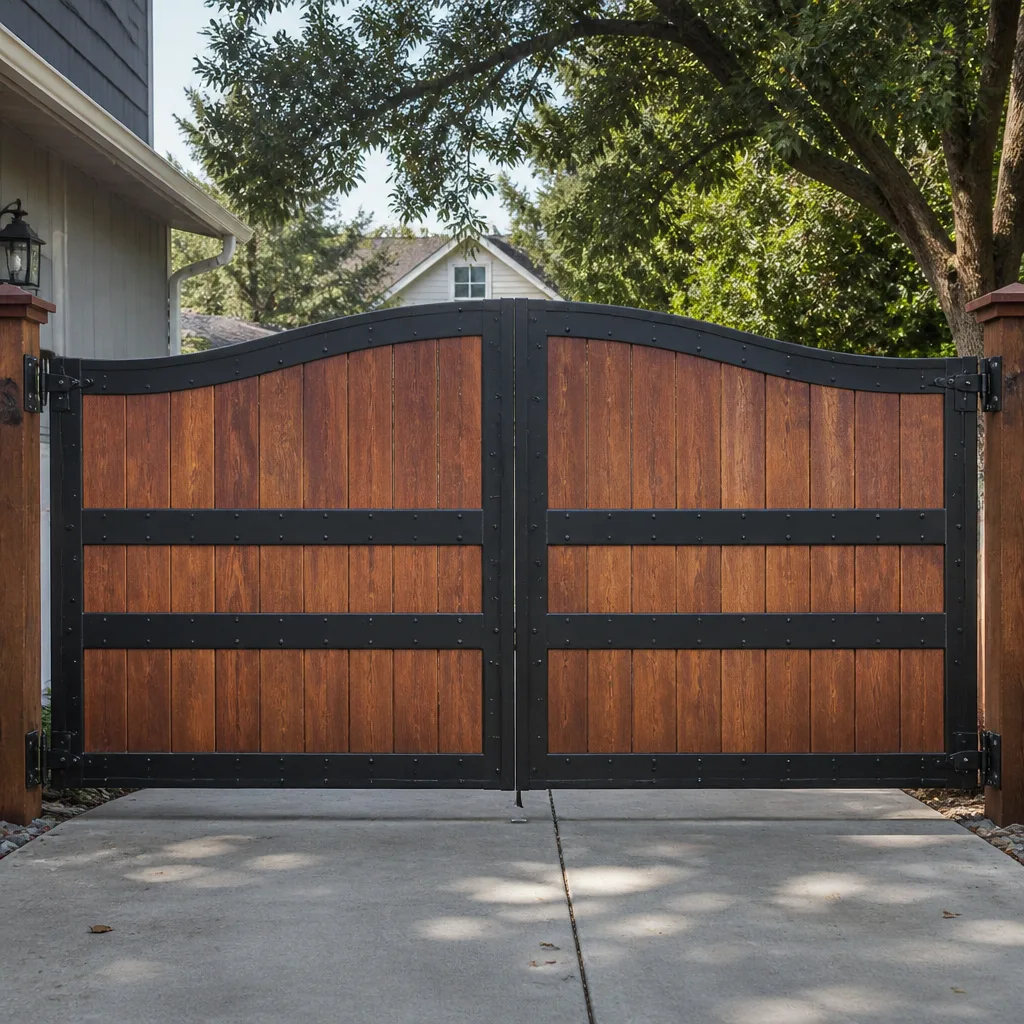 Wood & steel frame
 Farm & ranch
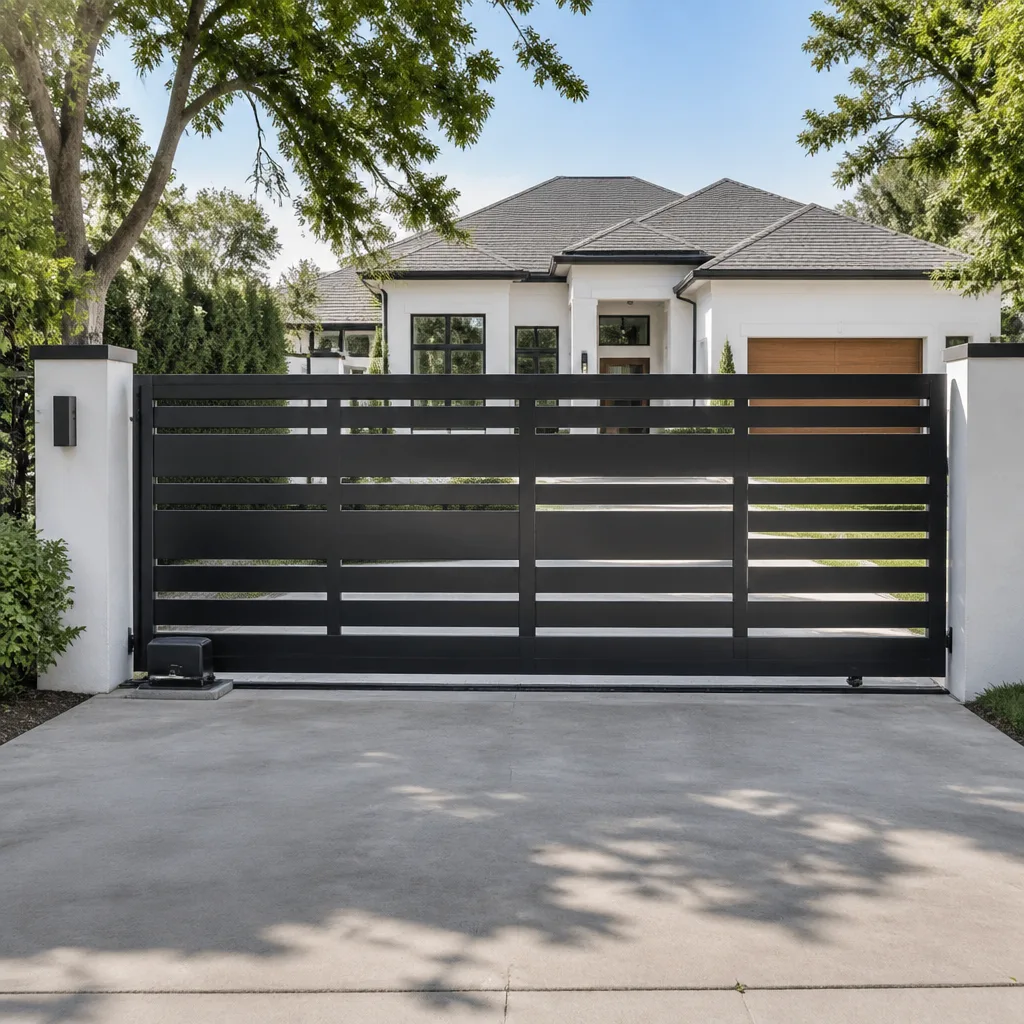 Sliding driveway gates
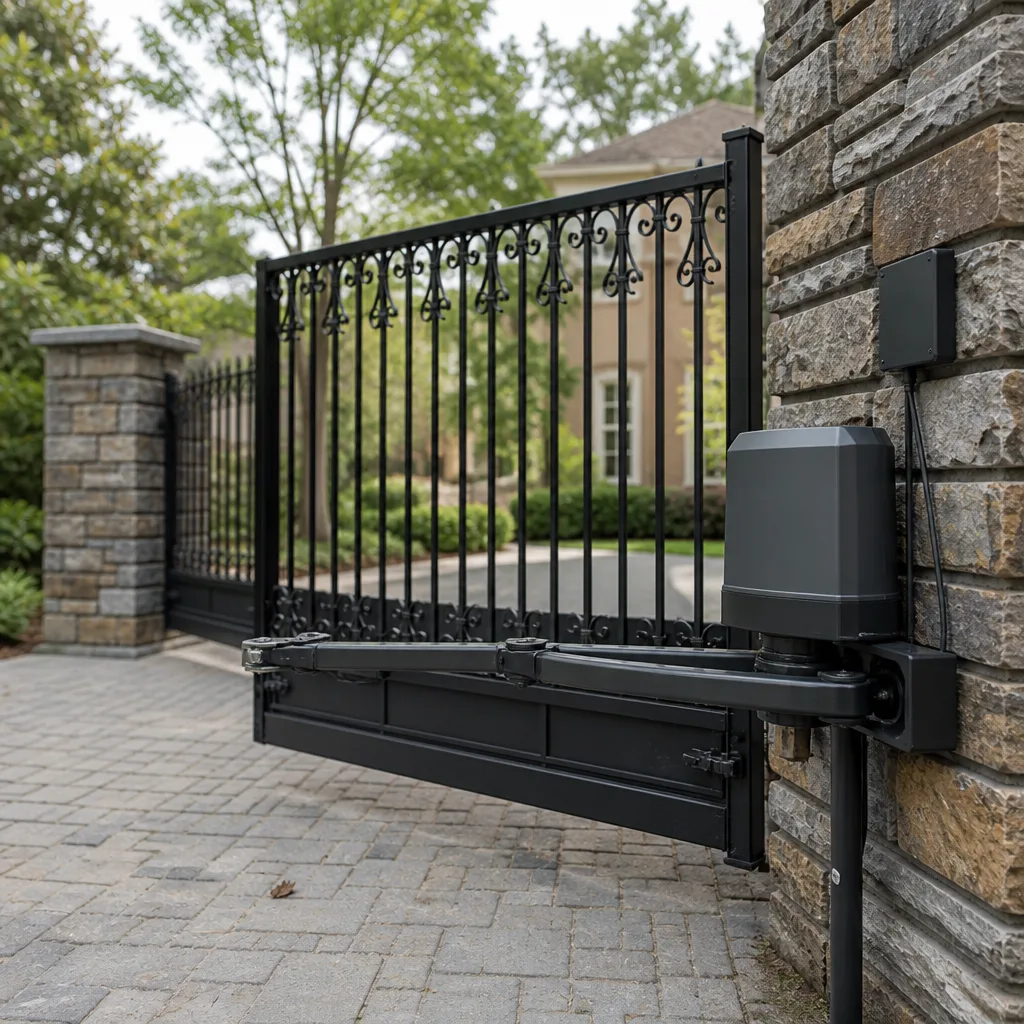 LiftMaster operators
Free on-site gate assessment - hinges, posts, and your LiftMaster or Nice gate operator checked before anything is quoted
The assessment is free and the quote is the invoice.
Get your free estimateDIY vs Professional Gate Repair: The Alexandria Homeowner’s Decision Guide
Replacing a gate hinge is a legitimate weekend project. Adjusting the entrapment protection settings on an automated operator is a UL 325 safety matter that Virginia code ties to licensed electrical work, and that line isn’t where most homeowners assume it is. The safety question rarely gets a straight answer. This guide draws the line component by component for Alexandria homeowners: what’s genuinely safe to attempt, what voids a manufacturer warranty on a LiftMaster or FAAC operator, what Virginia law expects, and what a failed DIY attempt really costs. You’ll finish knowing exactly which repairs belong in your toolbox and which belong with a gate specialist.
Quick Answer
Most mechanical gate repairs are safe for a careful homeowner to attempt: hinges, latches, rollers, physical stops, and clearing debris from a slide track. Anything involving the operator’s force settings, obstruction sensors, wiring, or 120-volt power should go to a licensed professional. In Alexandria, automated gate work touches UL 325 safety standards and manufacturer warranty terms, so the stakes go beyond a gate that won’t open. If your gate is automated and the problem is electrical or sensor-related, call a gate specialist.
Styles & brands we work with
- Wrought iron
- Wood & steel frame
- Farm & ranch
- Sliding driveway gates
- LiftMaster operators
Table of Contents
- The decision framework: what makes a gate repair DIY-appropriate
- Repairs that are genuinely safe to DIY in Alexandria
- Repairs that require a licensed professional
- Why operator force settings and obstruction sensors aren’t DIY
- How DIY work affects manufacturer warranties
- Tools and knowledge a DIY repair actually needs
- The hidden cost of a failed DIY attempt
- Alexandria-specific conditions that change the calculus
The decision framework: what makes a gate repair DIY-appropriate
The right question isn’t “can I fix this?” Most homeowners with basic tools can fix more than they think. The right question is: what happens if I get it wrong?
We break every gate repair into three categories before deciding who should handle it. The framework works the same whether you have a manual swing gate on a residential lot in Del Ray or a DoorKing-controlled entry system at a multi-unit property in Old Town.
Category 1: Low consequence, no electrical, no safety function. Hinges, latches, handles, visual damage, debris in a track. If your fix fails, the gate still works, or it fails in a visible way that doesn’t hurt anyone. These are fair game for a homeowner.
Category 2: Mechanical parts under load. Gate posts, heavy slide-gate rollers, counterbalance hardware, structural welding. These aren’t automatically off-limits, but the weight and stored energy involved mean a mistake can cause injury or make the problem worse. A heavy slide gate panel that comes off its track is genuinely dangerous.
Category 3: Electrical, automation, and life-safety systems. Operator wiring, 120-volt power runs, force settings, obstruction sensors, battery backup, control boards. This is where a homeowner should stop. Not because the work is hard to understand, but because the failure mode is a gate that doesn’t stop when a child walks under it.
That third category is where the DIY vs. professional question actually matters in Alexandria. The first two are judgment calls. The third has legal and physical consequences that go well past a repair bill.
Repairs that are genuinely safe to DIY in Alexandria
The following repairs are genuinely safe and legal for an Alexandria homeowner to attempt, assuming the gate is manual or the operator is fully powered down at the breaker.
- Hinge replacement on a swing gate. Worn hinges cause sagging and dragging. A like-for-like swap with the correct hinge is straightforward and low risk.
- Latch and handle adjustment. A gate that won’t stay shut because the latch is misaligned is usually a matter of loosening two bolts and repositioning.
- Replacing rollers on a light slide gate. On gates where the panel can be safely lifted or blocked, roller replacement is a common homeowner fix. Heavy steel panels are not in this category.
- Adjusting physical stops. Swing gate stops that limit travel are mechanical and adjustable with basic tools.
- Clearing debris from the track. Dirt, leaves, and grit accumulate in slide gate tracks and cause stalling. Clearing and lubricating the track is routine.
- Cosmetic repairs. Touching up paint, replacing a damaged picket, tightening a loose bolt on the frame.
- Replacing a remote battery or reprogramming a remote. This doesn’t touch the operator’s internals and is covered in most manuals.
For every item on this list, one rule holds: power down the operator at the breaker before touching anything near the gate. Even a mechanical repair can go wrong if the gate moves unexpectedly while your hands are in the hinge area.
Repairs that require a licensed professional
These repairs belong with a licensed professional. The list is not about difficulty. It’s about what a failure can do.
- Any work on the operator’s electrical supply. Virginia code treats 120-volt wiring as licensed electrical work. Running a new circuit to the operator, repairing a damaged power run, or installing a disconnect falls under that. It also voids the operator warranty when done by an unlicensed person.
- Force setting adjustments. The operator’s force setting determines how much resistance the gate meets before it reverses. Set it wrong and the gate won’t stop for a person or a vehicle. Set it too sensitive and the gate reverses on wind or a small obstruction, which makes it unusable. Either way, the wrong setting is a safety failure.
- Obstruction sensor replacement or realignment. Photo-eyes and safety edges are the last line of defense before contact. A sensor that’s misaligned or set outside its design parameters is worse than no sensor, because it gives a false sense of protection.
- Control board replacement or wiring changes. The control board manages every safety input. A miswired board can defeat the entrapment protection entirely.
- Gate arm and operator replacement. The operator is a heavyweight mechanical assembly with a motor, gearing, and a spring or chain under tension. Lifting or replacing one is not a homeowner job.
- Structural post repair or replacement. A gate post that’s leaning or loose carries the full weight of the gate. Correcting it needs footings at proper depth and alignment the gate hinges on.
- Spring and counterbalance work on heavy gates. A gate with a spring assist stores energy. The spring can release violently. Do not attempt this yourself.
If you’re not sure which category your problem falls into, call a specialist and describe the symptom. A short phone conversation usually tells you whether it’s a five-minute fix or a service call.
Why operator force settings and obstruction sensors aren’t DIY
This is the section most DIY guides skip, and it’s the one that matters most in Alexandria.
An automated gate is a moving object that weighs hundreds of pounds. UL 325 is the safety standard that governs gate operators, and it exists because a gate without functioning entrapment protection can seriously injure or kill a person. The force setting and the obstruction sensors are the two mechanisms that prevent that.
Here’s what goes wrong when a homeowner adjusts force settings without understanding the system:
- The gate stops sensing resistance. Force gets turned up to make the gate close against wind, a dragging track, or an out-of-level gate. The gate now closes on anything in its path.
- The gate reverses constantly. Force gets turned down too far. Now the gate reverses on a twig or a gust, and the homeowner turns the force back up to compensate. The cycle repeats.
- The sensors get bypassed or relocated. A photo-eye that keeps tripping gets moved or disconnected to stop the nuisance. Now there’s no backstop between the gate and whatever’s under it.
The correct fix isn’t a force adjustment. It’s diagnosing why the gate needs more force in the first place: a failing motor, a bound track, worn rollers, or a misaligned post. Adjusting force to compensate masks the real problem and creates a safety hazard at the same time.
We’ve been called to Alexandria properties where an operator had been adjusted repeatedly to compensate for a failing component. The fix was never a setting. It was the part underneath it. That’s why a gate specialist opens the operator and checks the mechanics before touching a single setting.
How DIY work affects manufacturer warranties
Manufacturer warranties on gate operators from brands like LiftMaster, FAAC, and BFT are specific about what voids coverage. Almost every warranty states that damage from unauthorized service, improper installation, or work by unlicensed personnel is excluded.
In practice, that means:
- Unauthorized service voids component coverage. Open the operator housing and replace a control board yourself, and the manufacturer can decline a warranty claim on that board and on anything the miswire damages.
- Electrical work by an unlicensed person is a warranty exclusion. Most warranties require installation and electrical connection by a licensed professional. A homeowner-run power circuit is one of the most common warranty invalidation causes.
- Force and sensor adjustments can void safety-related coverage. Some warranties treat unauthorized changes to safety settings as a misuse condition.
- Labor coverage is separate from parts coverage. Even when a part is covered, the labor to replace it may not be, which is why a failed DIY repair often ends up costing more than the original professional repair would have.
The brands we service regularly – LiftMaster, FAAC, BFT, Linear, and others – all define who’s authorized to service the equipment. The safe path is to check the warranty terms before opening the operator housing, and to let a specialist handle anything covered.
You can read more about our approach to electric gate repair and how we handle warranty-sensitive work.
Tools and knowledge a DIY repair actually needs
We’re not going to pretend a hinge swap needs a mechanic’s shop. But “a screwdriver and YouTube” understates it. Here’s what a legitimate DIY gate repair actually requires.
Tools:
- A socket set and combination wrenches in the sizes your gate hardware uses (usually 9/16, 1/2, and 3/8 for residential gate hardware)
- A cordless drill and driver bits
- Penetrating oil for rusted fasteners
- A level, for hinge and latch alignment
- A pry bar and a jack or blocking for anything gate-sized
- Safety glasses and work gloves
Knowledge:
- How to locate and shut off power to the operator at the breaker (not just the remote)
- The manual for your specific operator model, kept on hand
- How to identify a gate that’s out of level or has a post that’s moving
- When to stop before the fix gets worse
One rule that isn’t optional: if the repair requires the gate to be temporarily supported while you’re working on it, and you don’t have a safe way to support the full weight of the gate, stop. A gate panel that drops during repair is an injury risk, and the repair cost goes up from there.
For the safe repairs on the list above, a homeowner with these tools and this knowledge can get the job done well. For anything in the professional category, those tools aren’t the missing piece. The license and the diagnostic knowledge are.
The hidden cost of a failed DIY attempt
A failed DIY repair costs more than the repair you didn’t complete. Here’s how it usually adds up:
- The original problem stays unresolved. A hinge that was replaced with the wrong hinge still sags. Now you’ve paid for a part that didn’t fix it and you still need the correct part.
- The botched fix damages a component that was working. A stripped bolt turns a latch adjustment into a frame repair. A miswired sensor turns a photo-eye replacement into a control board replacement.
- The warranty is voided, so the failed part isn’t covered. The cost of the replacement part falls entirely on you.
- The pro now charges to undo the work. A specialist has to remove the incorrect part, repair any damage, and reinstall correctly. The final bill reflects two repairs, not one.
- The operator loses its safety function. In the worst case, an over-adjusted force setting or a bypassed sensor leaves an automated gate without entrapment protection. A specialist has to restore the safety function on top of the repair.
The pattern we see on gate repair calls in Alexandria is consistent: the failed DIY repair costs one to two times as much as the original repair would have, before you count the parts.
Alexandria-specific conditions that change the calculus
Some local conditions shift where the DIY line sits for Alexandria homeowners.
Rain and freeze cycles. Alexandria’s winters cycle between freezing and thawing, and wet spring and fall weather is routine. That cycle works on outdoor gate hardware: fasteners rust, hinges seize, and slide tracks accumulate grit. Rusted fasteners are the biggest culprit in failed DIY repairs, because a homeowner forced to cut a bolt to remove it ends up with a bigger repair than expected.
Older housing stock. Many Alexandria properties have gate hardware and posts that have been in place a long time. A hinge on a post that’s been settling for years is a different job than a hinge on a new install, and it’s easy to misjudge which one you’re dealing with.
HOA and multi-unit properties. If you’re a property or HOA manager in Alexandria, the DIY question is often not yours to answer. Access-control systems that serve multiple units have vendor agreements and warranty terms that require authorized service, and a DIY repair by a resident or casual handyman can create liability for the association.
Licensed electrical work. Any new power run to an automated gate on an Alexandria property is licensed electrical work under Virginia code. That’s true for a residential driveway gate in Rosemont and for a commercial entry system in Old Town.
If your gate is in one of these categories, the safer path is to have a specialist assess it. You can reach our team through the Alexandria page or by phone.
Common Mistakes to Avoid
- Adjusting the force setting to fix a gate that’s dragging. This is the single most common mistake we see. The dragging track or failing motor is the real problem, and raising the force masks it while removing the entrapment protection.
- Disconnecting or relocating an obstruction sensor that keeps tripping. A tripping sensor is a symptom of a problem, not the problem itself. Fixing the sensor is the answer; removing it removes the safety net.
- Touching the operator internals without checking the warranty. On a LiftMaster, FAAC, or BFT operator, opening the housing yourself can void coverage on the parts inside.
- Assuming a rusty fastener will come out cleanly. Alexandria’s wet winters make rusted gate hardware common. Forcing a rusted bolt can strip it or snap it, turning a five-minute fix into a drill-and-tap job.
- Ignoring a loose or leaning post. A post issue is not a DIY repair. It carries the weight of the gate and a gate that’s out of level will keep damaging hinges and rollers until the post is fixed.
- Running new electrical to the operator yourself. This is licensed work in Virginia, and it’s also a warranty exclusion on most operators.
- Trying to fix a heavy slide gate alone. A slide gate panel that comes off its track can crush a hand or a foot. Heavy panels need a professional and proper blocking.
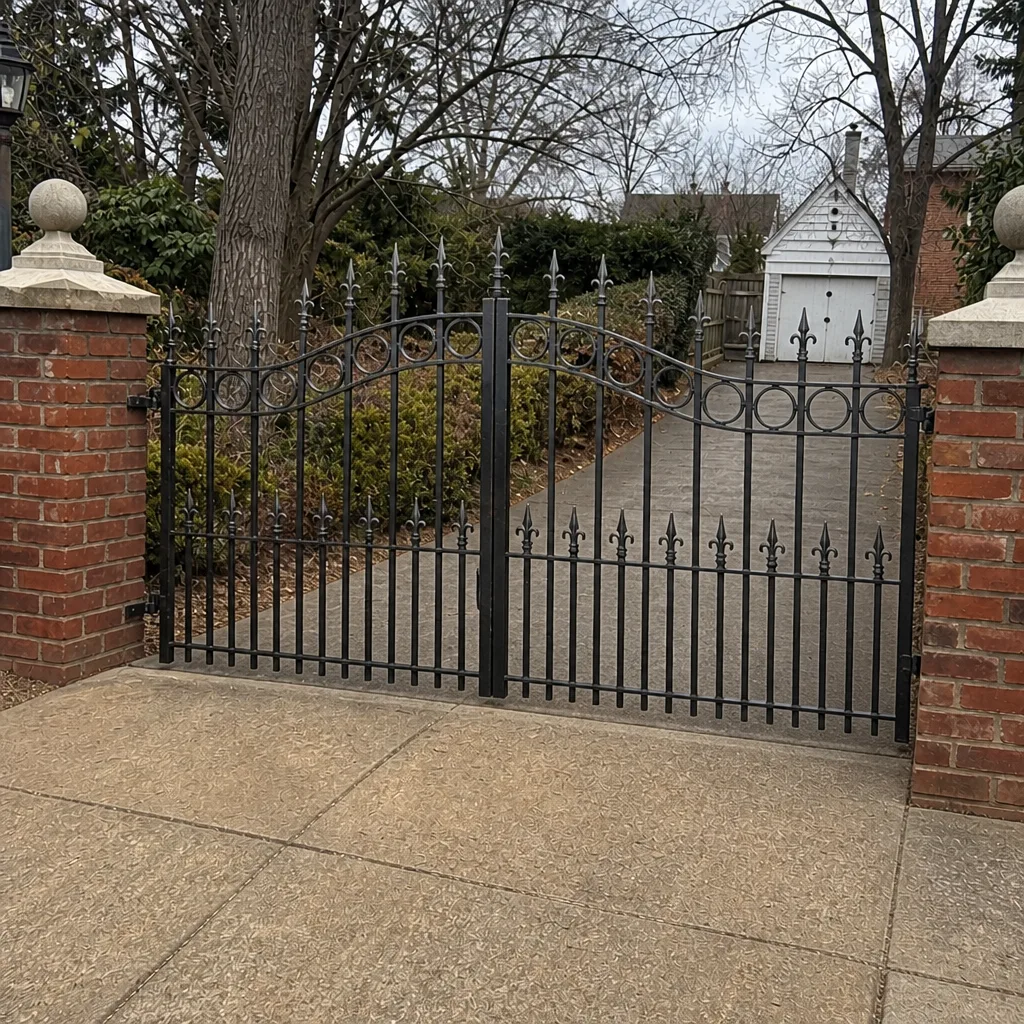
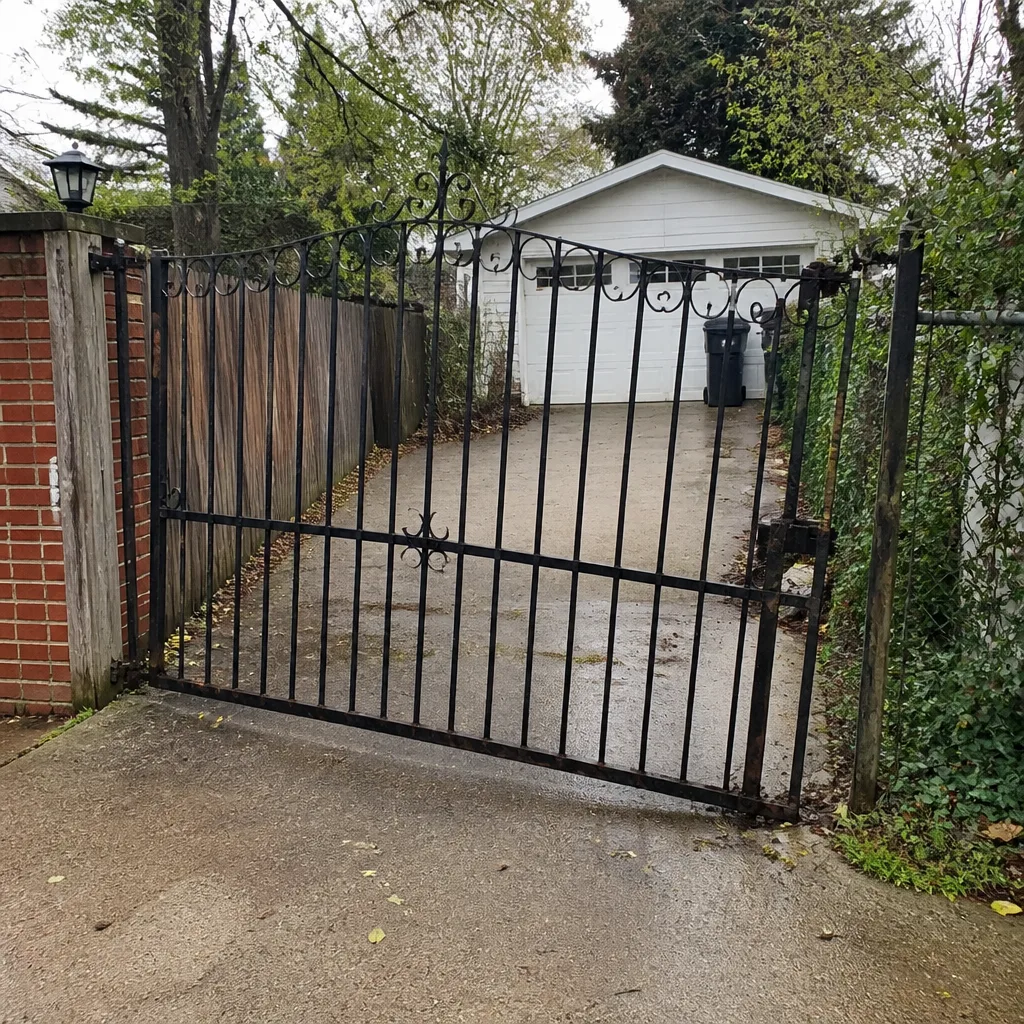
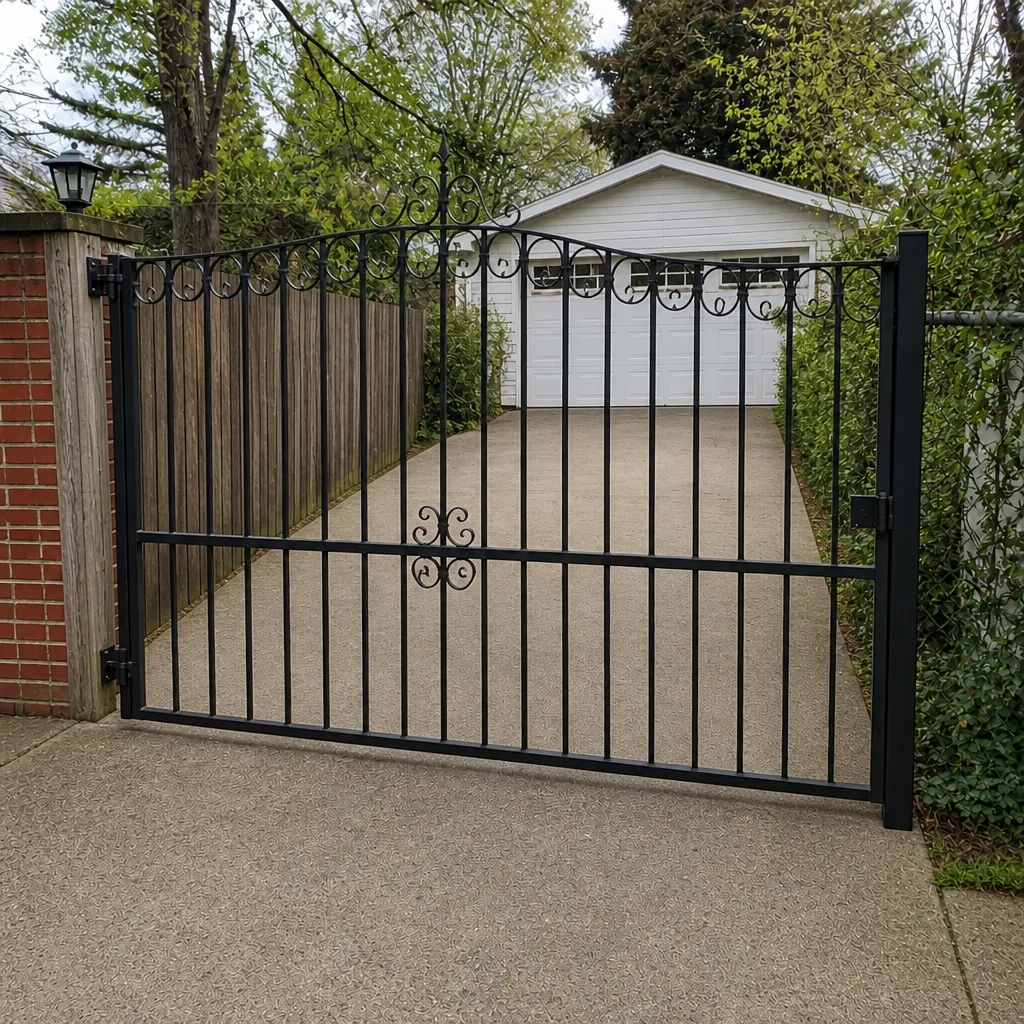
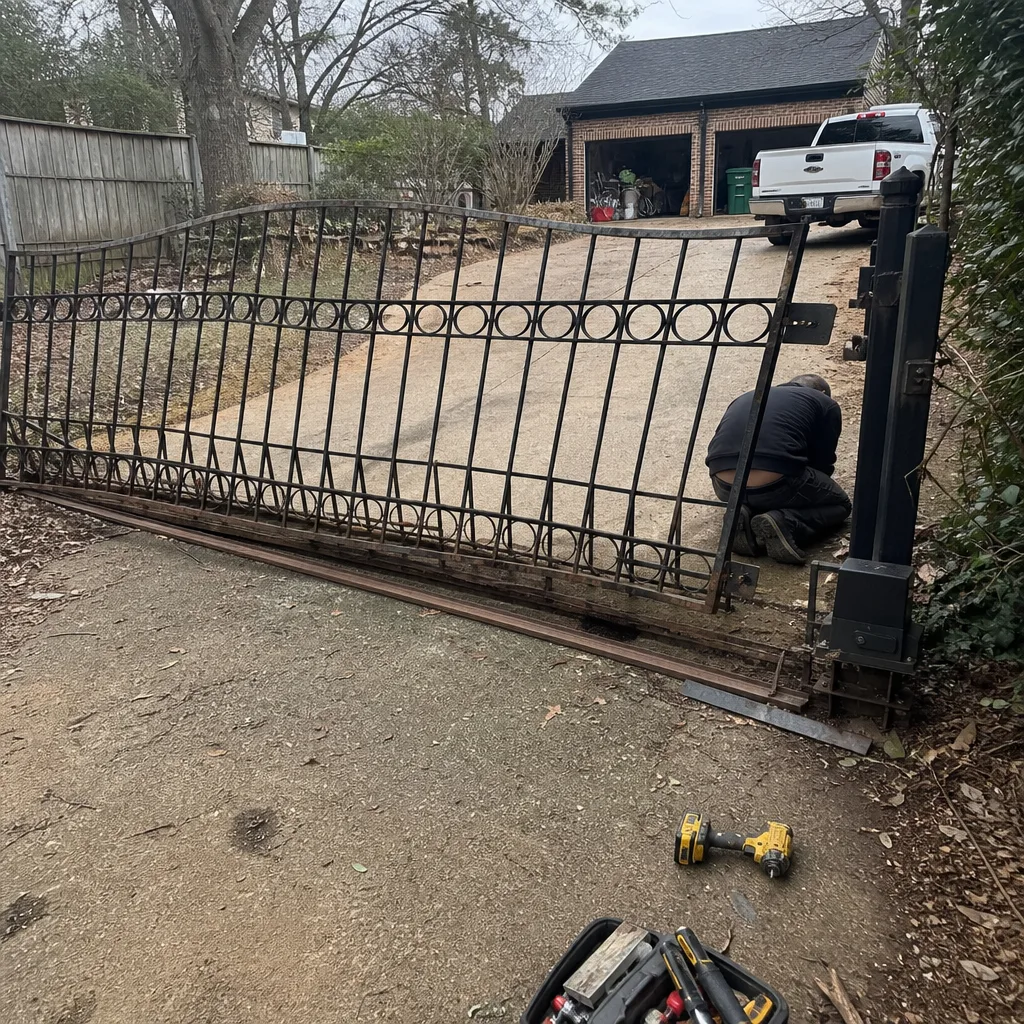
See the difference
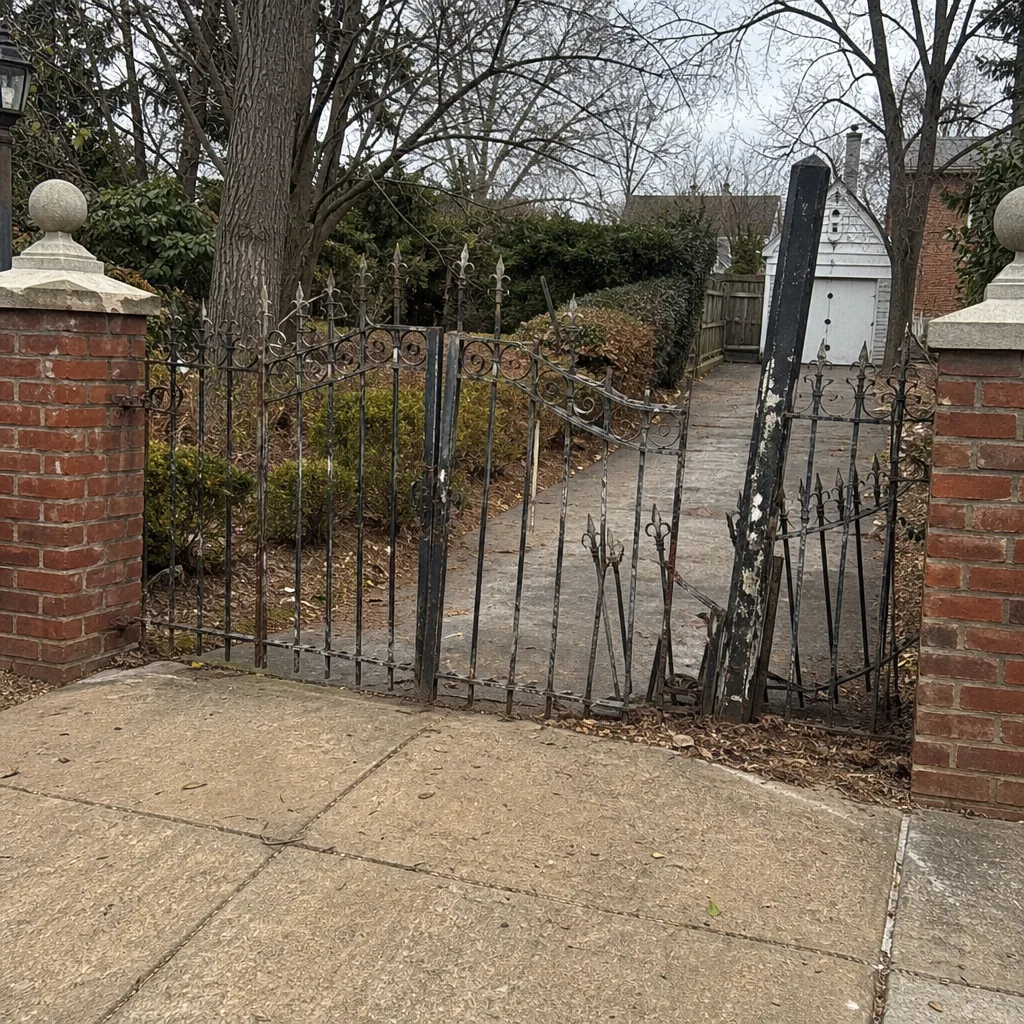 Before
 After
 Before
 After
 Before
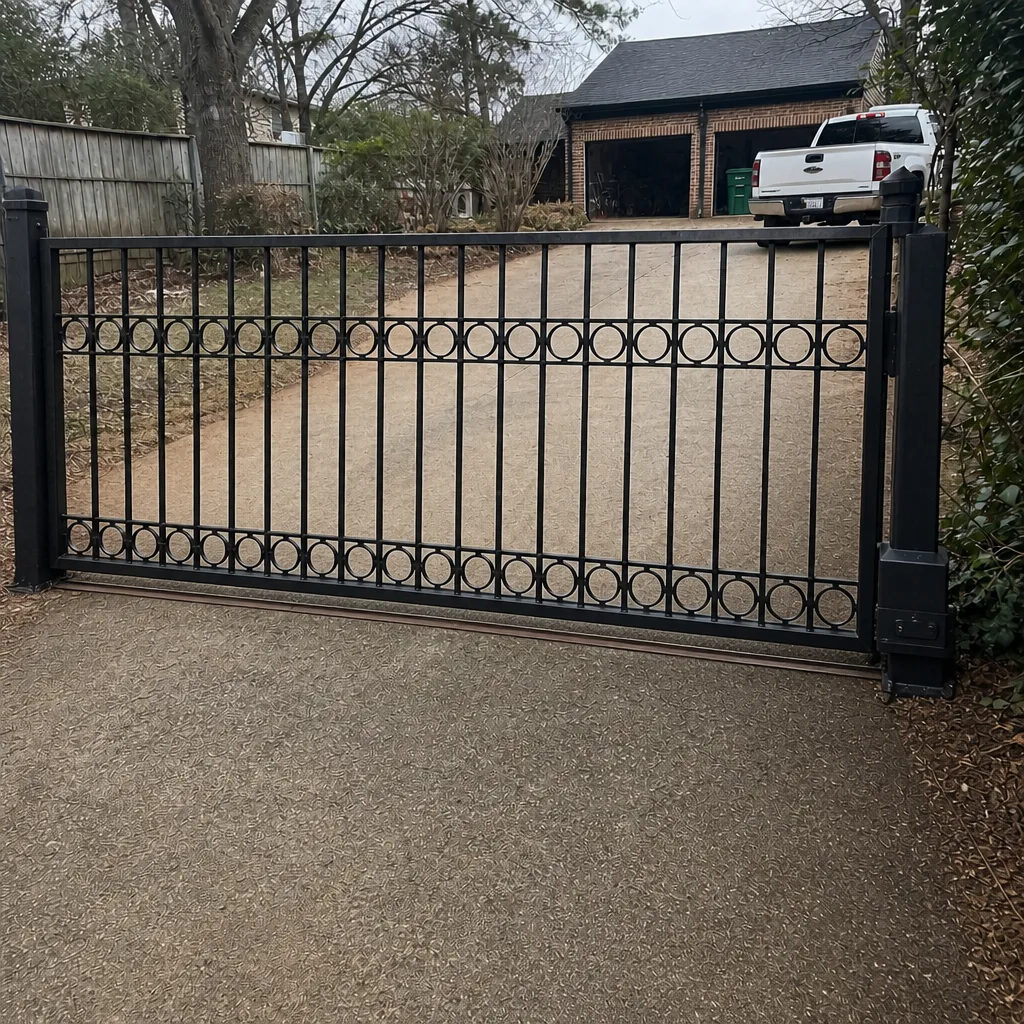 After
When to Call a Professional
Call a gate specialist when any of the following is true: the gate is automated and the problem is electrical, sensor-related, or involves the operator housing; the gate is a heavy slide gate or swing gate that’s out of level or off its track; a post is leaning or loose; a spring or counterbalance is involved; you’re not sure whether the repair is mechanical or electrical; or the gate serves a multi-unit or commercial property. In our experience, a failed gate is more often urgent than it’s worth pushing off. We answer 24/7, and fast dispatch runs 7am-7pm, Sunday through Friday. Alexandria Gate Repair offers free estimates in Alexandria – call (888) 356-9186.
We work on the brand you already have. Our technicians are experienced with LiftMaster, FAAC, BFT, Linear, and other major operators, and we handle the mechanical and electrical sides of a gate problem under one call.
Frequently Asked Questions
No. Force settings control how much resistance the gate meets before it reverses, and setting them wrong can remove the entrapment protection that keeps a person or vehicle from being crushed. On an automated swing or slide gate in Alexandria, force adjustment should be done by a licensed professional who can also check why the gate needed more force in the first place. Call (888) 356-9186 to schedule a free estimate.
Often, yes. Most manufacturer warranties exclude damage from unauthorized service, improper installation, or work by unlicensed personnel, and electrical work by a homeowner is a common exclusion. Before you open the housing on a LiftMaster, FAAC, or BFT operator, check the warranty terms. If you’re not sure, call us and we’ll walk through it.
Yes, in most cases. Hinge replacement, latch adjustment, and roller replacement on a light slide gate are genuinely safe for a homeowner with the right tools, provided you shut off power at the breaker first. What’s not safe is anything that involves the operator’s internals, a heavy gate panel, or a post that’s loose or leaning. Call (888) 356-9186 if you’re uncertain.
Yes. Virginia code treats 120-volt wiring as licensed electrical work, and that covers any new power run to a gate operator. It’s also a warranty requirement on most operators. Call us at (888) 356-9186 for a free estimate on the electrical side of a gate project.
A gate that reverses constantly is usually sensing resistance it shouldn’t: a dragging track, a misaligned sensor, a failing motor, or a force setting that’s too sensitive. Don’t raise the force to compensate. The right fix is to diagnose the underlying cause. We handle both the mechanical and electrical sides of that diagnosis. Call (888) 356-9186 – estimates are free.
Often, yes. We answer 24/7, and fast dispatch runs from 7am to 7pm, Sunday through Friday. A call outside dispatch hours is booked into the next opening. Installation and full operator replacement are scheduled work, so those are measured and quoted before the job is booked. Call (888) 356-9186 for an exact quote.
The Bottom Line
The DIY vs. professional question comes down to consequence, not difficulty. Hinges, latches, rollers on a light gate, and track cleaning are fair game for an Alexandria homeowner with the right tools and the power shut off at the breaker. Force settings, obstruction sensors, operator wiring, control boards, gate posts, and any heavy gate that’s off its track belong with a licensed specialist. The safety standard and the manufacturer warranty both reward that discipline. If you’re not certain which side of the line your repair falls on, call us and describe the symptom. One conversation usually settles it.
We’re Alexandria Gate Repair, and gates are the only thing we work on: repair, installation, and everything from the motor to the hinge. Our technicians have up to 12 years of experience, and we work on the brand you already have rather than pushing a switch.
Get a Free Estimate
Call (888) 356-9186 for a free estimate on your gate repair or installation in Alexandria. We answer 24/7. Fast dispatch from 7am to 7pm, Sunday through Friday. Tell us what the gate is doing and what brand of operator you have, and we’ll tell you whether it’s a repair you can safely handle yourself or a job for our team. Either way, you’ll know before anything starts, and the price is quoted and agreed before any work begins.
Written by the team at Alexandria Gate Repair.