
Last updated November 15, 2026
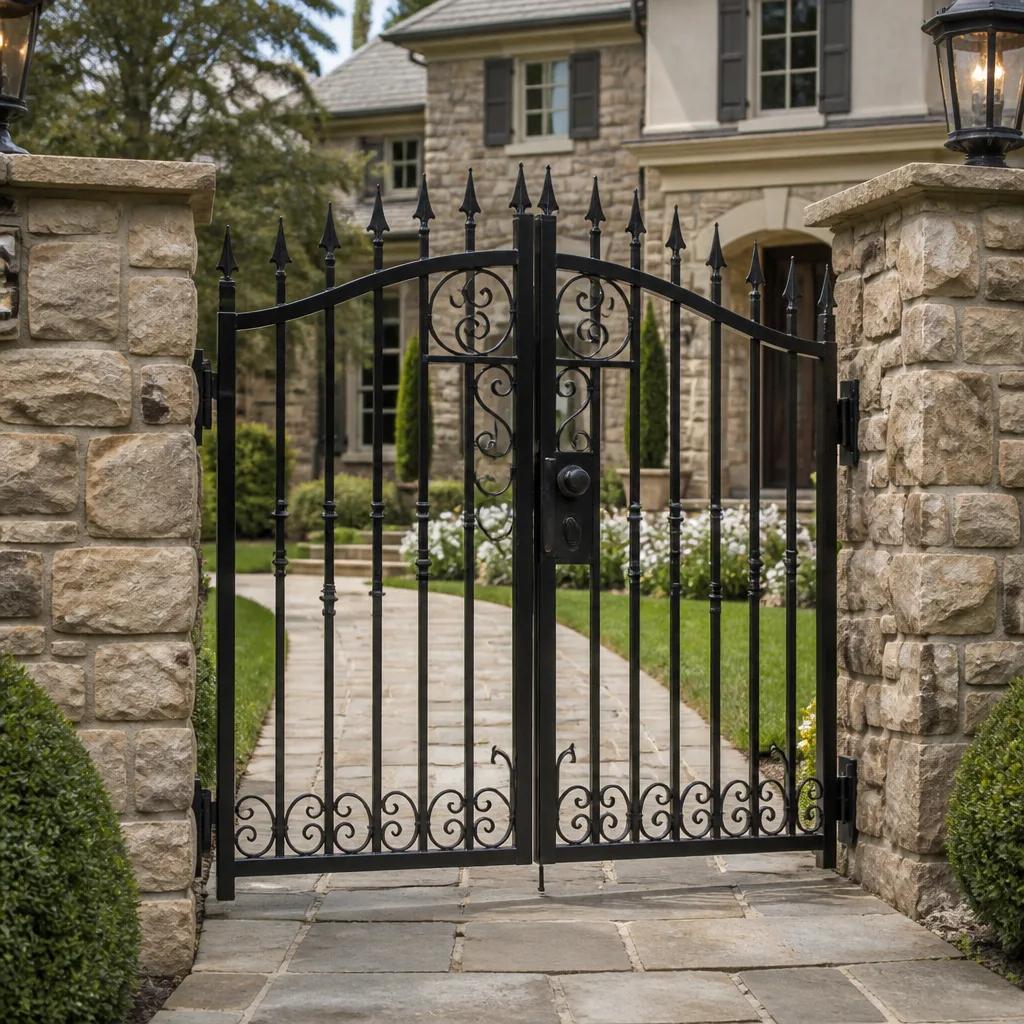 Wrought iron
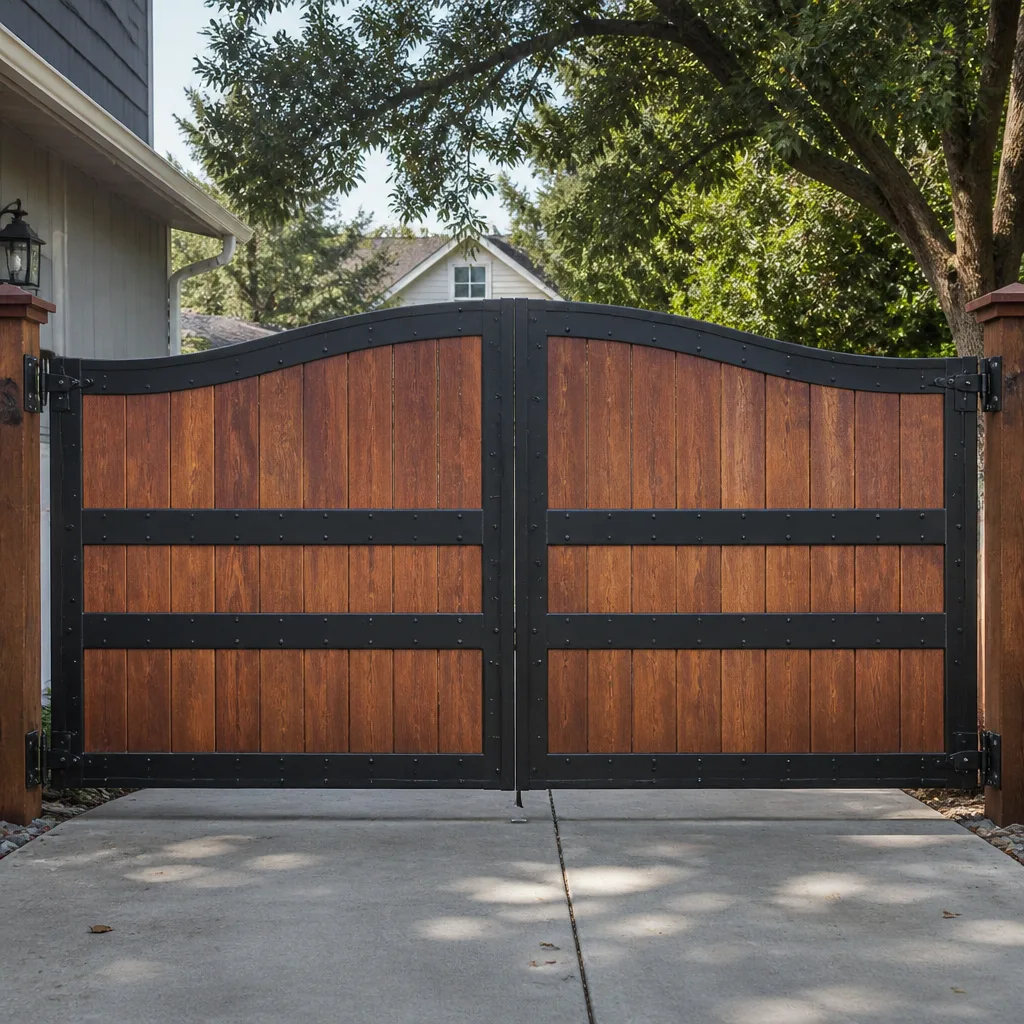 Wood & steel frame
 Farm & ranch
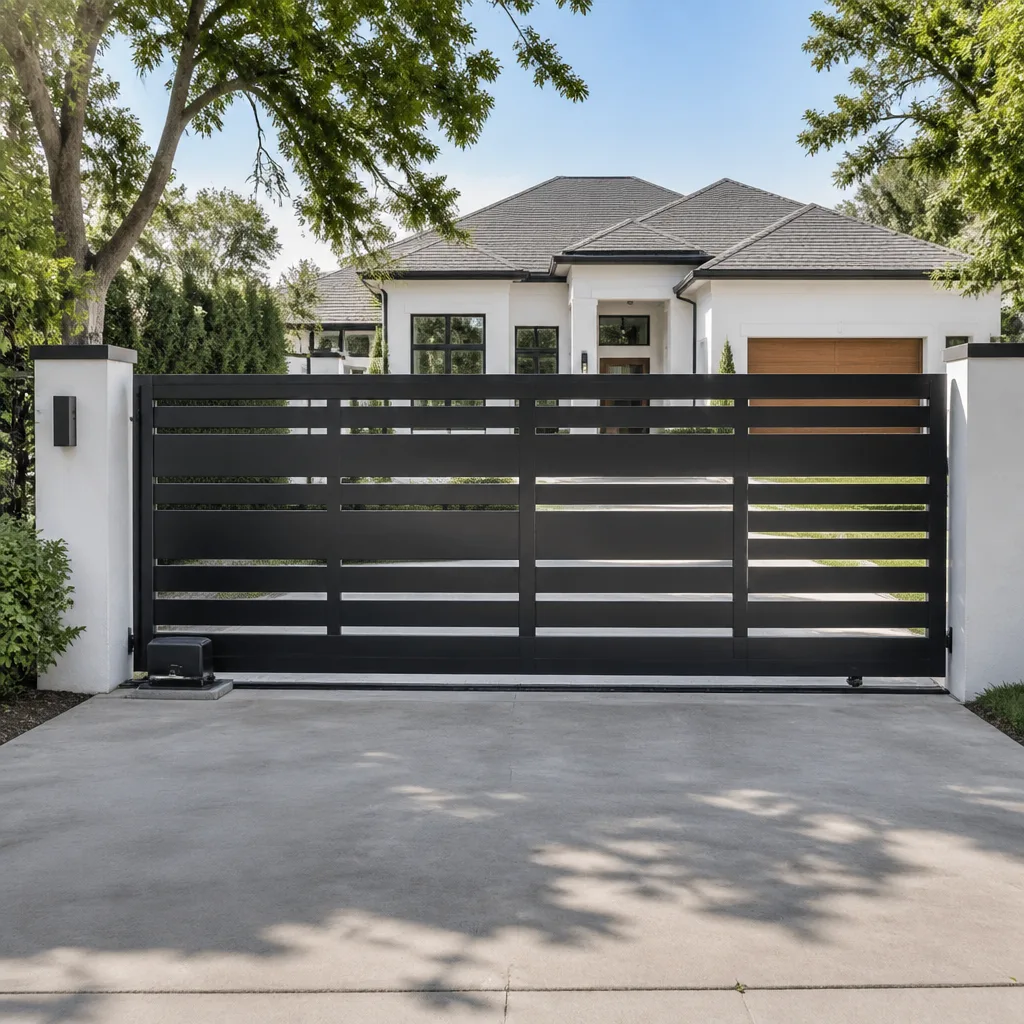 Sliding driveway gates
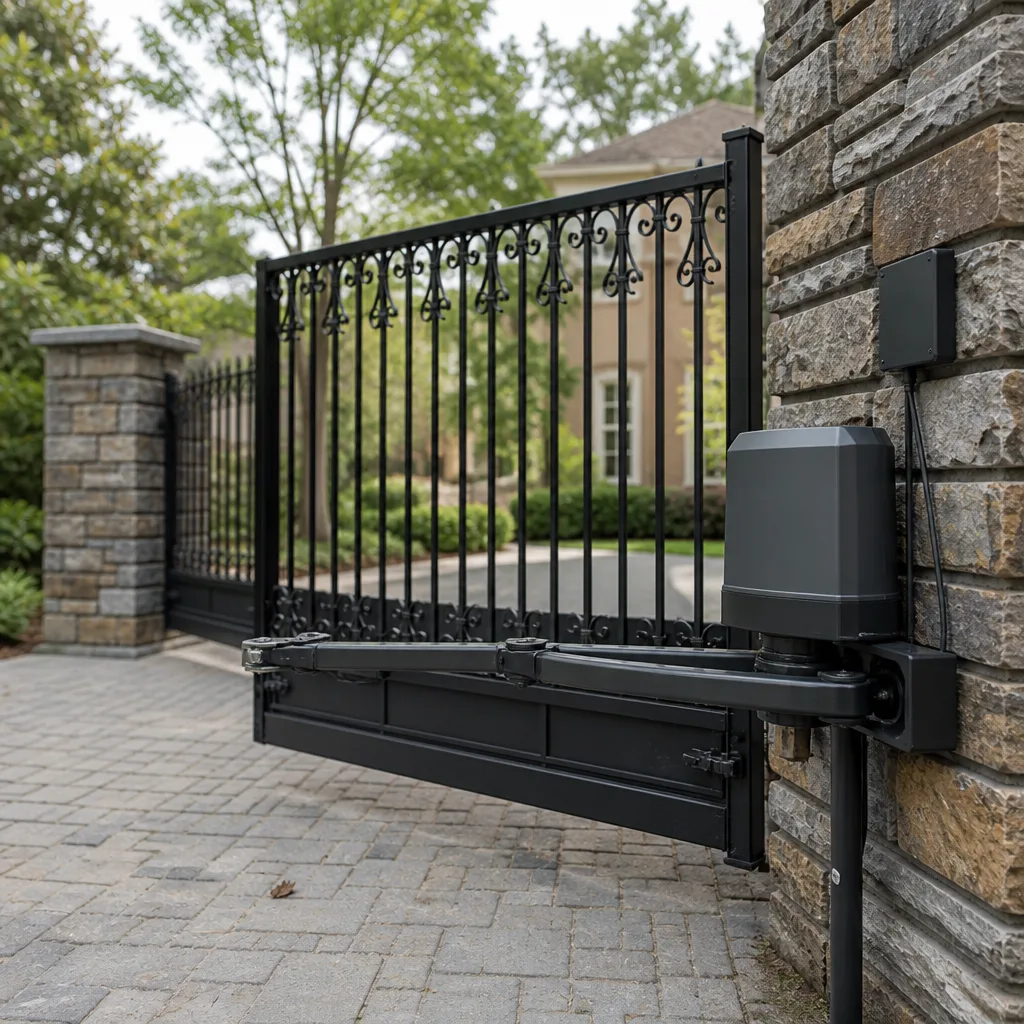 LiftMaster operators
Free on-site gate assessment - hinges, posts, and your LiftMaster or Nice gate operator checked before anything is quoted
The assessment is free and the quote is the invoice.
Get your free estimateGate Repair Warning Signs: An Alexandria Homeowner’s Reference Guide
A gate that reverses direction mid-cycle isn’t malfunctioning randomly. It’s telling you exactly which sensor, limit switch, or obstruction is triggering a UL 325 safety response, if you know how to read it. Most of the calls we get in Alexandria arrive well after the gate started sending signals: a slow crawl that built over weeks, a keypad that only failed on humid afternoons, a click that turned into a grind. This guide translates those behaviors into mechanical and electrical terms so you can tell cosmetic wear from a real failure, test your own system in about 60 seconds a week, and understand why certain months here produce certain breakdowns. By the end you’ll know what to look for, what to ignore, and when to pick up the phone.
Quick Answer
Common gate repair warning signs include slow cycle travel, reversing before fully closing, grinding or clicking sounds, partial opening, intermittent keypad failure, delayed loop response, and a gate that no longer responds to the remote. Each symptom maps to a specific component: sensors, limit switches, the operator motor, the control board, or the wiring that ties them together. Catching a warning sign early usually keeps a repair from turning into a full system replacement.
Styles & brands we work with
- Wrought iron
- Wood & steel frame
- Farm & ranch
- Sliding driveway gates
- LiftMaster operators
Table of Contents
- What Each Symptom Actually Means: A Translation Guide
- Swing vs. Slide Gates: Cosmetic Wear vs. Structural Warning Signs
- The Access Control Signals Most Homeowners Ignore
- Why Gate Problems in Alexandria Worsen in June-July and December-January
- Your 60-Second Weekly Gate Test
- Electrical and Operator Safety: What Not to Touch
- When to Repair vs. When to Replace
- Why Brand Awareness Matters Before You Call
What Each Symptom Actually Means: A Translation Guide
A gate doesn’t fail silently. It fails in a sequence, and each behavior in that sequence points to a particular part. Read the symptom against this list before you call anyone, so you know what you’re dealing with.
- Slow travel (opening or closing takes longer than it used to) – usually a binding track or hinge, worn rollers on a slide gate, or an operator motor losing torque. On a swing gate it can also mean sagging hinges loading the arm.
- Reversing before fully closing – the safety sensor (photoelectric eyes or a safety edge) is interrupting the cycle. On automated gates this is a deliberate UL 325 response, not a fault, and it’s the most common cause of a gate that “won’t stay shut.”
- Partial opening (stops a few feet short) – a limit switch out of adjustment, or an obstruction the control board reads as a limit.
- Grinding or metal-on-metal – worn track, misaligned slide gate wheels, or a failing gear in the operator. Grinding is the one sound worth treating as urgent.
- Clicking but not moving – control board or capacitor issue, or a safety device interrupting the circuit before the motor energizes.
- No response at all – check the breaker and the manual release first, then suspect the control board or remote receiver.
Notice the pattern: three of those six symptoms trace back to the automation, two to the mechanical structure, and one to wiring. That’s why a specialist who can diagnose both halves of the system is worth having on the phone. If your gate fits one of these, gate repair starts with an on-site diagnostic rather than a guess.
Swing vs. Slide Gates: Cosmetic Wear vs. Structural Warning Signs
The two configurations fail in different places, and the distinction matters because cosmetic wear gets mistaken for structural failure all the time (and the reverse). Here’s how to tell them apart on your own property.
On a swing gate
Cosmetic wear shows up as paint fading, slight surface rust on the frame, and a small amount of play in the hinges. None of that is a warning sign on its own. Structural warning signs are different:
- The gate sags and drags at the latch end (hinge or post footing settling)
- The operator arm strains or the motor whines during opening (arm out of alignment)
- Visible cracks at the hinge welds or post base
- The gate no longer sits square in the frame when closed
On a slide gate
Cosmetic wear looks like a worn finish, dust buildup in the track, or a slightly noisy roller. Structural warnings look like this:
- Wheels that wobble or have worn flat spots
- A track that has shifted out of level
- The gate binding halfway through the cycle (this often shows up as “the motor is dying” when it’s really the track)
- The gate wandering sideways as it travels, or coming off the track under load
That last one is worth reading twice. A slide gate that leaves its track is heavy metal moving uncontrolled, and it’s the strongest signal to stop using the gate until a technician who handles electric gate repair has looked at it.
The Access Control Signals Most Homeowners Ignore
The gate itself is only half the system. The entry point – keypad, remote receiver, loop detector, intercom – sends its own warnings, and homeowners tend to dismiss them because the gate still works most of the time. Here are the ones we see overlooked most often.
- Intermittent keypad failure – if the keypad only fails in humid weather or only after rain, suspect a moisture path into the wiring or the keypad housing rather than a dying keypad. On a DoorKing unit this is a wiring diagnosis, not a replacement.
- Delayed loop response – an exit or entry loop that used to trigger the gate when you pulled up now makes you wait. A delay is often a sign of loop wiring losing continuity or the detector sensitivity drifting.
- Intercom static – static, crackle, or a one-way audio drop points to a wiring fault, not a broken speaker. Many intercoms get replaced when the run to the house was the problem.
- Remotes that need multiple presses – the receiver is losing signal strength, or a nearby obstruction is weakening it.
- A gate that works from the keypad but not the intercom (or vice versa) – one path to the control board is compromised, and it will fail fully before too long.
Access control problems are worth fixing early for a practical reason: a gate that doesn’t reliably identify who’s allowed in and out is a security question, not just a convenience one. A quick on-site look at the wiring run and the control board usually identifies which component is actually at fault.
Why Gate Problems in Alexandria Worsen in June-July and December-January
Timing is diagnostic. When a gate fails matters almost as much as how it fails, and in Alexandria the calendar produces a predictable pattern. Here’s what the two big windows mean.
June-July
Heat and humidity stress the electronics more than the metal. Control boards, motor windings, and power supplies run hotter inside a sealed enclosure. Wires exposed along the run expand and contract. We see a predictable rise in operator overheating, motor cutouts after several cycles, and control board faults that appear in the hottest part of the day. If your gate fails specifically on the hottest afternoons, the operator’s thermal protection is doing its job – but it also means something is loading the motor, and that’s worth diagnosing.
December-January
Cold brings its own set of failures. Metal contracts, lubricants thicken, and a gate that had a small amount of play in October binds in January. If your gate starts the season moving fine and slows or stalls by February, the change points at the track, hinges, and rollers rather than the automation.
What the timing tells you
- Fails in heat? Suspect operator overload, thermal protection, or control board.
- Fails in cold? Suspect mechanical binding – track, wheels, hinges, or frame.
- Fails in humidity? Suspect wiring, keypad, or connection points.
- Fails on rainy days only? Suspect water intrusion into a wiring path.
When you call, tell us the season and time of day the gate first started acting up. That detail narrows the diagnosis before a technician even opens the panel. Alexandria properties sit on some of the older wiring runs in the region, so we routinely start with the wiring path first.
Your 60-Second Weekly Gate Test
You can catch most of these failures weeks before they become emergencies with a quick weekly routine. It takes about a minute and gives you a baseline to compare against. Run it on a normal day, not during extreme weather.
- Run a full open and close cycle from the remote. Watch the whole travel. Does it move smoothly and at the same speed throughout?
- Test the safety reverse. While the gate is closing, pass a hand or a flat object across the safety sensor path lightly. The gate should reverse. If it doesn’t, stop and call.
- Listen. Stand close enough to hear the operator. Any grind, click, or rhythmic knock that wasn’t there last week?
- Watch for a partial stop. Note whether the gate reaches its full limit in both directions. A stall a few inches short is an early limit switch signal.
- Walk the track and the hinges. Look for debris in the track, loose hinge bolts, or wobbling wheels.
- Test each entry point separately. Try the keypad, the intercom, and the remote. All three should work independently.
If the gate passes all six, you’re clear for the week. If a single check fails, write down which one and what day it happened, then call us. That note saves a lot of diagnostic time, and it’s the single most useful thing a homeowner can bring to an Alexandria Gate Repair call.
Electrical and Operator Safety: What Not to Touch
Automated gate operators combine line voltage, low-voltage control circuits, and heavy moving metal in one enclosure. That combination is why we treat the following as the boundary between what you should check and what you should not.
What you can safely check: the manual release mechanism, the condition of the track and hinges, whether the gate is clear of obstruction, that the safety sensors are clean and aligned, and that the breaker feeding the operator hasn’t tripped.
What you should not touch: any wiring inside the operator enclosure, the control board, the power supply, loop detector wiring buried in the drive, and the safety edge or photoelectric sensor circuits. These carry line voltage or signal circuits that require the right tools and knowledge to test safely, and a mistake can cause serious injury or permanent damage to the board.
If your gate’s safety reverse fails the weekly test, do not keep cycling it. A gate that closes without reversing is a crushing hazard, particularly on a heavy slide gate or a commercial entry point. Stop using it and call a trained professional. The same applies if you smell burning inside the operator enclosure or see a spark or scorch mark on the control board. That’s an electrical problem, not a gate problem, and it needs the panel looked at before the gate runs again.
We work on both the mechanical structure and the automation, so there’s no handoff between two trades. One call covers the wiring and the gate.
When to Repair vs. When to Replace
Most of the symptoms in this guide are repair signals, not replacement signals. Here’s how to think about the difference.
- Repair – a single failed component on an otherwise healthy system: a limit switch, a safety sensor, a control board on an operator that’s otherwise fine, worn rollers, a sagging hinge, or a misaligned track.
- Repair – intermittent wiring issues, keypad faults, and loop detector problems, even if the gate is otherwise old. Wiring is fixable.
- Consider replacement – the operator motor has failed, the gate frame has structural damage, or repeated repairs are stacking up on the same component. At that point the money is better spent on a modern operator.
- Consider replacement – the gate mechanism is sound but the automation is old enough that parts are hard to find. A modern operator on a healthy gate is a straightforward upgrade.
Brand matters here. A gate running a LiftMaster, DoorKing, Elite, or Mighty Mule system is well supported and repair is usually the better choice. Because we’re independent and brand-agnostic, we diagnose the actual problem rather than recommending a brand switch to make the repair easier on our end. If the right answer is a new installation, we handle that too – full project scope from a failed opener to a new gate system.
Why Brand Awareness Matters Before You Call
Most homeowners already know their gate’s brand and want to confirm the company on the phone can actually service it. That’s the right instinct. Gate automation isn’t standardized across brands, and a generalist who works on one or two systems will either refer you elsewhere or take longer to diagnose a brand they don’t see often.
We service nine major gate automation brands: LiftMaster, FAAC, BFT, Linear, Viking, Ghost Controls, DoorKing, Elite, and Mighty Mule. Our technicians have up to 12 years of experience, and that experience covers both the mechanical gate structure and the automation and electrical components. Whether your gate won’t open, won’t close, or was never installed right, the diagnosis starts from the system you actually have.
If you’re in Alexandria and aren’t sure which brand you have, look for a label on the operator housing or inside the enclosure door. If you can’t find it, tell us what the remote looks like and we’ll usually narrow it down. Bring the label, the brand name, or a photo, and the conversation starts at the diagnosis rather than at the brand.
Common Mistakes to Avoid
- Treating slow travel as normal aging. A gate that takes noticeably longer to open or close is loading the motor, and that load will shorten the operator’s life. Two seconds slower may not feel like a warning sign, but it’s the earliest one there is.
- Disabling the safety reverse to make the gate close. A homeowner frustrated by a reversing gate will sometimes defeat the sensors. That removes the one safety feature that prevents the gate from crushing someone. Don’t do it – diagnose the sensor instead.
- Ignoring the keypad because the remote still works. A failing keypad is an early warning that the wiring path to the control board is compromised. The remote will follow.
- Greasing the track to stop a grind. Lubricant on a slide gate track attracts grit and accelerates wear. Grinding is usually a worn wheel or a track misalignment, not a lubrication problem.
- Assuming a reversing gate means a bad motor. On an automated system with safety sensors, a reversing gate usually means the sensors are triggering – not that the operator is failing. A diagnostic confirms it in minutes; guessing leads to an unnecessary motor replacement.
- Calling a general handyman for a gate problem. Gates combine heavy metal and line voltage in the same mechanism. Someone who isn’t gate-specific may adjust the symptoms rather than fix the cause, and the failure returns.
- Waiting for the gate to fail completely before calling. Every warning sign in this guide is cheaper to fix than the downstream damage it causes when ignored. A binding track that’s caught in week one is a roller replacement; caught after two months it can mean a new operator.
See the difference
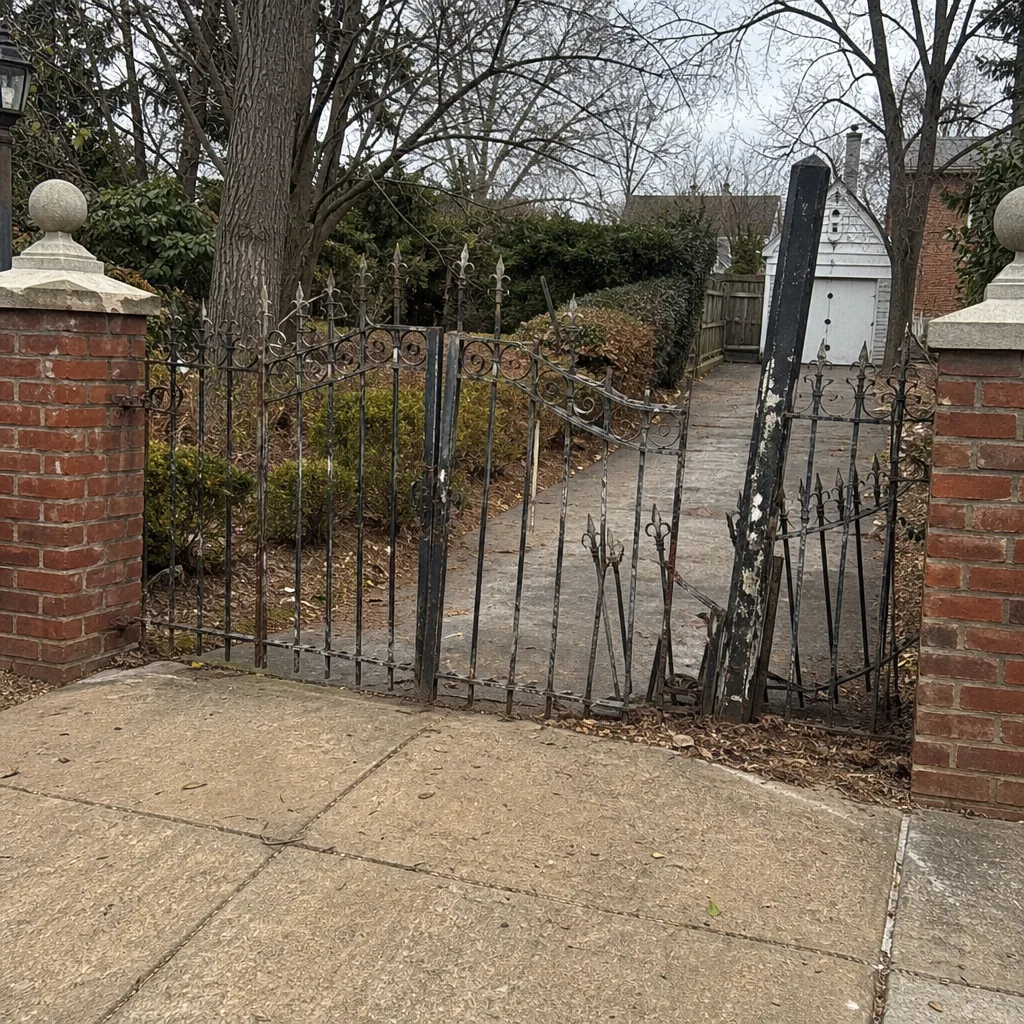 Before
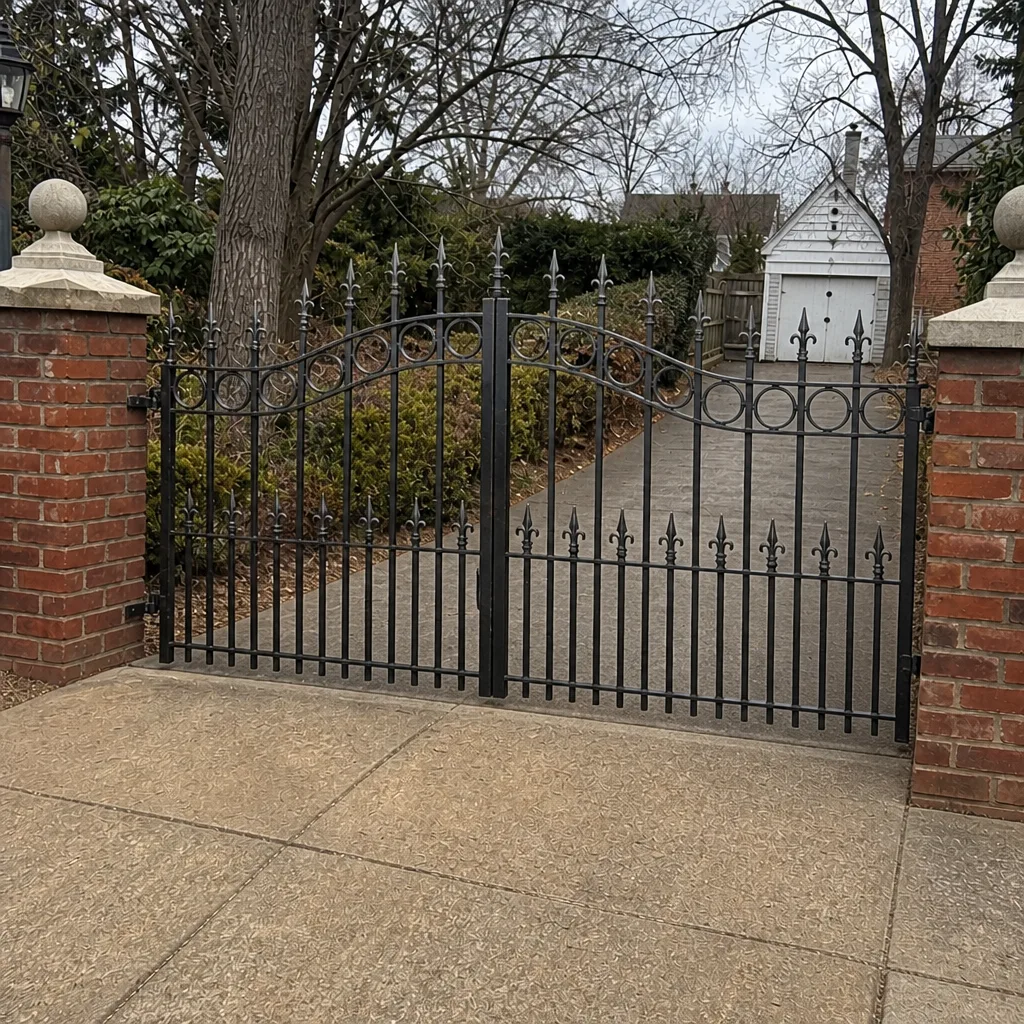 After
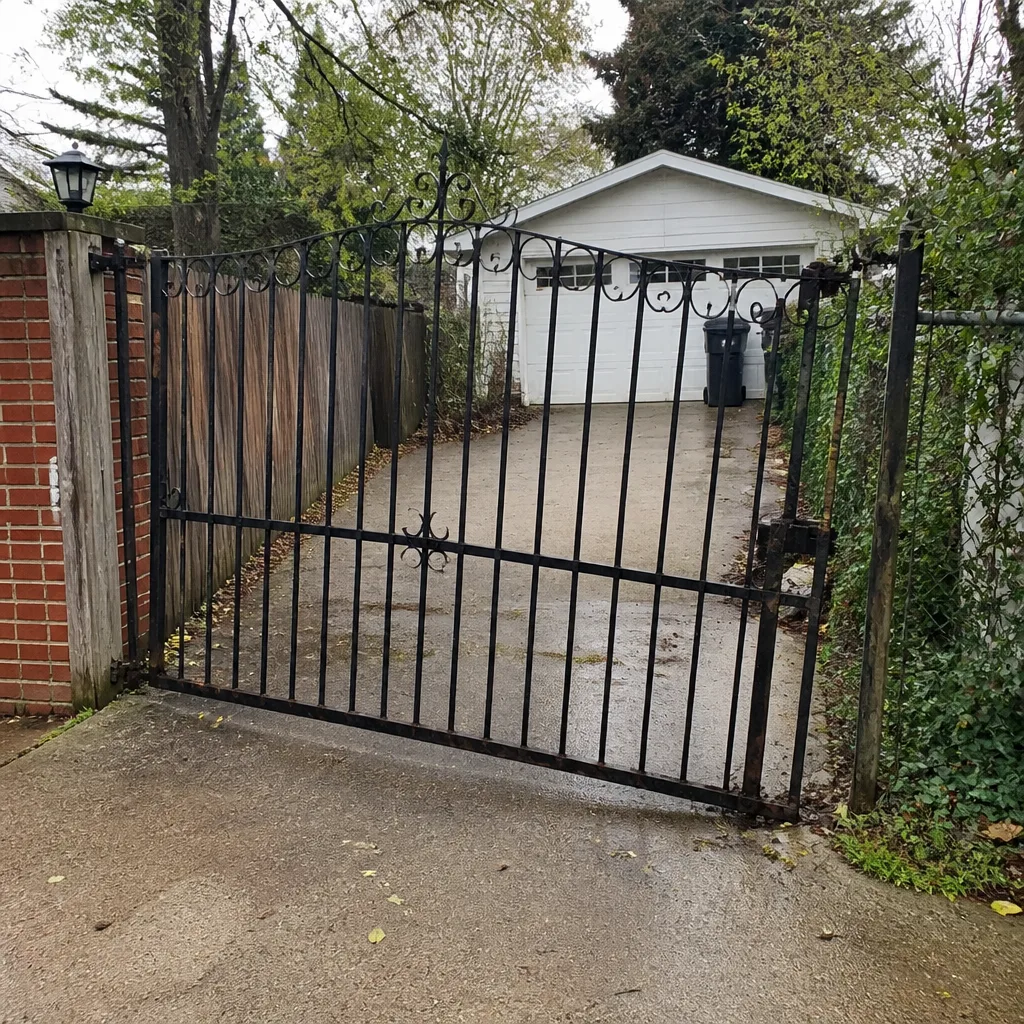 Before
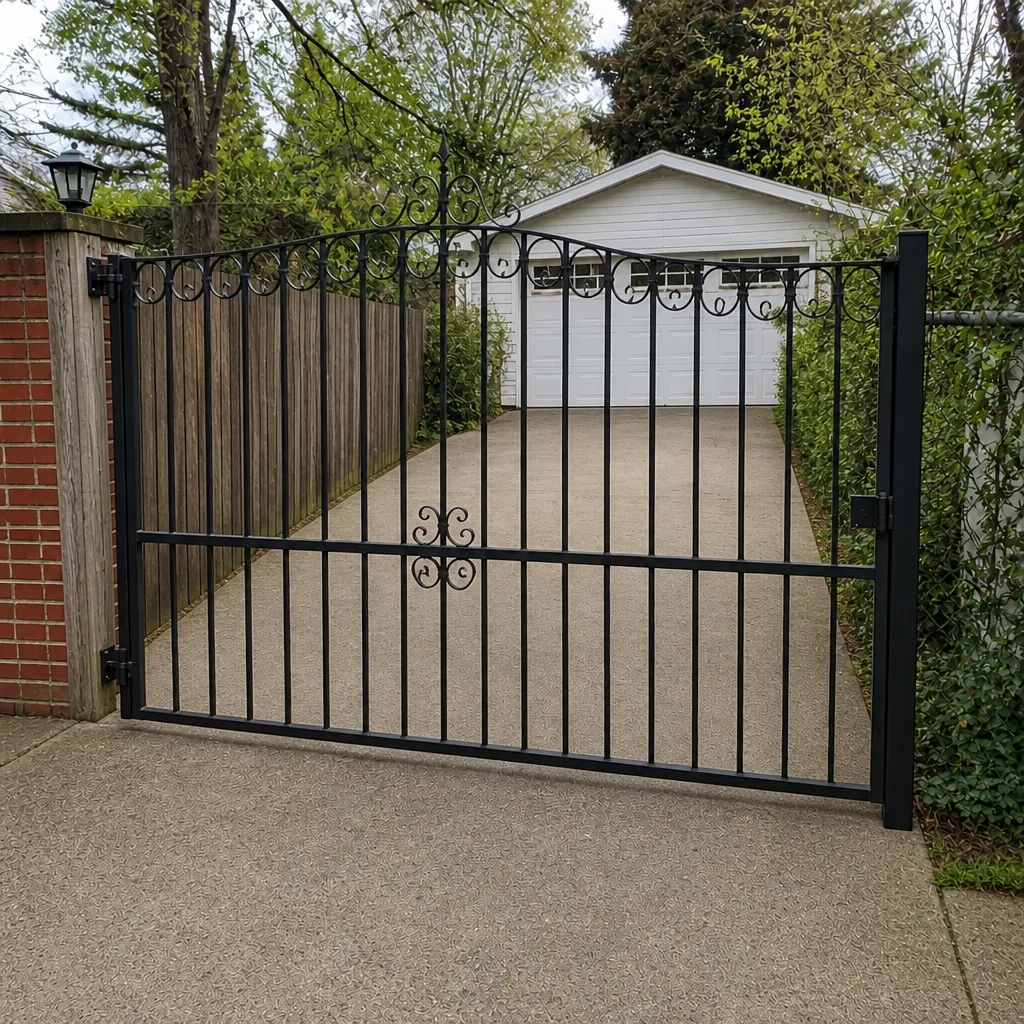 After
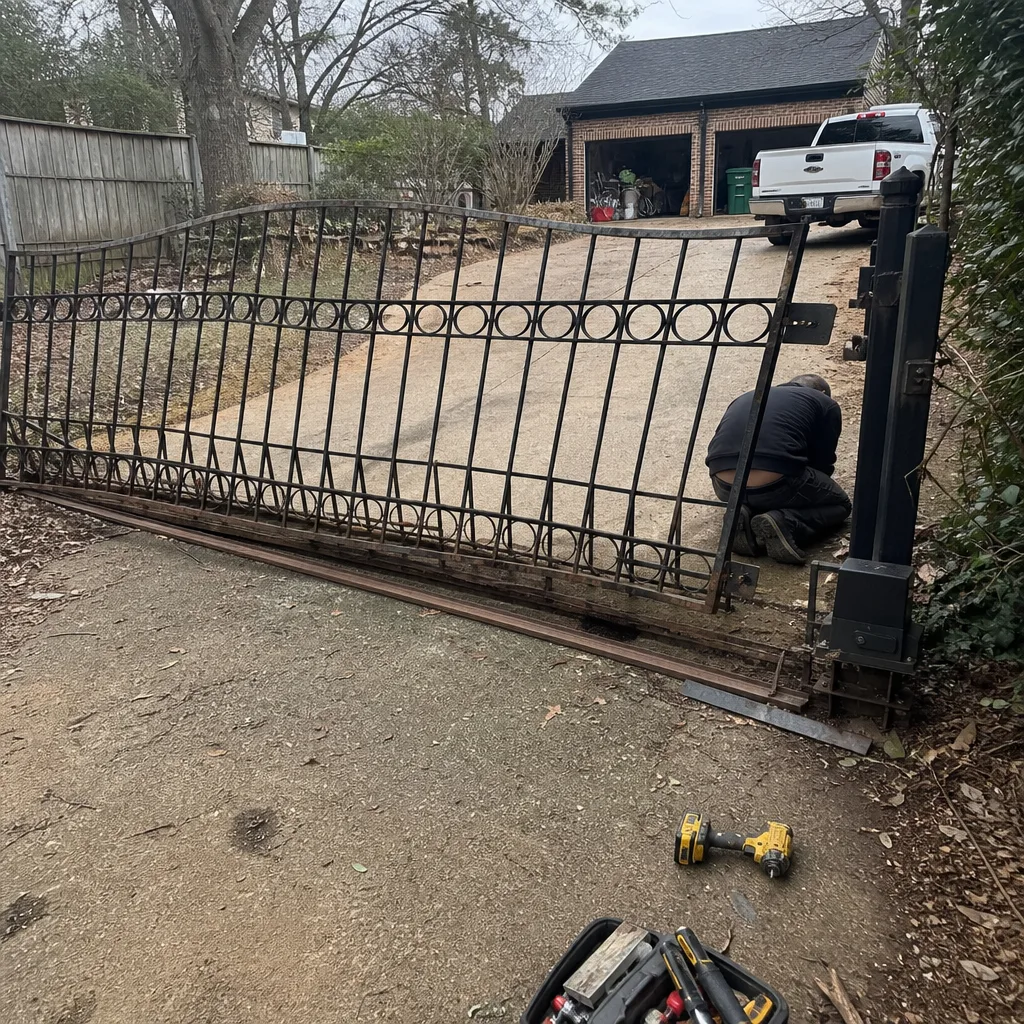 Before
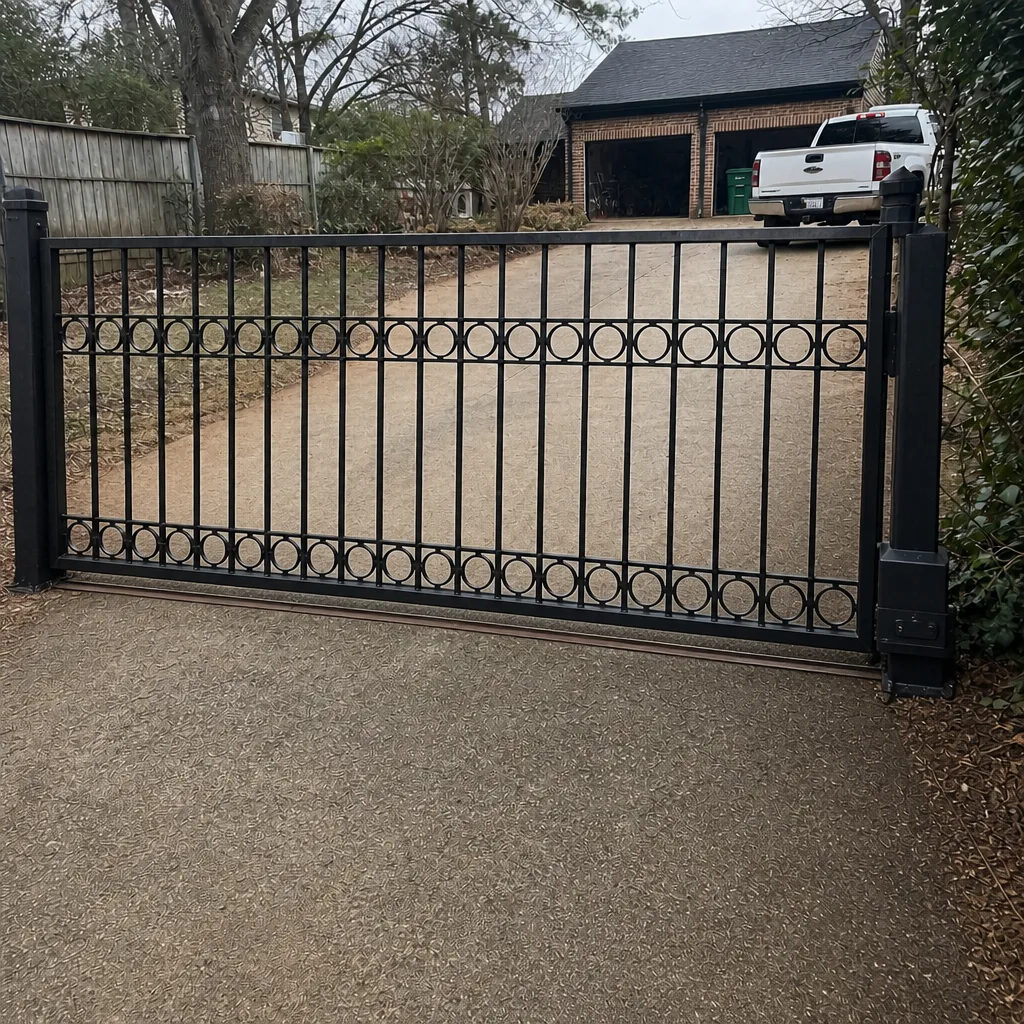 After
When to Call a Professional
Some of these checks you can run yourself. Some you shouldn’t, and some shouldn’t wait for the weekend. Call a professional if your gate fails the safety reverse test, if it makes a grinding or metal-on-metal sound, if it comes off the track, if the operator enclosure smells like burning or shows scorch marks, if the gate stops responding entirely, or if it’s reversing on every cycle and you can’t find an obstruction. Call too if the same symptom has returned after a repair. We answer 24/7. Fast dispatch from 7am to 7pm, Sunday through Friday. A call outside dispatch hours is booked into the next opening. Alexandria Gate Repair offers free estimates in Alexandria – call (888) 356-9186.
Frequently Asked Questions
The most common are slow travel, reversing before fully closing, partial opening, grinding, and an intermittent keypad or loop response. Each points to a specific component – safety sensors, limit switches, the operator motor, or wiring – and catching them early keeps a repair from becoming a replacement. Call (888) 356-9186 for a free estimate if you’re seeing any of these.
Usually not. On an automated gate, reversing mid-cycle is a UL 325 safety response triggered by a sensor, an obstruction in the safety path, or a limit switch out of adjustment. It’s the system doing exactly what it was designed to do. Call (888) 356-9186 for an exact diagnosis – estimates are free.
Heat stresses the electronics and cold stresses the mechanical parts. In June and July, control boards and motors run hotter inside a sealed enclosure, so operator cutouts and thermal faults show up. In December and January, cold thickens lubricants and contracts metal, so a binding track or hinge shows up as a stall. Tell us which season it started in and the diagnosis narrows fast. Call (888) 356-9186 to book an on-site estimate.
We service nine major gate automation brands, including LiftMaster, DoorKing, Elite, Mighty Mule, FAAC, BFT, Linear, Viking, and Ghost Controls. If you know your brand, tell us on the call. If you don’t, a label on the operator housing or a photo of the remote is usually enough to identify it. Call (888) 356-9186 – estimates are free.
A full open-and-close cycle with a safety-reverse check once a week catches most failures before they become emergencies. The 60-second routine in this guide covers it. If the safety reverse fails, stop using the gate until it’s inspected – that’s the one symptom that’s a genuine hazard, not an inconvenience. Call (888) 356-9186 for a same-day inspection.
Replace when the operator motor has failed, the gate frame has structural damage, or repeated repairs stack up on the same component. Otherwise repair is usually the right call, especially on a supported brand. A diagnostic tells you which is the better investment. Call (888) 356-9186 for a free estimate.
The Bottom Line
A gate that works slowly, clicks, reverses, or ignores its keypad is sending a specific message about which component is failing. Slow travel is load. Reversal is safety response. Grinding is mechanical wear. A keypad that fails on humid days is a wiring problem. The month it started failing narrows the diagnosis before anyone opens the panel – heat points at electronics, cold points at mechanics. The 60-second weekly test catches most of these weeks before they fail. If your gate fails the safety reverse or comes off its track, stop using it and call a specialist. In Alexandria, we service LiftMaster, DoorKing, Elite, Mighty Mule, and the rest of the major brands, and we fix the gate from the motor to the hinge. Call (888) 356-9186. We answer 24/7. Fast dispatch from 7am to 7pm, Sunday through Friday.
Written by the team at Alexandria Gate Repair.