
Last updated November 15, 2026
 Wrought iron
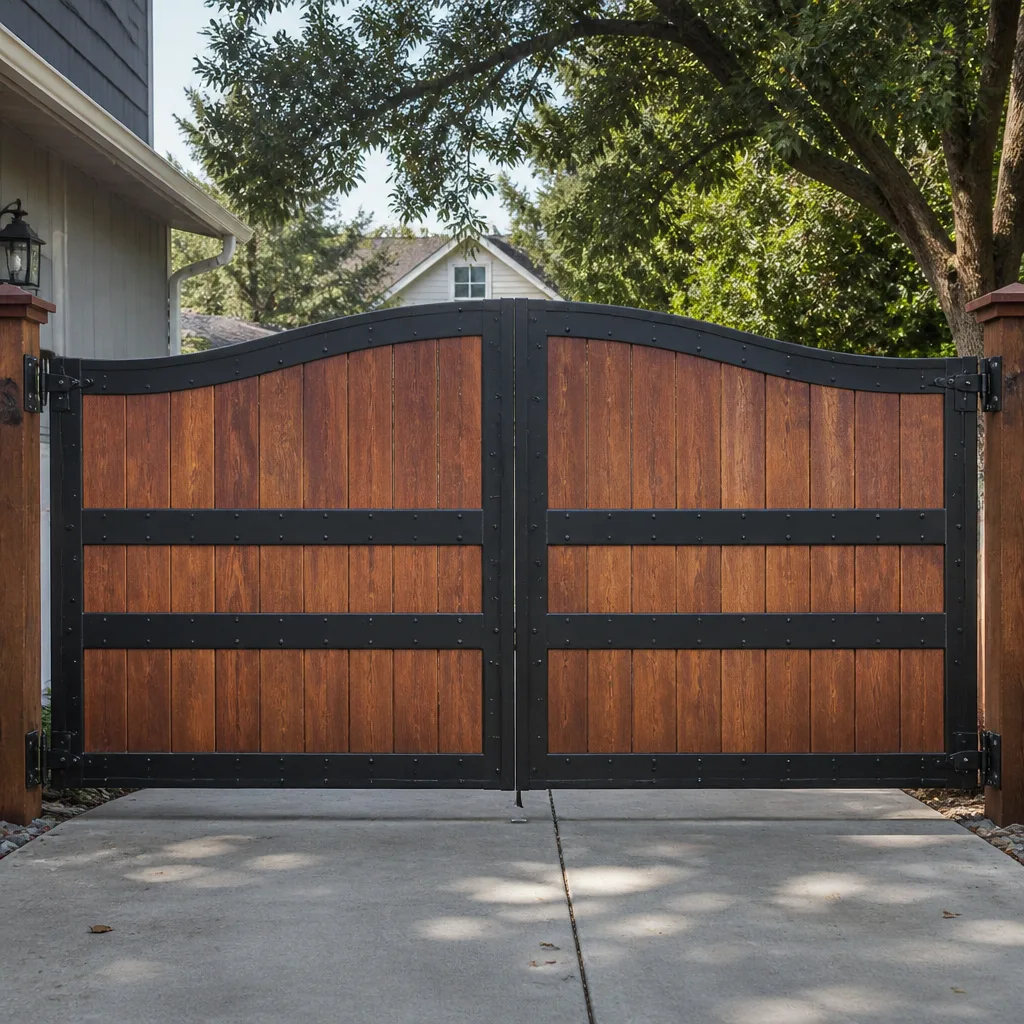 Wood & steel frame
 Farm & ranch
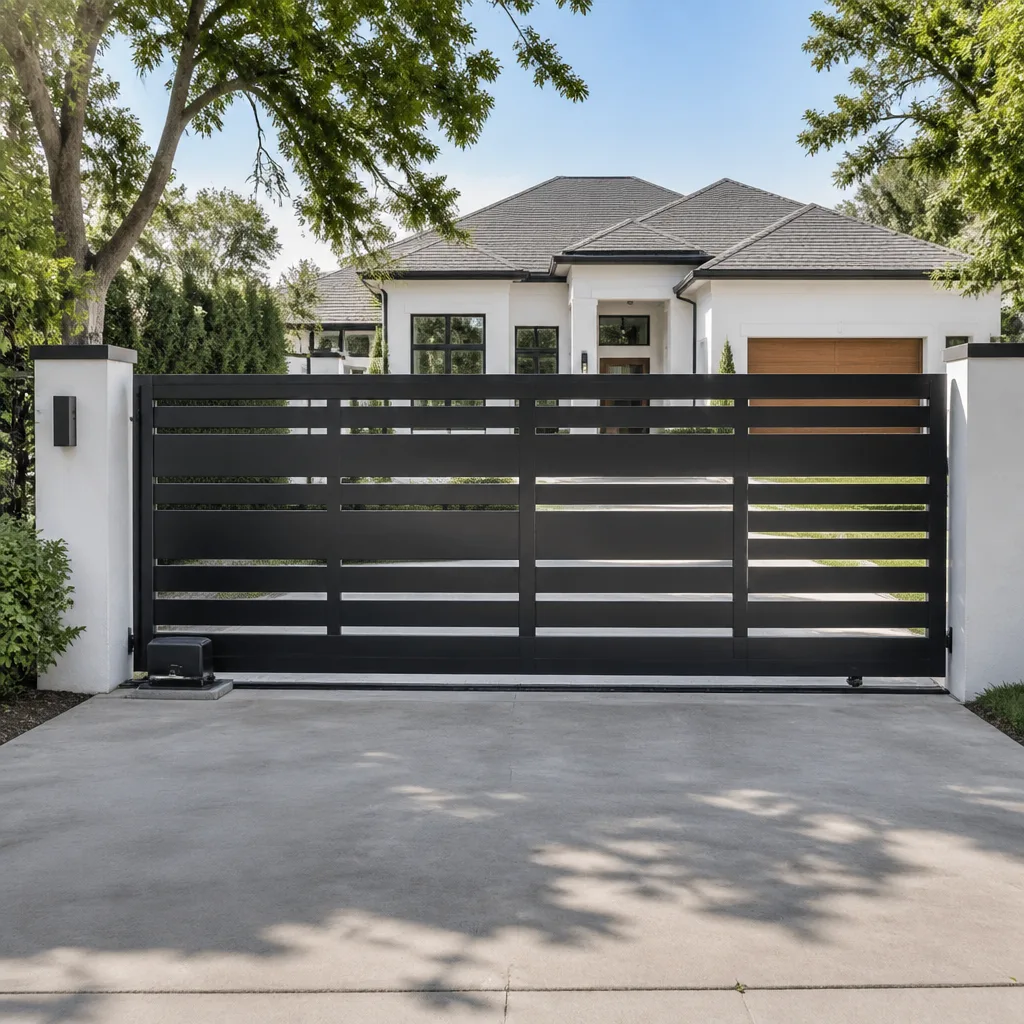 Sliding driveway gates
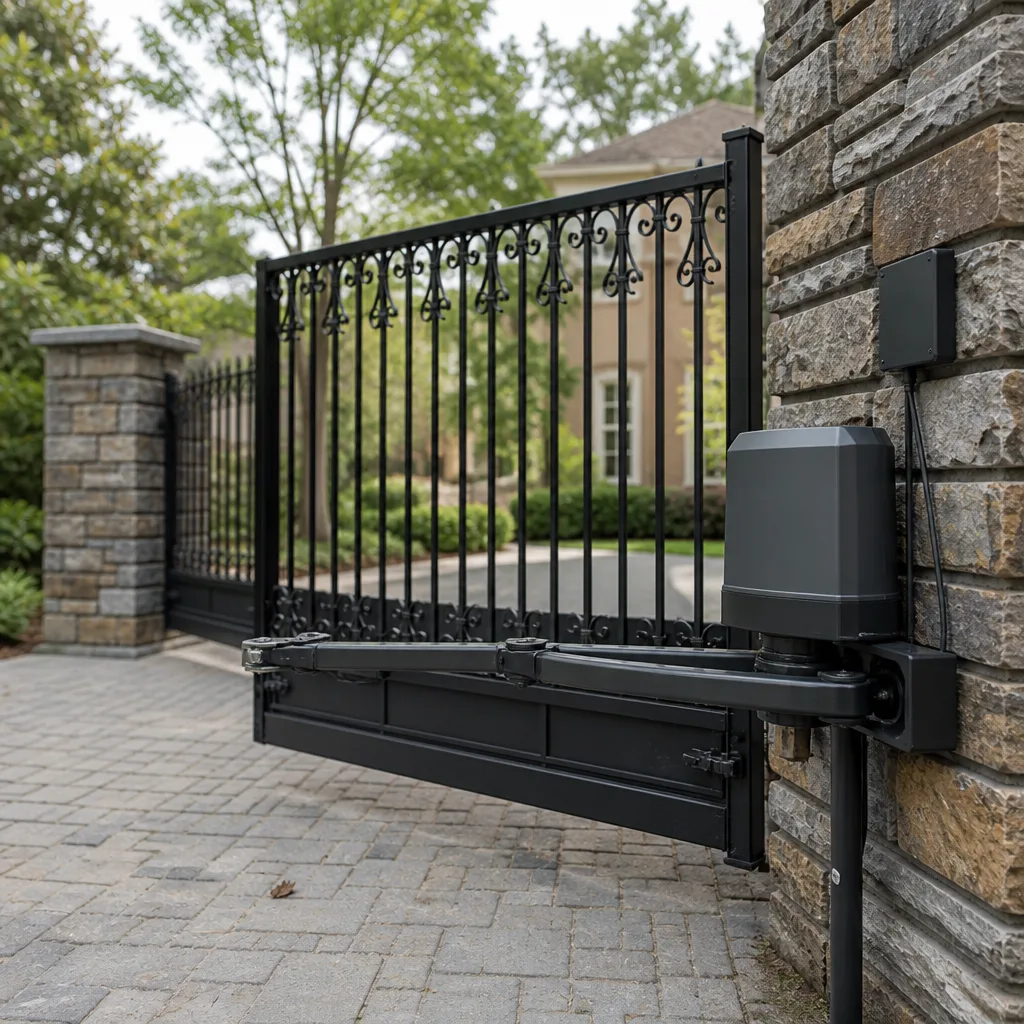 LiftMaster operators
Free on-site gate assessment - hinges, posts, and your LiftMaster or Nice gate operator checked before anything is quoted
The assessment is free and the quote is the invoice.
Get your free estimateGate Repair Maintenance Checklist for Alexandria Homeowners
The bolt that fails in February was already corroding in October. That’s the part most gate maintenance advice gets wrong: it treats the year as four generic seasons, when Alexandria’s year has a specific shape. Humid summers push moisture into every hinge pin. Fall rains soak the wood and fouling the chain. Then the first hard freeze arrives and the water inside a hairline crack expands, and a bracket that looked fine in September splits by December. Road salt from plowed driveways and nearby streets finishes the job on the metal. This guide walks you through a maintenance calendar built around that actual sequence, so you inspect at the right moment instead of the wrong one.
Quick Answer
A gate maintenance checklist for Alexandria should be timed to the local climate, not the calendar alone: inspect hinges, rollers, and the chain in early fall before the first freeze, check post corrosion and salt damage after winter, and test all access-control electronics (loop detector, intercom backup, keypad contacts) every quarter. Most gate failures in Alexandria trace back to moisture and road salt attacking hardware months before the gate actually stops working.
Styles & brands we work with
- Wrought iron
- Wood & steel frame
- Farm & ranch
- Sliding driveway gates
- LiftMaster operators
Table of Contents
- Why Alexandria’s Climate Sets the Maintenance Calendar
- The Month-by-Month Gate Maintenance Calendar for Alexandria
- Inspecting and Lubricating Hinge Pins, Roller Bearings, and Chain Drives
- Road Salt on Alexandria Driveways: The Corrosion Pattern to Watch For
- Access Control Checks Most Checklists Skip
- Documenting Gate Condition for Insurance and Warranty Claims
- Operator Power and Safety Edges: What to Check and What to Leave Alone
- Getting an Automated Gate Ready for an Alexandria Winter
Why Alexandria’s Climate Sets the Maintenance Calendar
Alexandria sits in a climate band where summers run hot and humid and winters deliver repeated freeze-thaw cycles rather than one long deep freeze. That combination matters more than most homeowners realize. Humidity in July and August keeps gate hardware damp for weeks at a stretch, which is prime conditions for rust to start on any bare or scratched metal. Then winter brings the freeze-thaw pattern: daytime temperatures climb above freezing, snow and ice melt and seep into joints and cracks, and overnight temperatures drop and that water expands. Expansion is the destructive part. A hinge pin that’s already lost its grease, or a post base with a hairline crack, gets worked apart cycle after cycle.
The practical consequence is that Alexandria’s gate damage happens in sequence. Moisture and heat start the process in summer. Fall rain accelerates it. Freeze-thaw finishes it in winter. By the time a homeowner notices the gate sagging or the latch misaligning, the corrosion has been developing for months. That’s why a climate-calibrated inspection is worth more than a generic “check your gate twice a year” reminder. You’re looking for the early stage, not the failure.
We work on the brand you already have, and the sequence above applies whether you own a Mighty Mule DIY-installed swing gate or a LiftMaster operator on a custom driveway. The brand doesn’t change the climate; the climate changes what the hardware goes through. If you’ve been putting off a proper evaluation, our gate repair page lays out the most common failure points we diagnose across Alexandria properties.
What makes Alexandria different from a generic four-season checklist
- Humidity window: Summer damp puts the most stress on hinge pins and bare metal.
- Freeze-thaw: Repeated thaw and refreeze works cracks open and shifts post footings.
- Road salt migration: Salt tracked or splashed onto driveway gates starts rust at the base first.
- Leaf and debris load: Fall accumulation in swing-gate tracks and slide-gate rails jams mechanisms.
- Fall inspection window: The narrow stretch before the first freeze is when you can still catch and correct moisture problems.
The Month-by-Month Gate Maintenance Calendar for Alexandria
Here’s how we’d structure a maintenance year for an Alexandria gate, working with the local weather rather than against it. This isn’t a rigid schedule; it’s a guide to what to inspect and when. Adjust for your gate’s age, whether it’s manual or automated, and how exposed it is to weather and road salt.
- March – early spring: After the last freeze-thaw cycles, walk the full gate. Look for post movement, cracked or rust-blooming hardware, and anything that shifted over winter. Reset the schedule by noting what changed.
- April – May: Clean and re-grease hinge pins and roller bearings. Clear winter debris and salt residue from tracks and rails. Check the operator’s manual for the manufacturer’s approved lubricant before you apply anything.
- June – August: The humidity stretch. Recheck bare metal for early rust, keep the chain drive lightly lubricated per spec, and test access-control electronics while the weather is reliable.
- September – the key inspection window: Before the first freeze, inspect every joint, pin, and base for moisture. This is the moment to catch the corrosion that would split hardware in February. Clean and lubricate with the products your operator’s manual allows.
- October – November: Clear gutters, downspouts, and drainage near post footings so water doesn’t pool at the base before winter. Prep the operator for cold-weather duty.
- December – February: Watch for ice in tracks and on rails. Keep salt off the gate metal where you can, and recheck the posts once the ground has frozen and settled.
One scheduling note on our side: repair and installation work in Alexandria is measured and scheduled, not rushed. When you want a professional inspection, we provide a free estimate and a written price before any work begins, so you know what a job involves before committing. If you’re weighing a repair against replacement, our electric gate repair page covers what a failed operator actually requires. For anyone in the neighborhood curious about broader local context, our Alexandria page is a good starting point.
Inspecting and Lubricating Hinge Pins, Roller Bearings, and Chain Drives
Lubrication is where well-intentioned maintenance goes wrong most often. The right product on the wrong part, or a lubricant the manufacturer didn’t approve, can void a warranty or attract grit that accelerates wear. So the first rule is simple: read the operator’s manual and use what it specifies. Here’s how the three main wear points usually break down.
Hinge pins
Hinge pins on swing gates take the load of every open and close. When they dry out, they wear unevenly, and the gate starts to sag or bind. Check for play by moving the gate by hand with the operator disengaged (per the manual’s instructions) and listening for squeaks or catching. If the pin is dry, clean it and apply the approved lubricant. If it’s rusted solid, it may need replacing rather than re-greasing, which is a job that’s easier done correctly than fought with afterward.
Roller bearings
Slide gates ride on roller bearings, and those bearings collect grit fast in an Alexandria environment. A bearing packed with abrasive dirt grinds itself down. Wipe the rollers clean before adding any lubricant, and inspect for flat spots, wobble, or rough rolling. A worn bearing will make the gate drag and can strain the operator motor.
Chain drives
Chain drives on automated gates need the manufacturer’s specified lubricant at the specified interval. Not more, not less. Too much lube collects grime; too little causes metal-on-metal wear. Check the chain tension and the wear on the sprockets while you’re at it. A chain that’s visibly stretched or riding high on a sprocket tooth is telling you it’s near the end of its service life.
Road Salt on Alexandria Driveways: The Corrosion Pattern to Watch For
Road salt is the most underrated threat to an Alexandria gate, and it attacks in a predictable order. Plow trucks, driveway treatments, and salt tracked onto the pavement near your driveway all push chloride onto the lower gate metal. The corrosion signature to recognize is rust that starts at the bottom and climbs, not rust that appears evenly across the gate. That bottom-up pattern is salt-driven; scattered surface rust higher up usually points to scratches or humidity.
Watch three spots in particular:
- The post base and footing: This is where splash and pooling hit hardest. Look for rust bloom, bubbling paint, or a white chalky residue at the base of the post.
- Lower hinges and rollers: Anything at ground level sits in the splash zone and corrodes before the upper hardware.
- Track and rail surfaces: Saltborne grit mixed with moisture forms a paste that grinds at slide-gate rollers.
Early-stage rust shows up as a roughness or discoloration under the paint before the metal visibly flakes. If you catch it at that stage, cleaning and a corrosion-inhibiting treatment can slow it; if you wait until the paint is lifting, the metal under it is already compromised. Rinsing the lower gate metal after heavy salt exposure helps, but keep water out of the operator housing and electrical enclosures. When rust has reached the structural parts of a gate, that’s a threshold where a specialist should assess whether repair or replacement makes sense.
Access Control Checks Most Checklists Skip
Most gate maintenance guides stop at the metal and never touch the electronics. That’s a gap, because access-control systems fail quietly and cause more access headaches than a squeaky hinge ever will. Here are the quarterly checks we’d add to any Alexandria gate routine.
- Loop detector sensitivity: The loop under the driveway tells the operator a vehicle is present. Test it by driving slowly over the loop and confirming the gate responds when it should. A drifting sensitivity setting causes gates that close on cars or fail to open. Note whether the response changes over the season; if it does, the setting needs adjusting.
- Intercom battery backup: If your intercom or access system has battery backup, check its condition quarterly. Backup batteries fail silently, and you only find out when the power drops. Replace on the manufacturer’s schedule, not on failure.
- Keypad contact cleaning: Outdoor keypads collect grime and oxidize at the contacts. Clean per the manufacturer’s guidance and confirm each key registers. A keypad that only works some of the time is usually a contact issue, not a code issue.
- Safety edge and photo-eye test: Put a hand or an object in the path of the safety edge or interruption sensor and confirm the gate reverses or stops. This is a safety-critical check; do it every quarter without exception.
If any of these fail and you’re not sure whether it’s a sensor, a setting, or wiring, that’s the point where a specialist saves you time. We service access-control systems from brands including DoorKing, Linear, and FAAC, and diagnosis comes before any recommendation to replace equipment. Whether your gate won’t open, won’t close, or was never installed right, we fix it. Call (888) 356-9186 for a free estimate.
Documenting Gate Condition for Insurance and Warranty Claims
Almost no maintenance checklist mentions this step, and it’s the one that pays off when something goes wrong. A dated photo record of your gate’s condition is your best evidence in an insurance or warranty claim, and it’s almost free to keep.
Here’s the routine we recommend for Alexandria homeowners:
- Photograph on a fixed schedule. Take the same shots each quarter: full gate in the open and closed positions, each hinge and roller, the post bases, the operator housing, and the access-control keypad and intercom.
- Capture the base metal up close. Salt-driven corrosion starts at the bottom, so a close-up of the post base and lower hardware shows the progression over time.
- Include a reference for scale and date. A photo with a coin or tape measure beside a crack shows how fast it’s growing; the file’s metadata dates it.
- Store copies off your phone. Back the images up so a lost or broken device doesn’t erase your record.
Why it matters: if a gate fails and you file a claim, an insurer or manufacturer wants to know whether the problem was sudden damage or gradual wear. Dated photos showing a stable condition before an event, or documenting a slow-developing issue you reported early, give you a far stronger position. Keep the operator’s manual and any service records alongside the photos. Our Alexandria Gate Repair page explains the full range of what we handle, and we can include condition notes with any work we do.
Operator Power and Safety Edges: What to Check and What to Leave Alone
Not every maintenance task is a homeowner task. Automated gate operators connect to line voltage, and the wiring, control boards, and power run inside that housing are genuinely dangerous. We never walk a homeowner through opening the operator enclosure or testing live electrical components. That work is for a trained professional, both for your safety and because one wrong move can damage equipment your warranty covers.
What you can and should do safely: test the safety edge and photo-eye from the outside, watch for the gate reversing properly, listen for unusual motor sounds, and note anything that seems off. If the operator humps, stalls, or the gate reverses without obstruction, stop using it and call a specialist. A malfunctioning safety device is a crushing hazard, and heavy gate panels can cause serious injury. The same care applies to any gate that’s come off its track or is hanging loose: don’t try to force it back into position by hand.
For automated systems, the power run, control wiring, and safety device installation should be handled by someone trained on the brand. We’re experienced with LiftMaster, FAAC, BFT, Elite, and other major systems, and we diagnose the operator and the electrical side together with the mechanical gate, so a problem doesn’t get misdiagnosed as one or the other.
Getting an Automated Gate Ready for an Alexandria Winter
The freeze-thaw cycle is what makes winter prep in Alexandria a real task rather than a formality. Water is the enemy: it gets into joints, cracks, and tracks, then expands overnight. Here’s what a winter-prep pass should cover.
- Clear drainage at post bases. Make sure water runs away from the footings rather than pooling where it will freeze.
- Keep tracks and rails free of debris. Ice forms around grit and leaf litter in tracks, jamming slide gates.
- Lubricate per the manual before the first freeze. The fall window is the time to get moisture out of joints and grease where it belongs, before temperatures make it impractical.
- Check the operator’s cold-weather guidance. Some systems have seasonal settings; follow the manufacturer’s specs.
- Inspect hardware for cracks and loose fasteners. Freeze-thaw exploits every weakness, so fix them before winter.
For anyone managing an HOA or multi-unit entry point in Alexandria, the same checks apply across every access point, plus the access-control items above. We handle both residential driveways and commercial entry systems, from emergency repair of a dead opener to full new gate installation, so one call covers the whole scope.
Common Mistakes to Avoid
- Following a generic four-season checklist. Alexandria’s freeze-thaw sequence isn’t the same as a deep-freeze region’s or a mild-winter one’s. Timing inspections to the local weather catches failures a generic schedule misses.
- Lubricating with the wrong product. An unapproved lubricant can attract grit or void a manufacturer warranty. Check the operator’s manual before applying anything.
- Ignoring the base of the post. Road salt corrosion starts at the bottom and climbs, so a quick glance at the top of the gate tells you almost nothing.
- Skipping the access-control electronics. Loop detectors, intercom backup batteries, and keypad contacts fail quietly, and most checklists never mention them.
- Opening the operator housing yourself. Line voltage and control wiring inside the enclosure are dangerous. Leave electrical work to a trained technician.
- No photo record. Without dated photos, an insurance or warranty claim becomes a guess about when the damage started.
- Forcing a jammed or off-track gate. A heavy panel coming off its track can cause serious injury; stop and have it inspected.
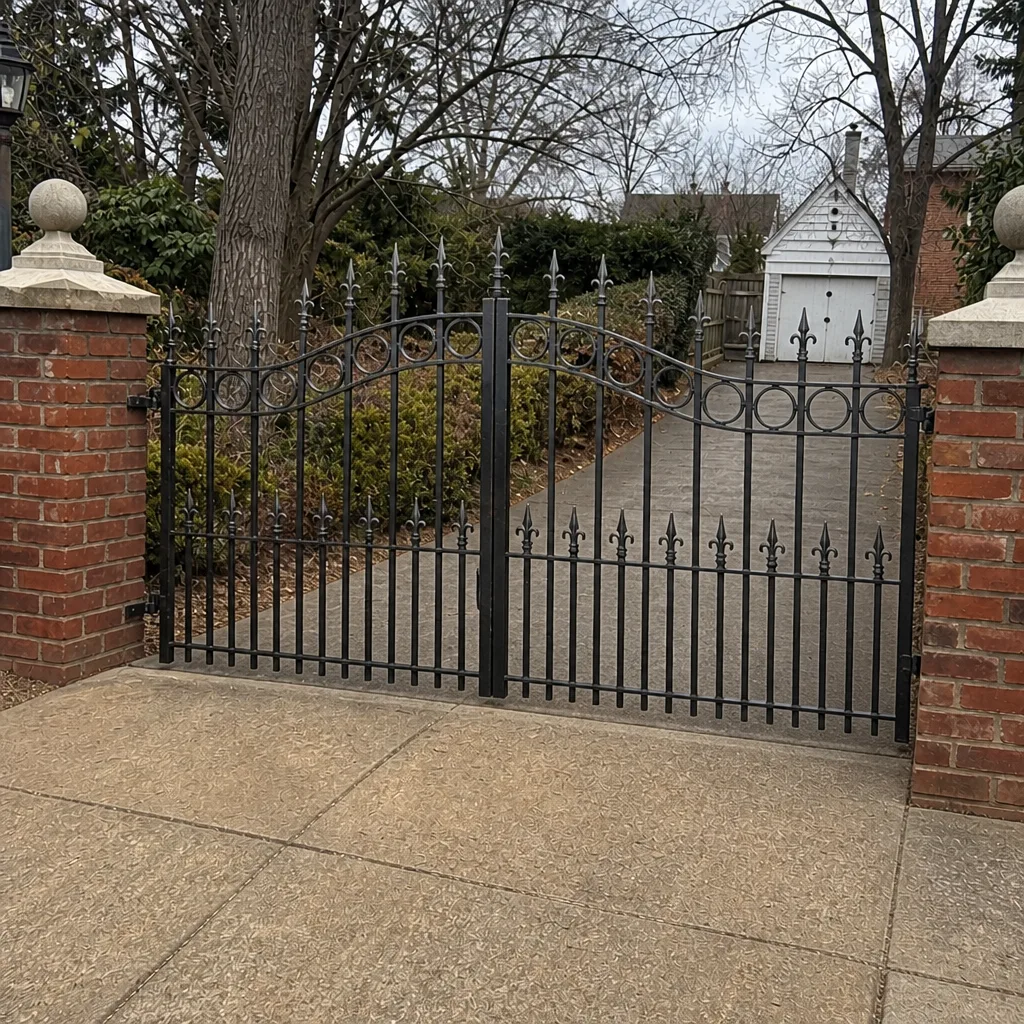
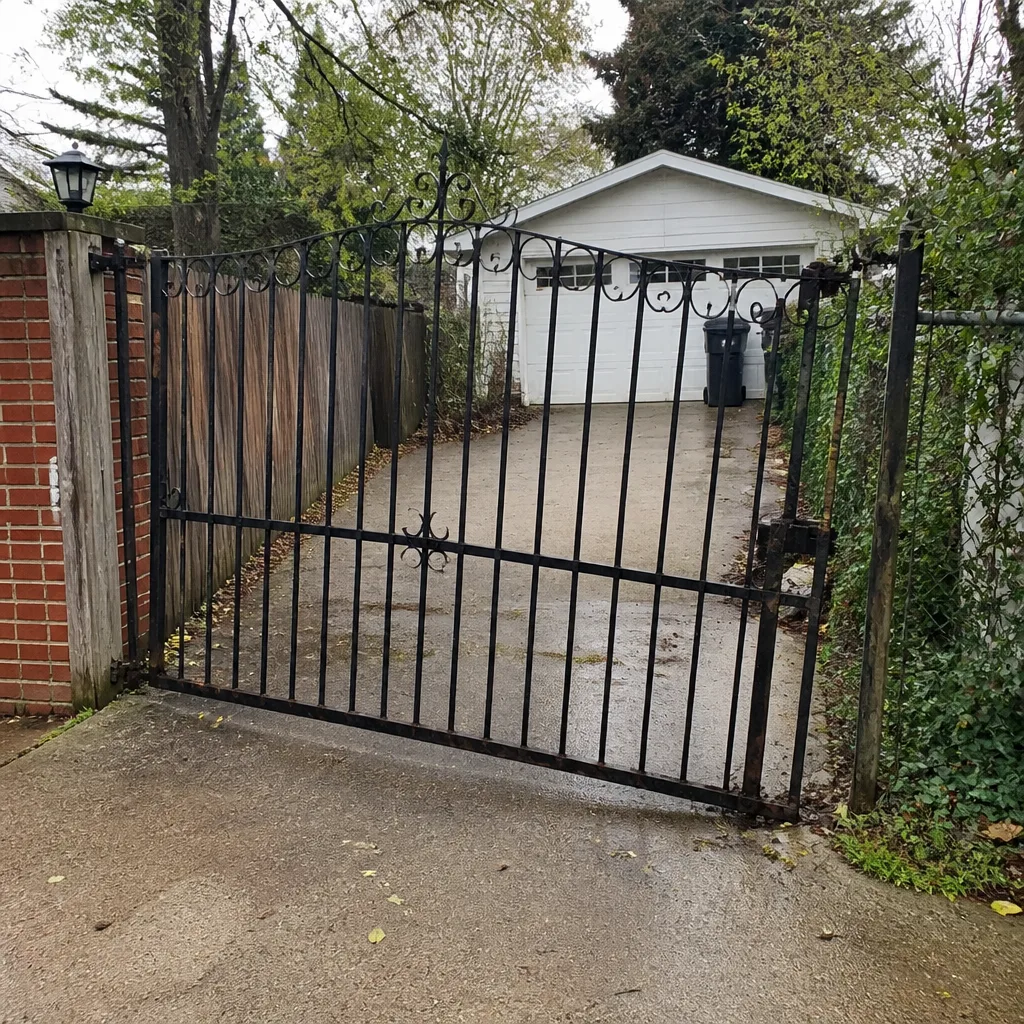
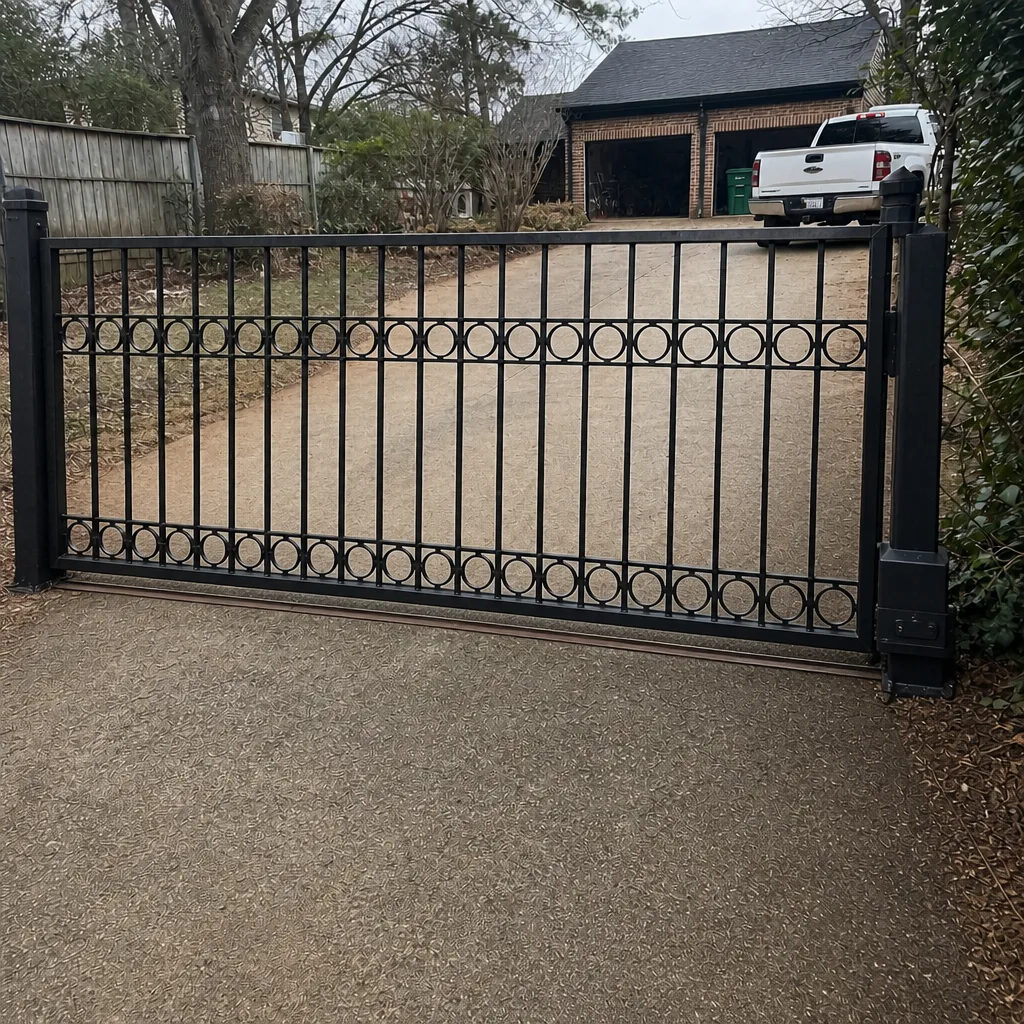
See the difference
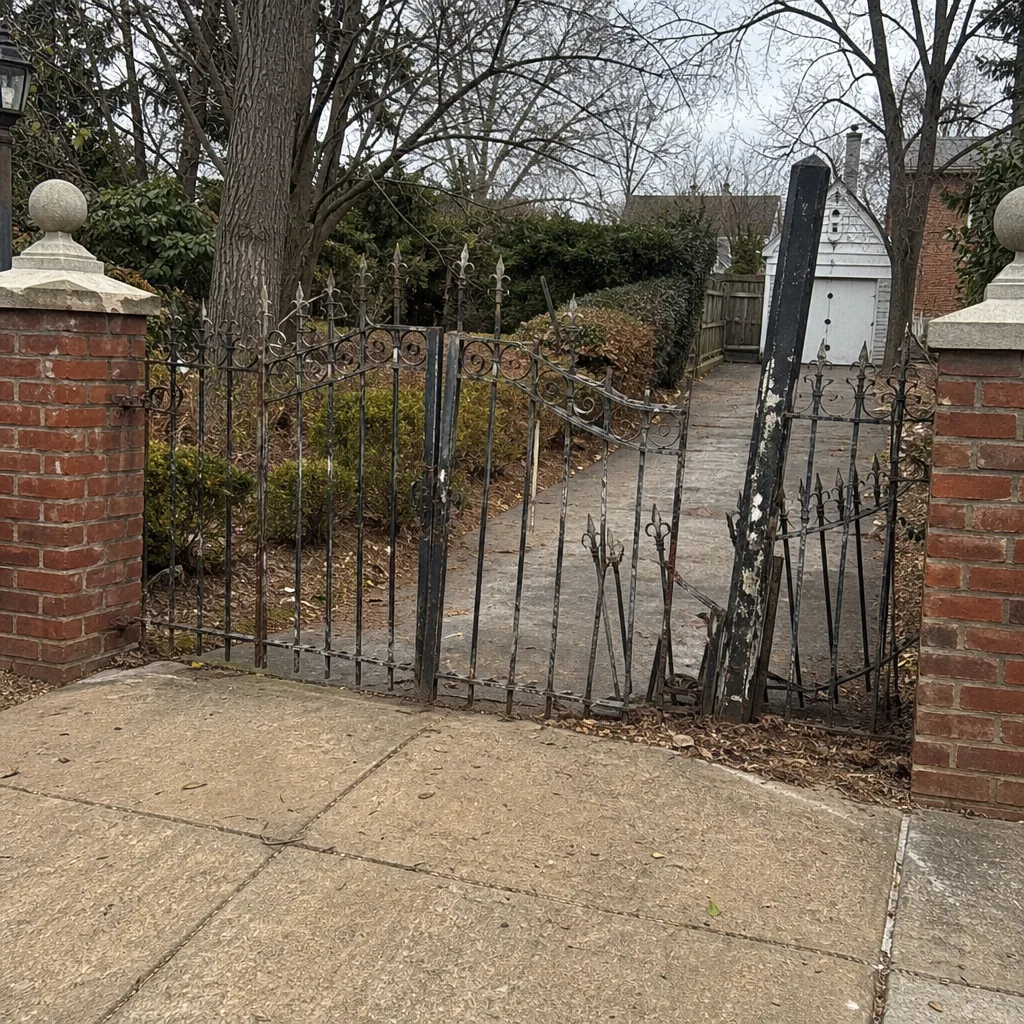 Before
 After
 Before
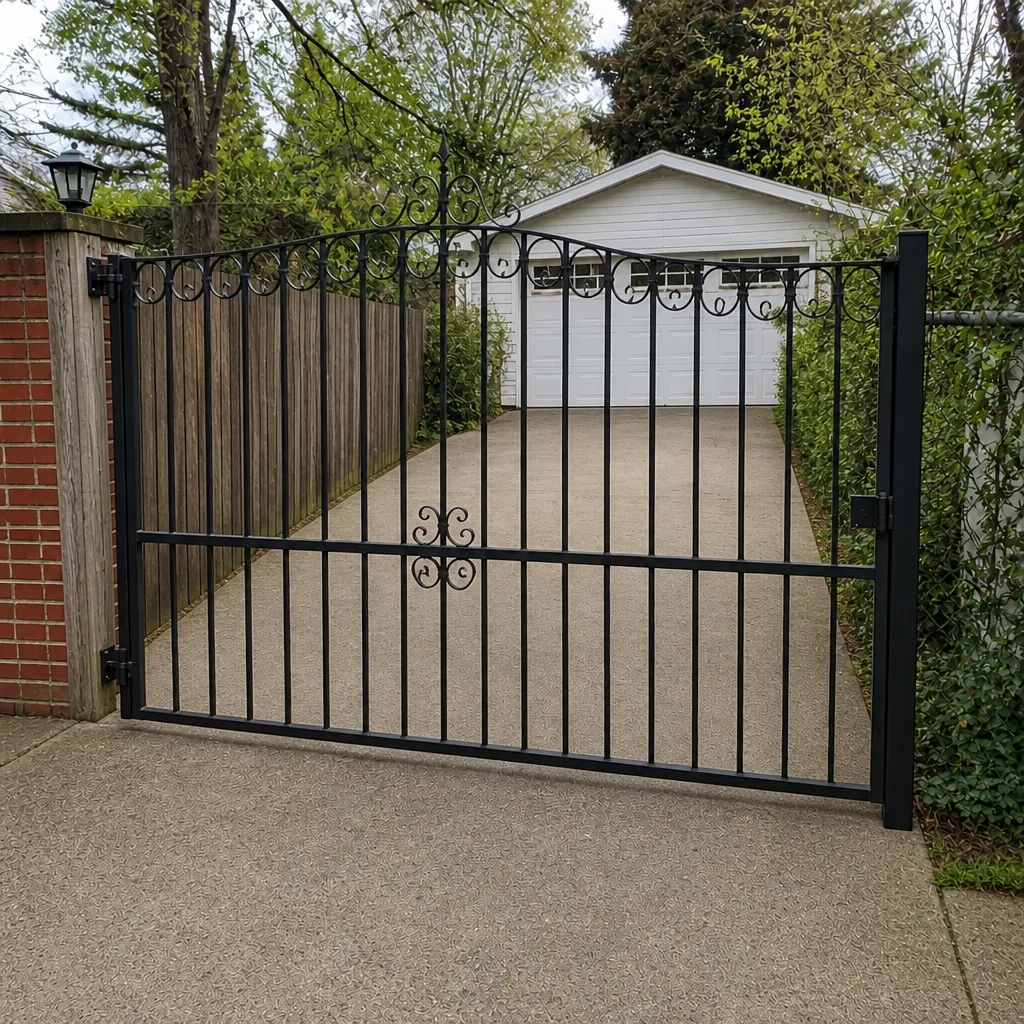 After
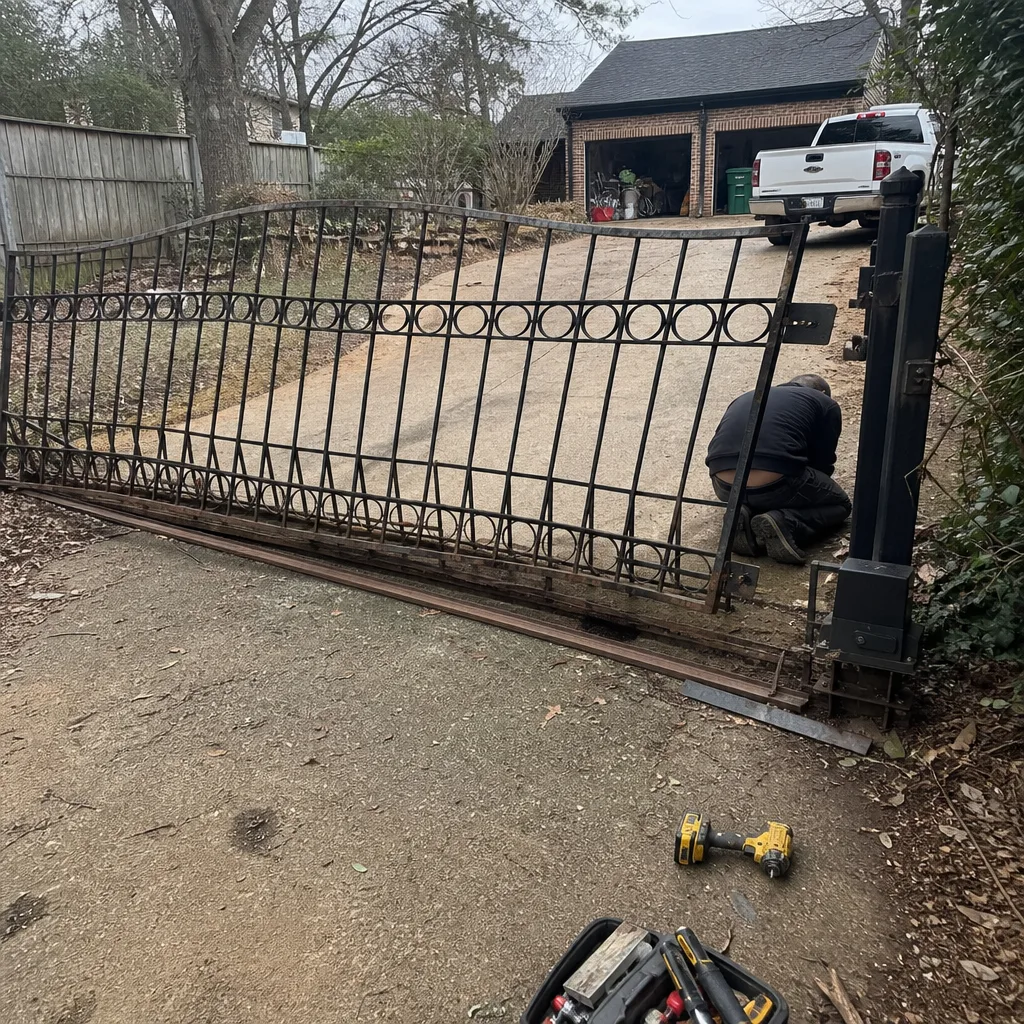 Before
 After
When to Call a Professional
Some problems are routine maintenance; others need a trained eye before they get worse. Call a specialist if your gate sags or won’t latch properly, if the operator humps, stalls, or the gate reverses without obstruction, if a slide gate has jumped its track, or if you spot rust that’s reached structural metal rather than surface paint. Any safety device that doesn’t test correctly is a call-now situation. Electrical faults and control-board issues also belong with a professional, not a DIY attempt. Alexandria Gate Repair offers free estimates in Alexandria, and our technicians have up to 12 years of experience. One call covers it. Call (888) 356-9186.
Frequently Asked Questions
Inspect the full gate quarterly, with two key checkpoints: a thorough pass in early fall before the first freeze, and another after winter to assess freeze-thaw and salt damage. Automated systems and access-control electronics deserve a check each quarter. Consistent timing matters more than a long list; catching corrosion early is what saves hardware.
Corrosion and moisture damage to hinges, rollers, and post bases are the most common issues we diagnose, usually a result of the humid summers and freeze-thaw winters working on hardware over months. Road salt accelerates rust at the base of posts. Many of these problems are visible well before a gate stops working, which is why the fall inspection window matters.
Yes, for the mechanical parts, if you use the lubricant your operator’s manual specifies. Clean the part first, apply the approved product, and check for wear at the same time. Do not open the operator housing or touch line-voltage components; that work is for a trained technician.
Intermittent keypad and intercom failures usually trace to oxidized contacts, a failing backup battery, or a drift in loop detector sensitivity, not to the entry code itself. Clean the contacts per the manufacturer’s guidance and check the battery condition. If the problem continues, we service access-control systems from brands like DoorKing, Linear, and FAAC and can diagnose it.
It’s a good idea and a step almost no checklist includes. Take dated photos each quarter of the full gate, the hinges, rollers, post bases, and access electronics, and store backup copies. This record helps support an insurance or warranty claim by showing the condition before an event and the timeline of any developing issue.
Yes. Before the first freeze, clear drainage at post bases, clean tracks and rails, lubricate mechanical parts with the approved product, and fix any cracks or loose fasteners. These steps prevent freeze-thaw from working weaknesses wider over winter. For complex operator issues, a professional inspection is the safer route. Call (888) 356-9186 for a free estimate.
The Bottom Line
Gate maintenance in Alexandria comes down to timing. Inspect mechanical parts before the first freeze, check post bases and lower hardware for salt-driven rust after winter, and test access-control electronics every quarter. Use only approved lubricants, photograph your gate’s condition on a schedule, and never open the operator housing or force a jammed gate yourself. Following this checklist catches corrosion and wear months before they become a failure, and when a repair is needed, call (888) 356-9186 for a free estimate. We answer 24/7. Fast dispatch from 7am to 7pm, Sunday through Friday.
Written by the team at Alexandria Gate Repair.