
Last updated November 15, 2026
 Wrought iron
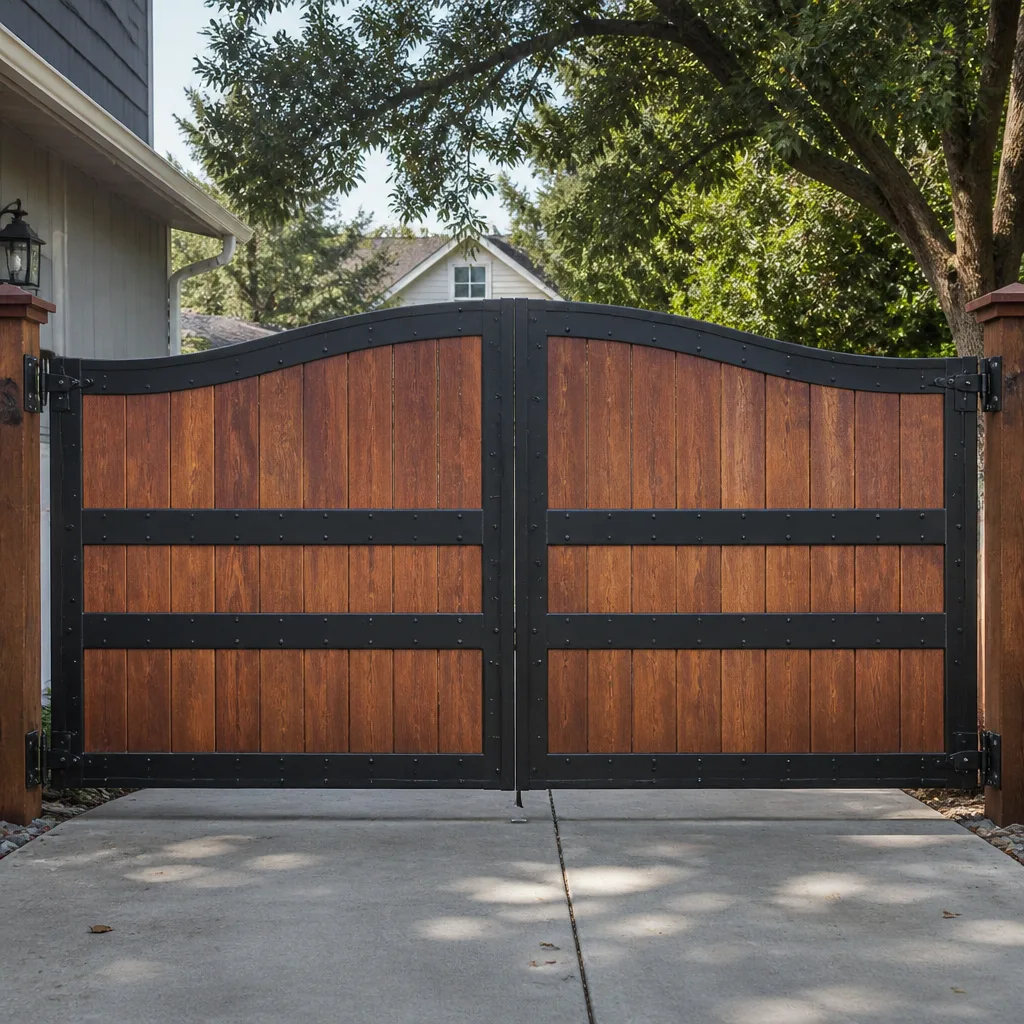 Wood & steel frame
 Farm & ranch
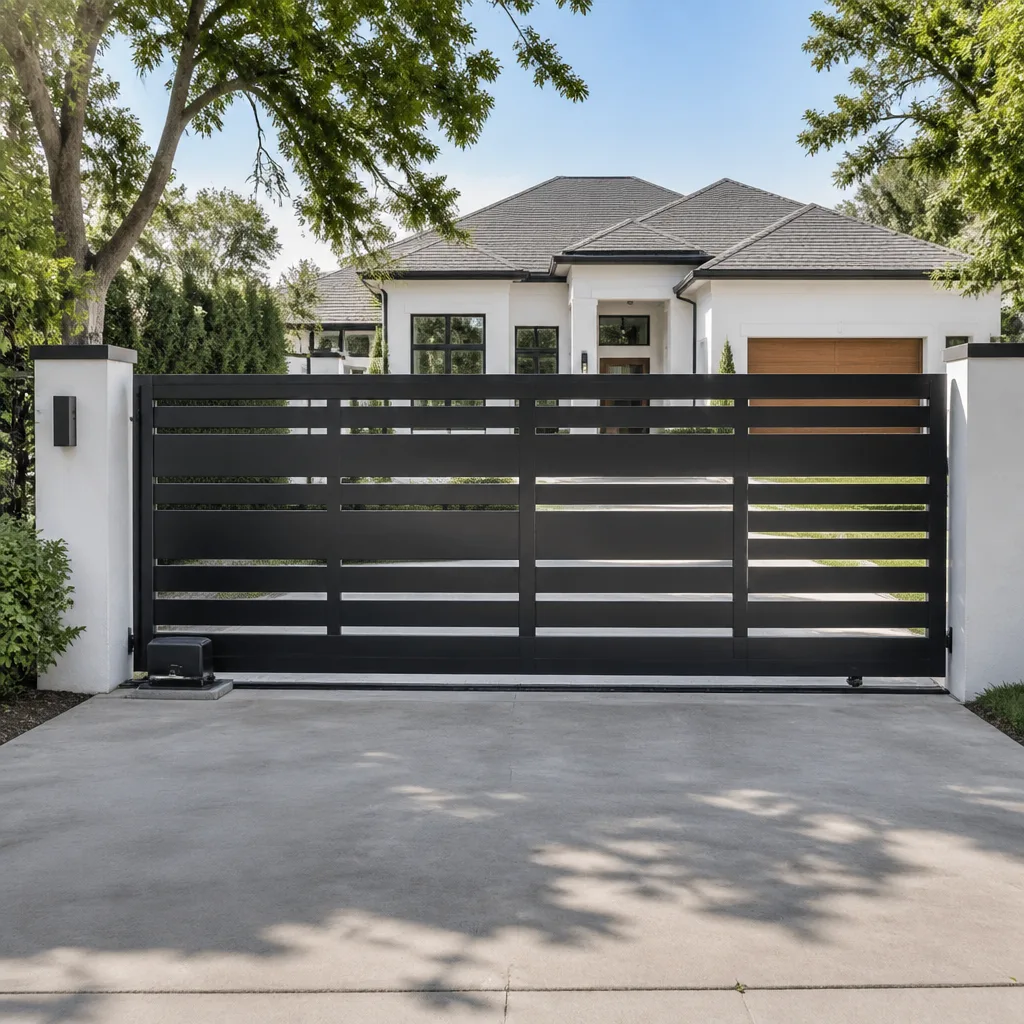 Sliding driveway gates
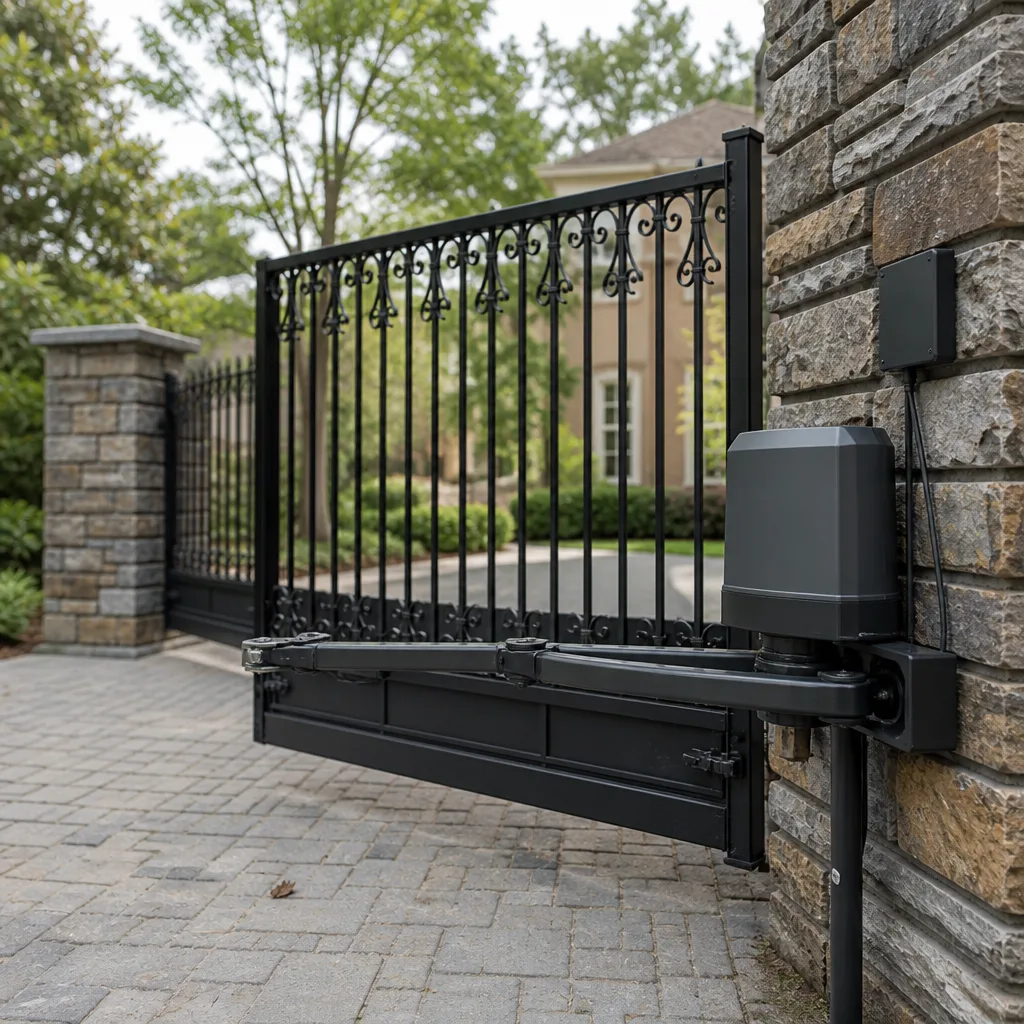 LiftMaster operators
Free on-site gate assessment - hinges, posts, and your LiftMaster or Nice gate operator checked before anything is quoted
The assessment is free and the quote is the invoice.
Get your free estimateGate Repair Troubleshooting in Alexandria: Common Problems and How to Fix Them
A gate that reverses before it closes isn’t broken. It’s communicating. The obstruction sensor, the limit switch, and the motor control board all report through the same handful of symptoms, and most homeowners read those symptoms wrong. They see “gate won’t close” and assume the motor is dying, when the actual problem is a photo-eye knocked out of alignment by a branch. That misread costs money and time. In this guide we’re going to give you a diagnostic framework, not a symptom list: the five root-cause categories every gate failure falls into, the checks you can safely run yourself, the checks you shouldn’t, and how to arrive at a service call in Alexandria with information that actually shortens the repair.
Quick Answer
Most gate failures in Alexandria come down to one of five root causes: power or electrical supply, the control board, a mechanical obstruction, sensor misalignment, or a failed loop detector. Match your gate’s symptom to the right category and you’ll know within a few minutes whether it’s a simple adjustment you can handle or a job for a trained technician. When in doubt, stop and call a specialist – gate operators carry line voltage and store energy in their capacitors even after the breaker is off.
Styles & brands we work with
- Wrought iron
- Wood & steel frame
- Farm & ranch
- Sliding driveway gates
- LiftMaster operators
Table of Contents
- The Five Root-Cause Categories of Gate Failure
- The Alexandria Gate Diagnostic Decision Tree
- Voltage and Continuity Checks You Can Safely Do – and Where the Line Is
- Why the Same Symptom Means Different Things on Swing, Slide, and Overhead Gates
- Alexandria-Specific Factors: Humidity, Freeze-Thaw, and Tree Roots
- Power and Control Board Failures
- Mechanical Obstruction, Sensor Misalignment, and Loop Detectors
- When to Call a Professional
The Five Root-Cause Categories of Gate Failure
Every gate problem you’ll encounter traces back to one of five systems. Learning to sort your symptom into the right bucket is the single most useful troubleshooting skill a gate owner can develop. Here’s how each category announces itself.
1. Power and Electrical
Symptoms: the gate is completely dead, the operator hums but doesn’t move, the control board shows no lights, or the breaker trips repeatedly. Power problems are upstream of everything else. Before you touch anything, confirm the breaker at the panel is on and that the operator’s own disconnect switch, if it has one, hasn’t been bumped. Low-voltage solar and battery systems on rural Alexandria properties behave differently from 120-volt wired operators: weak batteries produce slow, labored movement before they produce a total failure.
2. Control Board
Symptoms: the gate moves in the wrong direction, stops partway, runs for a few seconds and reverses, or responds to the remote but not the keypad. The control board is the brain. When it fails, you get logic errors rather than mechanical ones. Boards can fail from power surges, insect intrusion, or water getting into the enclosure – a real risk in Alexandria’s humid summers.
3. Mechanical Obstruction
Symptoms: grinding, scraping, the gate jerks and stalls, or the motor strains audibly before giving up. Look at the track, the rollers, the hinges, and the ground itself. A single acorn wedged in a track will stop a slide gate as surely as a dead motor will.
4. Sensor Misalignment
Symptoms: the gate reverses immediately, reverses partway, or refuses to close at all while the motor runs fine. Photo-eye safety sensors must see each other across the opening. A leaf, a spider web, or a bump that knocks one eye off axis all produce the same result.
5. Loop Detector
Symptoms: the gate won’t close, or it opens on its own with no vehicle present. Loops are the wire coils buried in the driveway that tell the operator a vehicle is there. A loop that has been cut by utility work or damaged by ground movement reads “vehicle present” permanently – so the gate holds open. We see this on commercial entry gates and larger residential driveways in Alexandria whenever the ground has shifted.
The Alexandria Gate Diagnostic Decision Tree
Work through these steps in order. Each answer points you toward the next question, and at the end you’ll know which category your problem belongs to.
- Is the operator receiving power? Check the breaker. Listen for any hum or click when you press the remote. If there’s nothing at all – no lights on the board, no sound – you’re in Category 1, and no further troubleshooting will help until power is restored.
- Does the control board show any indicator lights? Most boards have LEDs that signal status and fault codes. If the lights are on but the gate behaves illogically, you’re likely in Category 2.
- Does the gate move at all when you release the operator to manual? Disengage the manual release (never with the gate in motion) and try opening it by hand. If it moves freely, the mechanical side is fine and your problem is electronic. If it fights you or binds, you’re in Category 3.
- Does the gate reverse before or during closing? If yes and the mechanical side moves freely, you’re almost certainly in Category 4. Look for anything between the photo-eyes.
- Does the gate refuse to close only when a vehicle is nearby, or open with nothing present? If yes, suspect the loop detector.
- Does the symptom only appear at certain times of day or after rain? Intermittent faults point toward moisture intrusion, a marginal connection, or a sensor that shifts in the heat.
Write down what you find at each step. When you call for service, those answers shrink diagnosis time and often let us bring the right part on the first visit. It’s one of the reasons we ask so many questions before we schedule a visit.
Voltage and Continuity Checks You Can Safely Do – and Where the Line Is
We’re asked constantly how much checking a homeowner can do alone. The honest answer is: some, but not much, and the line is drawn at the point where a multimeter probe would enter the operator housing or where line voltage is live.
What you can check safely
- The breaker at the panel – confirm it’s on and not tripped.
- The operator’s external power switch, if it has one.
- The manual release and whether the gate moves freely by hand once disengaged.
- Visual condition of the photo-eyes: are the lenses clean, are they facing each other, is there debris between them?
- The remote battery. A surprising number of “dead gate” calls are dead remote batteries.
- The keypad battery, if your system uses one.
- Whether the gate’s physical track or hinges are clear of debris.
What you should not check yourself
- Anything inside the operator housing. Gate operators run on line voltage and store energy in capacitors even after power is cut. A shock from a capacitor can be serious.
- Continuity on the loop detector wiring, which requires disconnecting the loop at the board.
- The control board itself, including any voltage at the terminal strip.
- Any splice or junction you find buried in the ground.
Here’s the rule we give customers: if the check requires opening a housing, disconnecting a wire, or touching a probe to anything that isn’t a battery compartment, stop. A trained technician performs those checks with the system properly isolated. Our technicians have up to 12 years of experience working inside gate operators, and we still isolate the system before every check.
Why the Same Symptom Means Different Things on Swing, Slide, and Overhead Gates
“Gate won’t open” has at least six possible causes, and which one applies depends entirely on the gate’s geometry. This is where DIY misdiagnosis goes wrong most often, and where a lot of wasted service calls originate.
Swing gates
Swing operators open against gravity or with it, depending on the hinge side. When a swing gate stops opening, the common causes are: a bound hinge (mechanical), a failed limit switch in the operator arm (control board), a low battery in a solar-charged unit (power), a photo-eye obstruction (sensor), the operator arm’s clutch slipping, or a manual release left partially disengaged. On brick pillar-mounted swing gates, we also see the anchor points work loose over years, changing the geometry enough that the arm strokes past its designed travel.
Slide gates
Slide gates run on a track and rollers. Their failure modes are the track, the rollers, the chain or rack, the operator’s clutch, and the limit cams. A slide gate that jams partway is almost always mechanical: a roller worn flat, a track full of debris, or the gate carriage out of alignment. A slide gate that starts and immediately reverses is more likely a sensor or a limit switch.
Overhead gates
Overhead gates (the rising-arm style you see on some commercial properties and larger residential driveways in Alexandria) fail most often at the counterbalance. A spring or counterweight out of adjustment makes the gate hard to lift, and the operator fights it until it stalls. Overhead gate failures are almost always mechanical or control-board, rarely power.
Why this matters
If you have a swing gate and you read advice written for a slide gate, you’ll check the wrong parts. If a technician arrives expecting the wrong gate type, the visit takes longer than it should. When you call, tell us: swing, slide, or overhead; manufacturer if you know it; and whether the operator moves at all or just doesn’t move the gate. We work on Linear, Viking, Ghost Controls, DoorKing, and five other major brands, so telling us the brand up front is genuinely useful.
Alexandria-Specific Factors: Humidity, Freeze-Thaw, and Tree Roots
Gates in Alexandria live in a specific environment, and it shapes what fails and when. Three factors dominate.
Potomac corridor humidity
Summers along the Potomac corridor push humidity into the operator enclosures and the terminal strips. It’s slow but it’s relentless. Corroded terminal screws, tarnished photo-eye contacts, and moisture fogging the inside of control boxes are all familiar sights on older installations. We see more intermittent “gate behaves normally in the morning and reverses in the afternoon” calls in July and August than at any other time of year. A properly sealed enclosure and dielectric grease on the terminals prevent most of it, and that’s the kind of detail we check on every service visit.
Freeze-thaw cycles on brick pillar-mounted systems
Alexandria sits in a genuine freeze-thaw climate. Water working into the masonry around a swing gate’s anchor points expands when it freezes and contracts when it thaws, and over many seasons the pillar hardware can loosen enough that the swing arm’s geometry shifts. If your gate has gradually developed a travel problem over several winters, that’s the first thing we look at.
Tree root interference on older residential driveways
Mature trees on Alexandria’s older residential lots push roots under driveways for decades. Those roots do two things to gate systems: they heave the concrete enough to bind a slide gate’s track, and they can displace a loop detector’s buried wire, causing false “vehicle present” signals. If your gate has an unexplained loop fault and there’s a large tree within twenty or thirty feet of the driveway, root movement is a strong suspect. Re-cutting the loop and resealing it usually solves it.
Power and Control Board Failures
When a gate is completely dead or behaves illogically, the fault is usually at the power supply or the control board. These are the two categories where DIY work is most dangerous and least effective.
Power failures
Rule out the simple causes first. The breaker. The operator’s disconnect. The remote battery. The solar-charged unit’s battery state. On AC-powered systems, a partially tripped breaker can leave the operator with enough current to light the board but not enough to run the motor – which is exactly the “board lights up but gate doesn’t move” symptom a lot of people misdiagnose as a control board failure.
Control board failures
When the board fails, look for these patterns:
- Gate moves but in the wrong direction – typically a reversed limit or a board logic fault.
- Gate stops partway every time – a limit switch not registering, or a board input stuck.
- No response to remote or keypad but manual operation works – an input circuit problem.
- Gate responds to one opening device and not another – a wiring or input mapping issue.
- Behavior changes after rain – moisture in the board enclosure.
Control boards are repairable but not DIY-repairable. We replace boards on all the major brands, including DoorKing units on multi-unit property entries where the access control and the operator are integrated. If your board needs repair, don’t try to bypass it with jumper wires – the safety inputs it accepts are there for a reason.
Mechanical Obstruction, Sensor Misalignment, and Loop Detectors
These three categories are the ones most likely to be fixed quickly once diagnosed.
Mechanical obstruction
Before you assume a motor fault, inspect the track and the gate’s travel path. On slide gates, clear debris from the track and check that the rollers turn freely. On swing gates, check the hinges for binding and the gate’s lower edge for contact with the ground. On overhead gates, check the counterbalance and the tracks. If the gate opens and closes freely by hand once the operator is disengaged, the mechanical side is fine.
Sensor misalignment
Photo-eye safety sensors are the single most common cause of “gate reverses before closing” in Alexandria. Two things to check: that nothing – leaf, branch, spider web – sits between them, and that both lenses are clean and facing each other. One rough bump is enough to knock an eye off axis; you won’t see the misalignment by eye, but the gate will reverse as predictably as if a car were parked in the opening. This is the one repair most homeowners can do: realign the eye, test the gate, and if the symptom clears, you’re done.
Loop detectors
Loops fail in two ways: they read “vehicle present” permanently (gate refuses to close), or they read “nothing present” permanently (gate won’t open on approach). Both are usually wiring faults. The loop is a coil of wire buried in the driveway; when a splice fails or the wire is cut, the operator gets no signal. Repair typically means cutting into the driveway, tracing and testing the loop, and either repairing the break or installing a new loop. This is a job for a specialist, not a general handyman – gate loop installation requires specific equipment and a technician familiar with how different operators interpret loop signals. We handle loops on residential driveways and commercial property entries in Alexandria on a routine basis.
Common Mistakes to Avoid
- Opening the operator housing to “have a look.” Line voltage and stored capacitor energy make the inside of a gate operator genuinely dangerous. The fact that the breaker is off does not mean the energy is gone.
- Replacing the motor when the actual problem is a sensor. A reversing gate is almost never a motor fault. Check the photo-eyes before you pay for a motor.
- Reading a slide-gate guide for a swing-gate problem. The failure modes overlap but the parts don’t. Tell your technician which gate type you have.
- Bypassing a safety input to make the gate close. Jumpering a photo-eye or a loop defeats the safety system and can create a serious hazard, especially for children and pets.
- Ignoring intermittent faults after rain. A gate that fails in wet weather in Alexandria and “heals” itself after drying is telling you about moisture intrusion. It will fail again.
- Assuming an older operator needs replacing when the control board is repairable. A board replacement is usually the right call, but the operator itself may have years of service left. Diagnose first.
- Calling a general handyman for a loop or an operator fault. Gate-specific electrical work requires gate-specific tools and training. We see a fair number of second-visit repairs that exist only because the first repair wasn’t done by a gate specialist.
See the difference
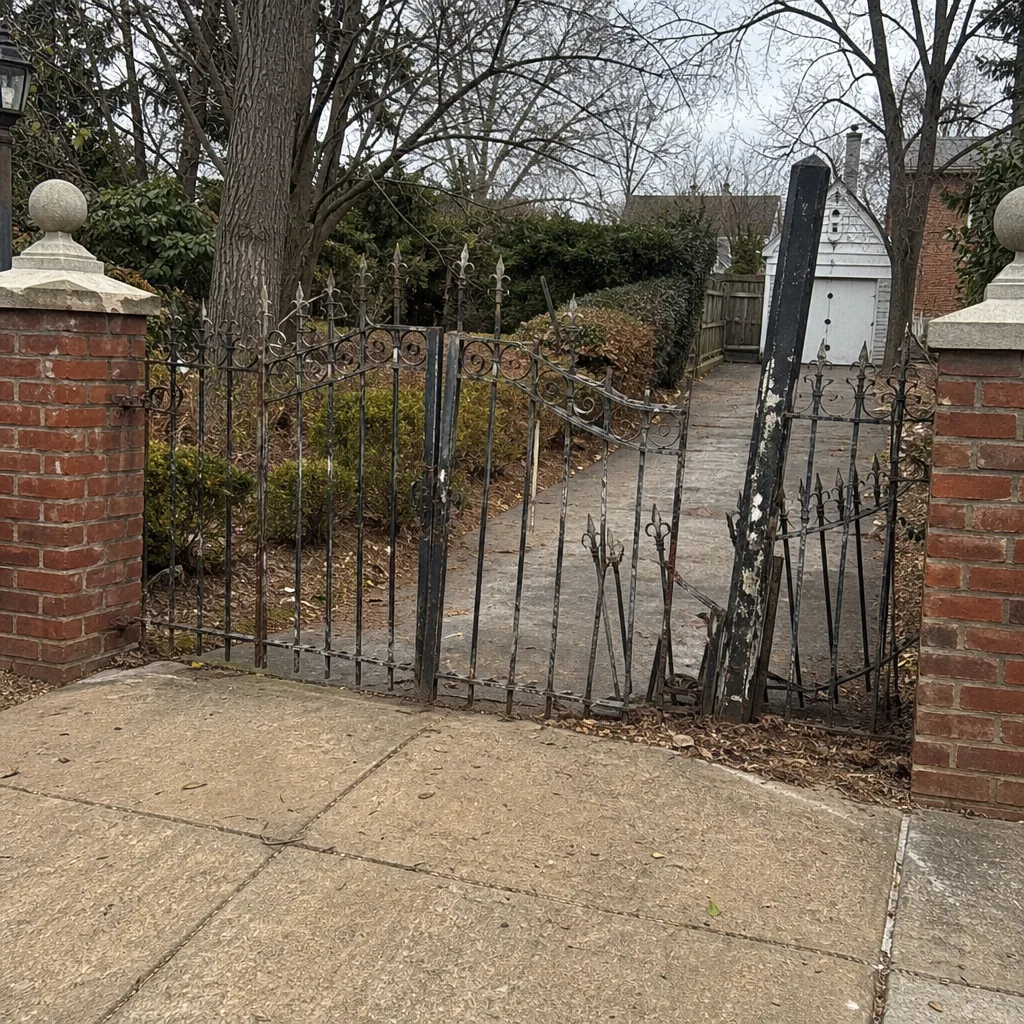 Before
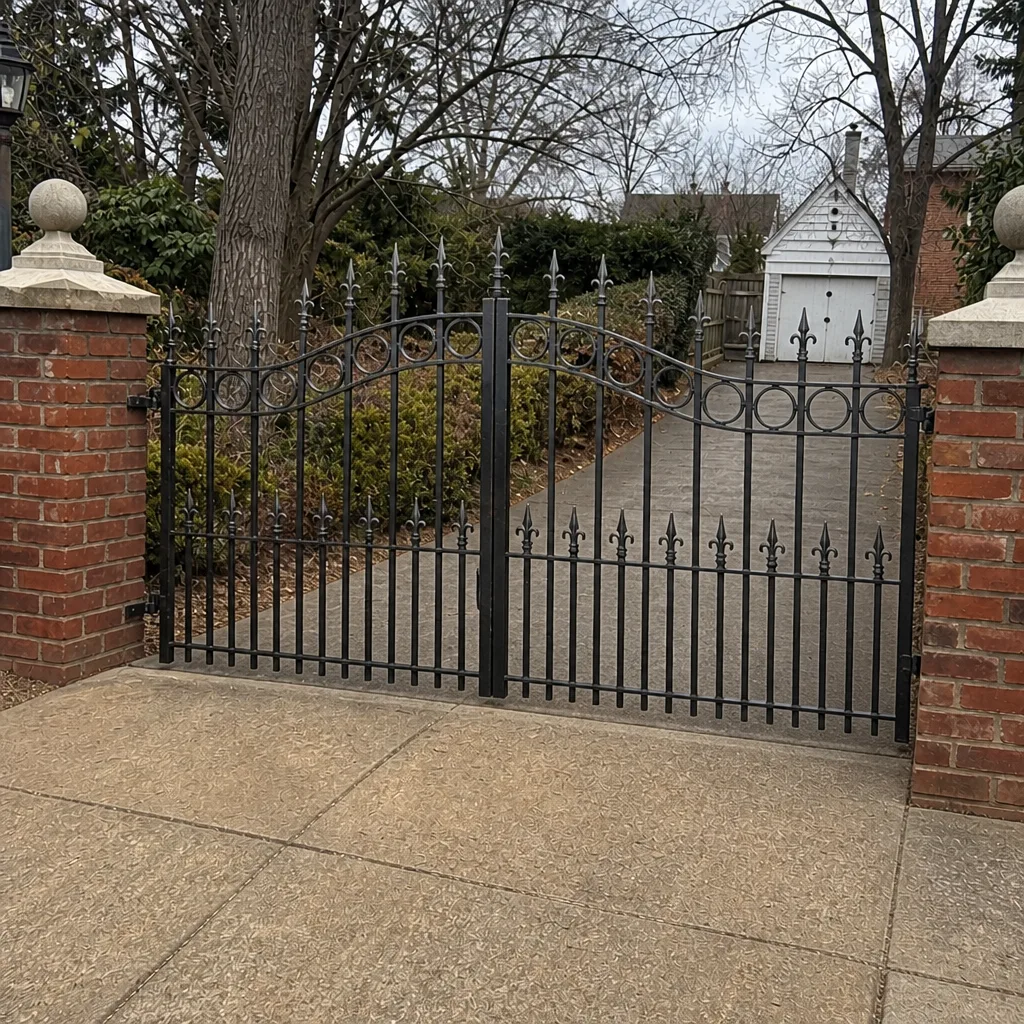 After
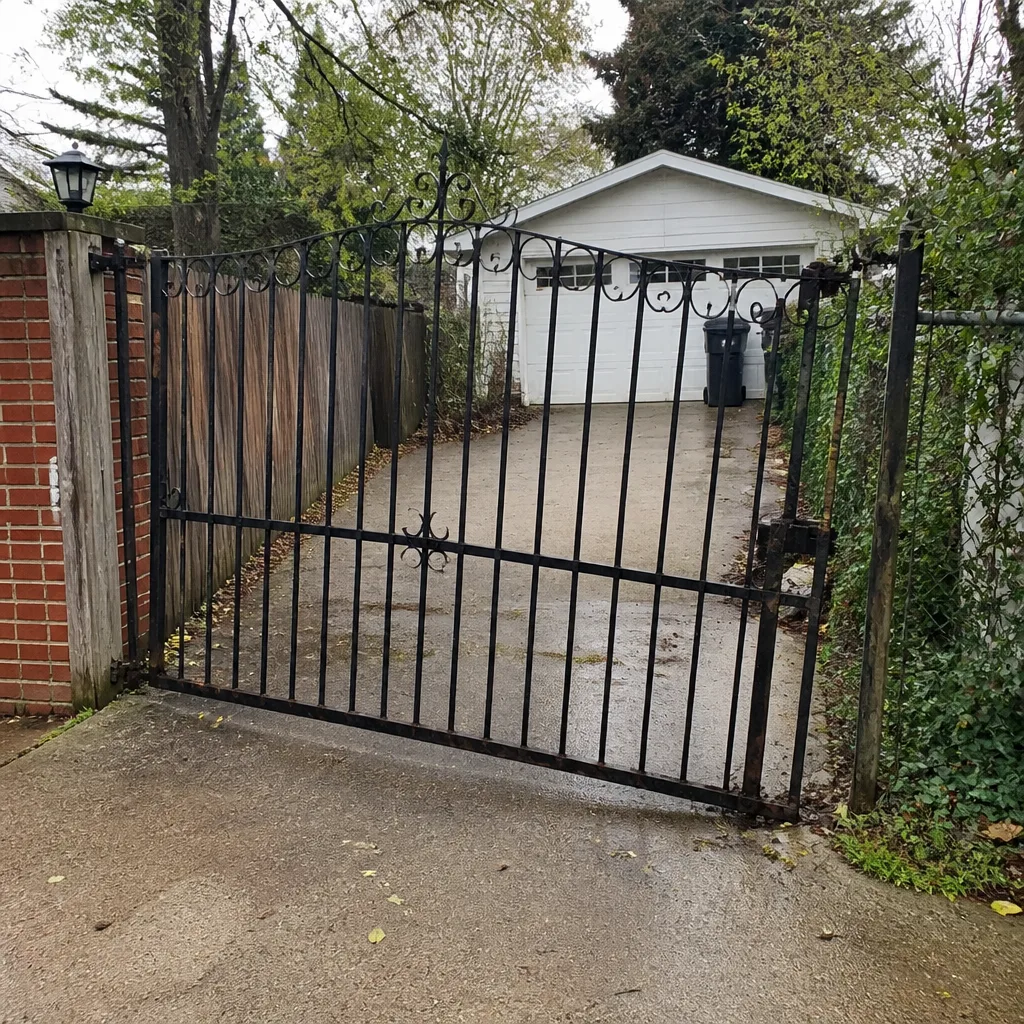 Before
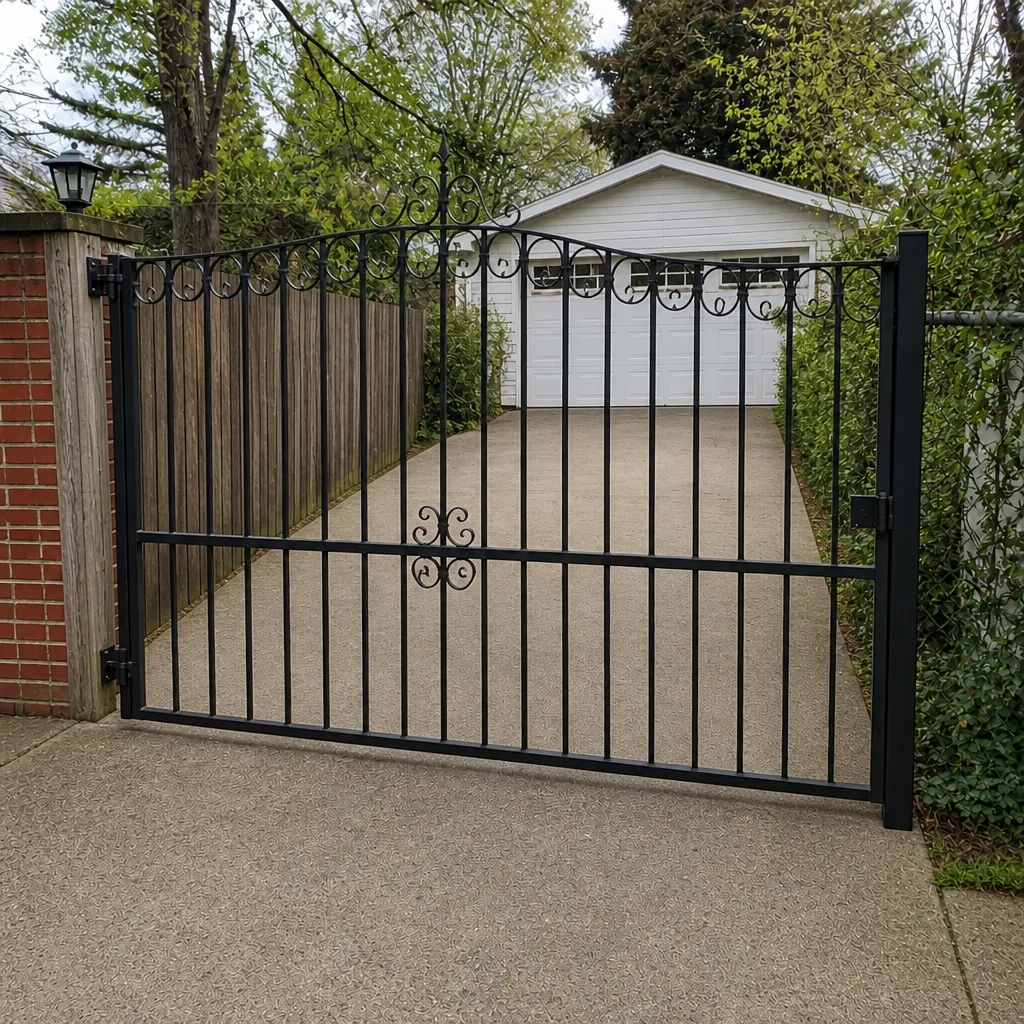 After
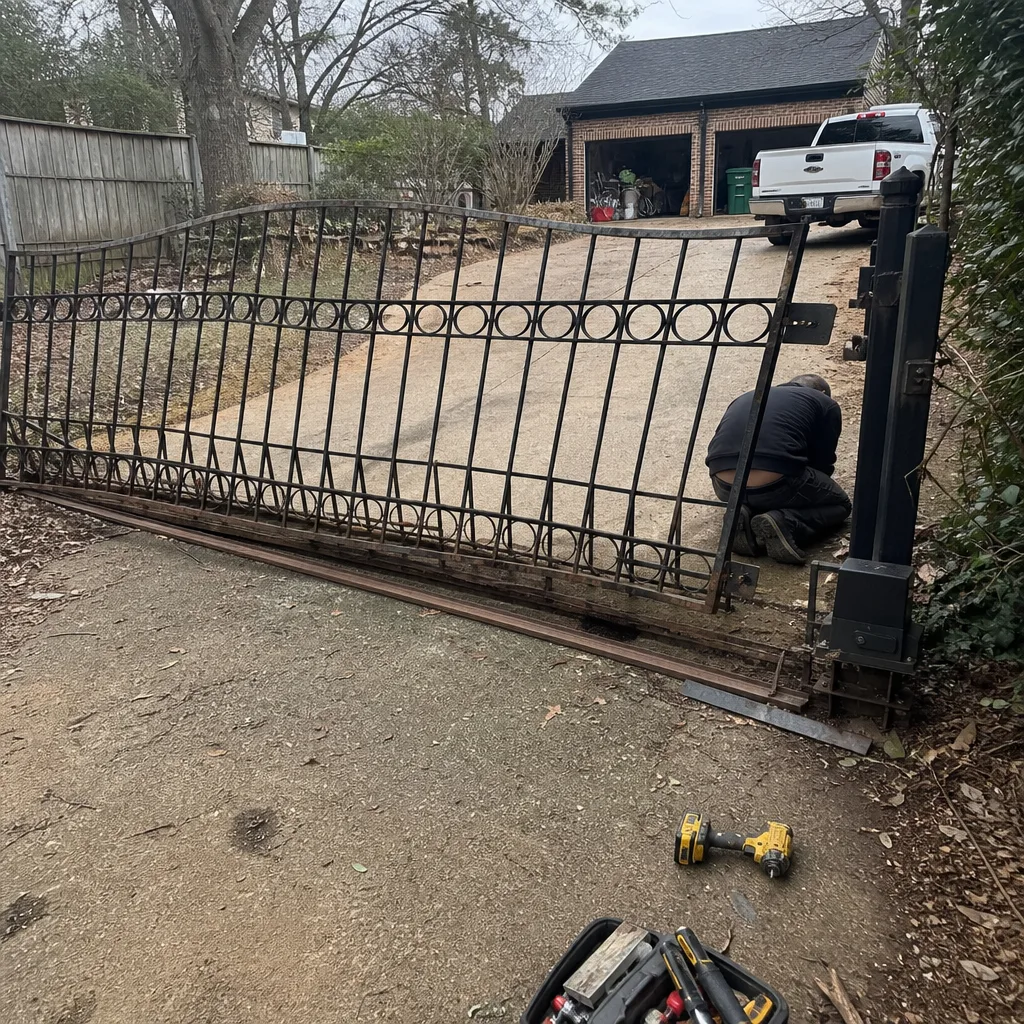 Before
 After
When to Call a Professional
Call a trained technician when the fault is inside the operator housing, when the control board is behaving illogically, when you suspect the loop detector, or when any part of your diagnosis would require live-voltage testing. Call immediately if the gate is moving on its own, if a safety edge is nonfunctional, or if the gate is hanging off its track and could fall. For anything mechanical that involves a heavy panel off its track, a slide gate that has derailed, or an overhead gate whose counterbalance has failed, stop using the gate until a technician has seen it.
We’re a gate specialist, not a generalist – everything we do is gates, both the mechanical structure and the automation. Whether your gate won’t open, won’t close, or was never installed right, we fix it. If you’ve done the diagnostic steps above and you’re still stuck, that’s exactly the point where a phone call is the right move. Alexandria Gate Repair offers free estimates in Alexandria – call (888) 356-9186. We answer 24/7. Fast dispatch from 7am to 7pm, Sunday through Friday.
Frequently Asked Questions
Your gate reverses because a safety input is telling the operator something is in the way. The most common cause is photo-eye sensor misalignment: a leaf, a spider web, or a bump that knocked one eye off axis. The next most common is the loop detector reading a phantom vehicle. Rarely, the limit switch is not registering properly and the operator’s control board is reversing the gate as a safety response. Check the photo-eyes first – if the symptom clears after cleaning or realigning them, you’ve found it. If it doesn’t, call (888) 356-9186 for an exact diagnosis.
Gate repair in Alexandria is priced per job, not at a flat rate, because the same symptom can require a photo-eye realignment one day and a control board replacement the next. Our estimates are free, and we quote a written price before any work starts – you approve the number before a technician touches the gate. Call (888) 356-9186 and we’ll ask the diagnostic questions over the phone so we can give you a useful estimate.
We offer same-day service on many repair calls, and fast dispatch from 7am to 7pm, Sunday through Friday. We answer 24/7, so if you call outside dispatch hours, we book you into the next opening. Have your gate type (swing, slide, or overhead) and the brand on hand if you can – it helps us route the visit correctly.
Very likely yes. We’re familiar with nine major gate automation brands, including Linear, Viking, Ghost Controls, and DoorKing, alongside LiftMaster, FAAC, BFT, Elite, and Mighty Mule. We work on the brand you already have, and our diagnostic approach doesn’t depend on pushing a brand switch – the technician diagnoses the actual fault and quotes the repair on the equipment you own.
Intermittent wet-weather failures in Alexandria usually point to moisture intrusion – a corroded terminal, a swollen seal, or a photo-eye housing that lets water in and dries out later. The gate behaves normally once it dries because the fault is intermittent until it isn’t. Left alone, moisture intrusion usually progresses to a permanent failure, so it’s worth calling a technician. Call (888) 356-9186 and describe the pattern – it’s useful diagnostic information.
Yes. We’re a full-service gate company and everything we do is gates: the mechanical structure, the automation, and the electrical components. That means we don’t refer out the electrical half or the mechanical half to someone else. Whether your problem turns out to be a bound hinge, a photo-eye, or the control board, one call covers it. Call (888) 356-9186 for a free estimate.
The Bottom Line
Gate troubleshooting starts with sorting your symptom into the right category: power, control board, mechanical, sensor, or loop. That one step tells you what to check and what to leave alone. If the check would open a housing or touch live voltage, hand it to a trained technician. If the check is a photo-eye alignment, a remote battery, or a track clear-out, you may well fix it yourself. The Alexandria-specific factors that matter most are humidity intrusion, freeze-thaw loosening on brick pillar-mounted systems, and tree root movement under older driveways. Bring the diagnostic answers with you when you call and the repair shortens. If you want a second opinion on your diagnosis, or you’ve reached the point where a technician is the right call, get in touch. For a gate specialist in Alexandria who works on the brand you already have, contact us for a free estimate.
If your gate has a specific issue that fits our guide, or you’d rather have someone walk through it on site, our team can help. We cover everything from electric gate repair to full gate repair across Alexandria and the surrounding area.
Call (888) 356-9186. We answer 24/7. Fast dispatch from 7am to 7pm, Sunday through Friday. Estimates are free, and the written quote is agreed before any work starts.
Written by the team at Alexandria Gate Repair.