
Last updated November 15, 2026
 Wrought iron
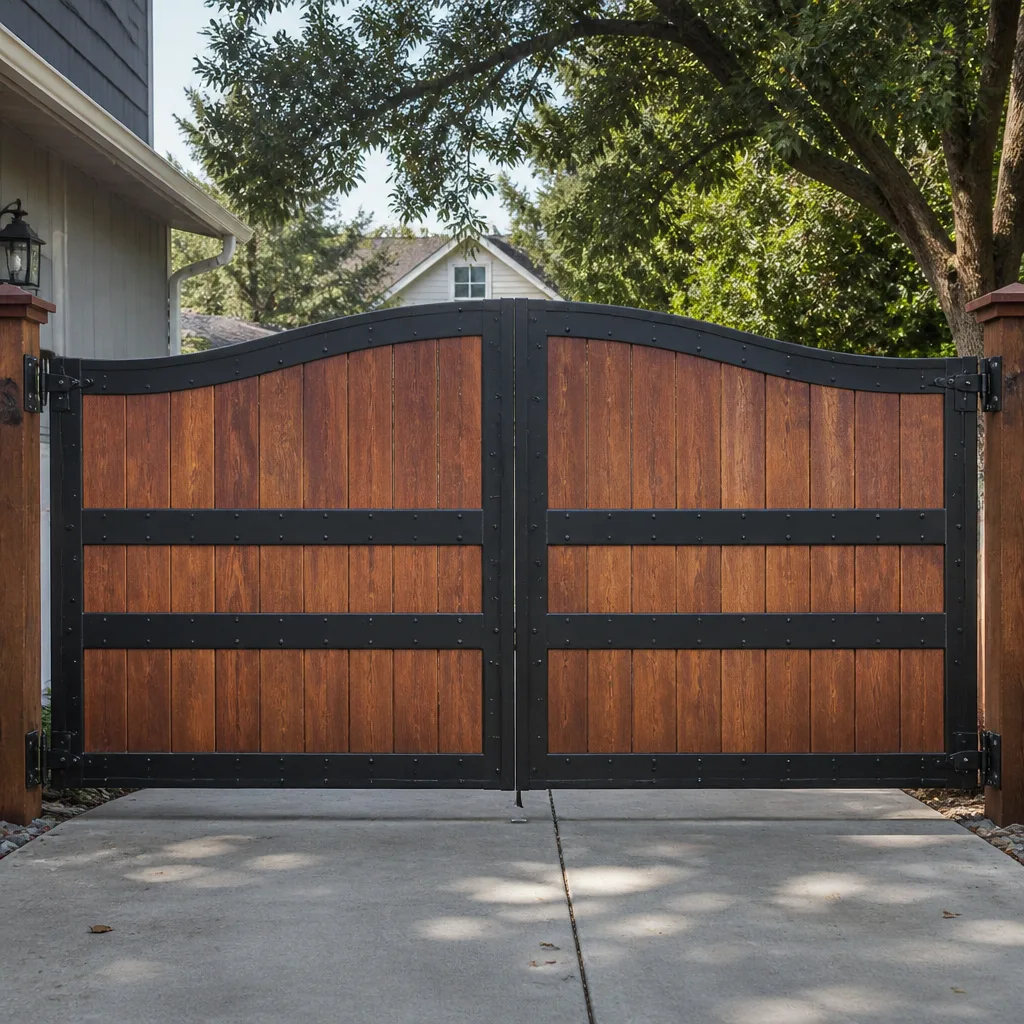 Wood & steel frame
 Farm & ranch
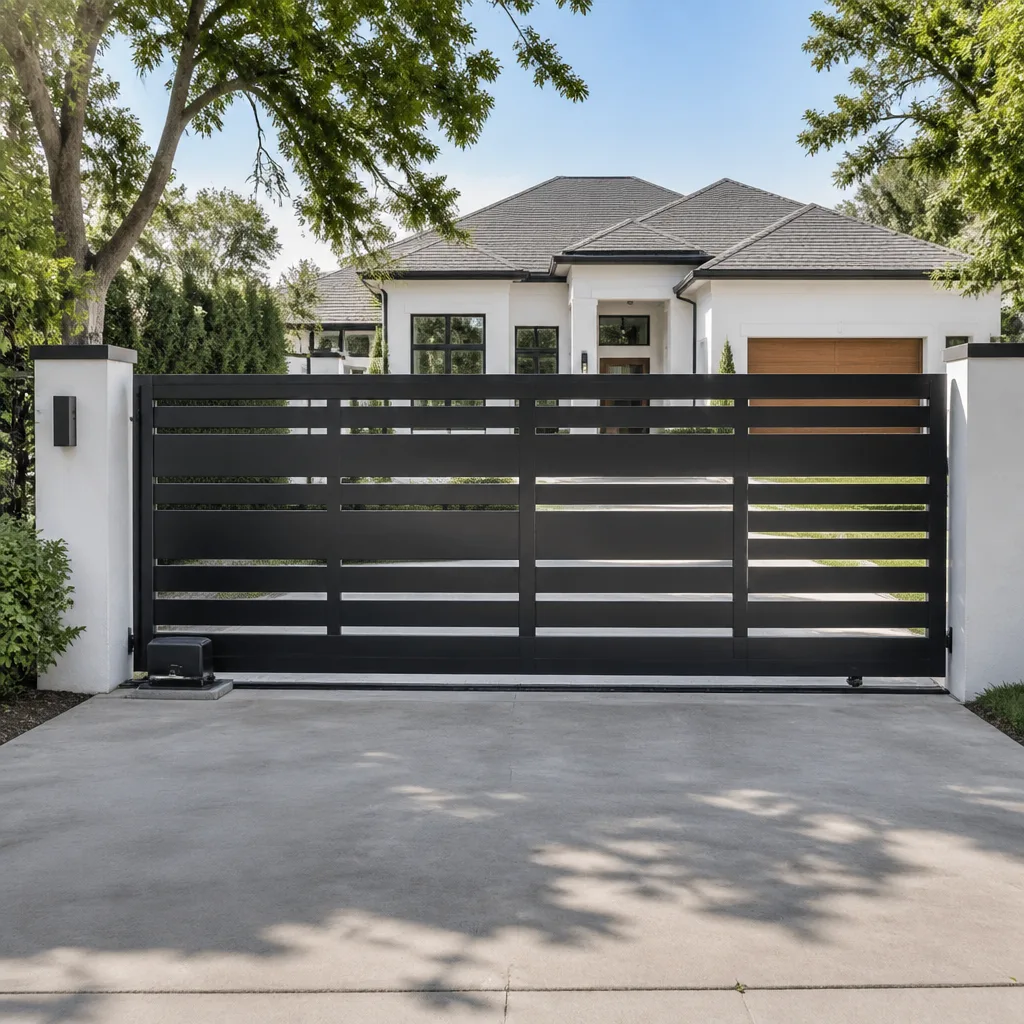 Sliding driveway gates
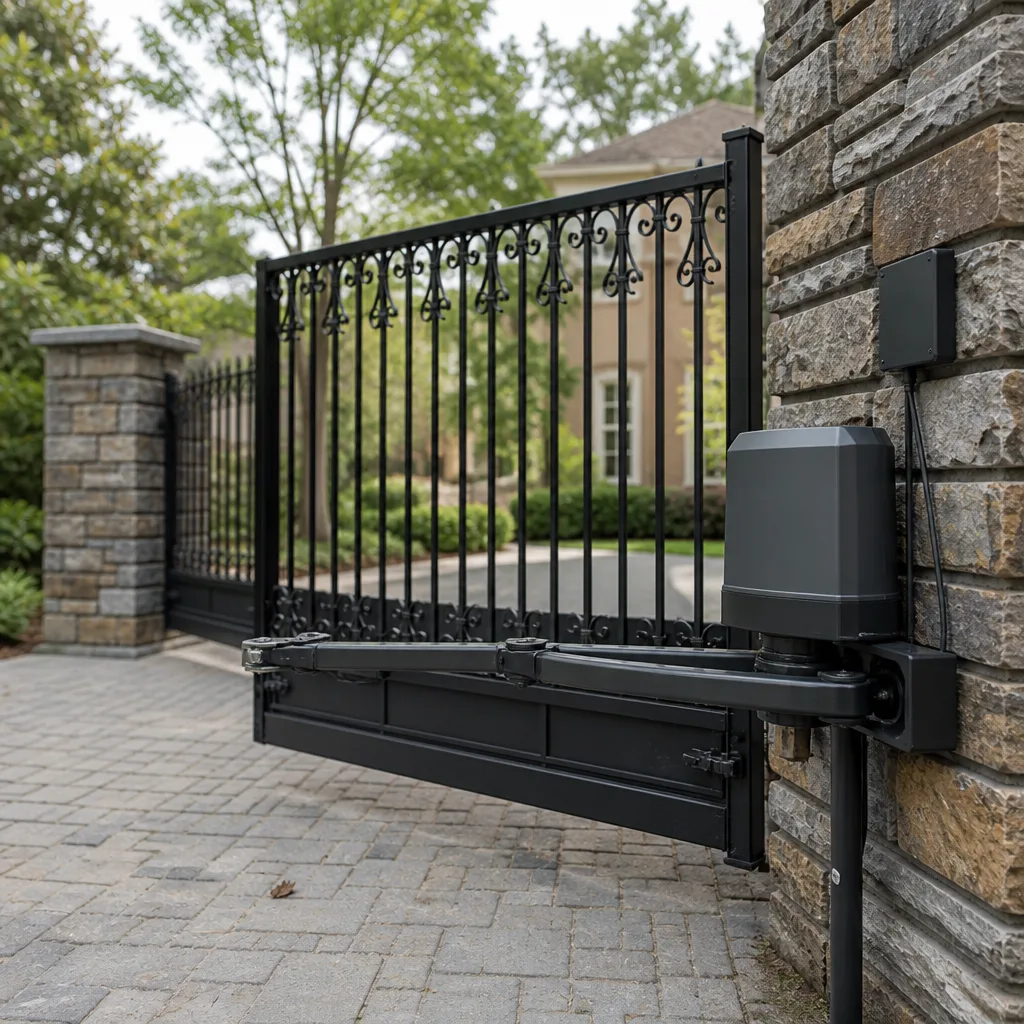 LiftMaster operators
Free on-site gate assessment - hinges, posts, and your LiftMaster or Nice gate operator checked before anything is quoted
The assessment is free and the quote is the invoice.
Get your free estimateGate Repair Maintenance Schedule: What to Do and When
If you grease your gate hinges every spring regardless of how many times the gate has cycled, you’re maintaining a calendar, not a machine. A gate in Alexandria that opens forty times a day and a gate at a quiet residential driveway that opens six times a day age at completely different rates, even though they sit under the same weather and get the same monthly visit from a handyman. Treating them the same is why high-traffic commercial gates fail years before their owners expect, and why lightly used residential gates sit through checks they never needed.
What we’re laying out here is an interval-based schedule built on cycle counts and component lifespans, cross-checked against the things Alexandria actually does to gates: winter sand and salt, summer growth into swing arcs, and fall leaves in loop conduit. You’ll finish with a maintenance framework you can document for insurance and warranty, and you’ll know exactly when to stop tightening and call a specialist.
Quick Answer
Schedule gate maintenance by cycle count first and calendar second: service hinges, rollers, and latches every 5,000 open/close cycles, and inspect the operator, wiring, and safety devices every 20,000 cycles or annually, whichever comes first. Replace battery backup units every 3 to 5 years and check loop detector wiring insulation every 7 to 10 years regardless of how the gate looks. In Alexandria, add a post-winter check for sand and salt on bottom rollers, a summer check for vegetation in swing arcs, and a fall check for leaf debris in underground conduit.
Styles & brands we work with
- Wrought iron
- Wood & steel frame
- Farm & ranch
- Sliding driveway gates
- LiftMaster operators
Table of Contents
- Why interval-based beats seasonal
- The cycle-count maintenance schedule
- Which lubricant belongs on which component
- Components with fixed replacement windows
- Alexandria’s calendar triggers
- The one-page documentation checklist
- High-traffic commercial gates
Why interval-based beats seasonal
A gate is a mechanical system with a use counter built into its life, and most homeowners and property managers never track the counter. The result is predictable: a commercial entrance in Old Town running high traffic cycles past 20,000 opens before anyone opens the operator cover, while a residential gate at the end of a quiet Alexandria street gets its hinges checked every spring whether it needs it or not. Cycle count tells you what actually wore. The calendar only tells you what season it is.
The two need each other, though. Some components wear by cycle (hinges, rollers, latches, chains), some age by time regardless of use (rubber seals, battery chemistry, loop insulation, weld fatigue on cantilever gates), and some are affected by the local environment on a rough calendar (sand, vegetation, leaves). A maintenance schedule that addresses only one of the three will always miss something.
Three categories cover every task we’ll list:
- Cycle-based tasks – done per 5,000 or 20,000 opens, since wear tracks usage.
- Time-based tasks – done on a fixed year interval regardless of how the gate looks, because the failure is invisible until it happens.
- Environment-based tasks – triggered by the Alexandria seasons, since grit, growth, and debris are what the weather leaves behind.
If you’re managing a commercial or multi-unit property, add a cycle estimator to your routine: most operators track cycle counts directly in their diagnostic menu, and if yours doesn’t, a rough count of daily traffic multiplied by days of the week gives you a usable number. Getting to accurate cycle counts is the single biggest upgrade most properties can make to their maintenance, and it’s how you move from guessing to scheduling. When a component has clearly gone past its expected window, that’s when you want a gate repair specialist to look before the failure lands on a busy morning.
The cycle-count maintenance schedule
Here’s the core of the schedule, broken out by cycle count and the tasks tied to each. Treat the cycle numbers as the hard thresholds and the calendar estimates as fallbacks for low-traffic gates that may not hit them for years.
Every 5,000 open/close cycles
- Lubricate hinges and pivot points on swing gates with a lithium-based grease.
- Lubricate rollers and track contact points on slide gates with the same grease, keeping the track clear of grit.
- Check the gate latch and stop points for free operation and sign of wear.
- Verify the safety edges and photo-eyes reverse or stop on contact.
- Walk the gate through a full cycle and listen for changes in the motor’s hum or the gate’s rattle.
Every 20,000 open/close cycles
- Inspect the operator drive for chain tension, sprocket wear, and any sign the motor is working harder than it should.
- Check the control board and wiring terminations for corrosion, loose fittings, and insulation damage.
- Test the safety devices thoroughly: reverse on obstruction, loop detection, and manual release function.
- Inspect gate frame welds and post anchoring; cantilever gates get extra attention at their stress points.
- Verify the battery backup, replacing it if it’s already in its replacement window.
For a residential gate opening six times a day, that’s a 5,000-cycle service roughly every two to two-and-a-half years, and a 20,000-cycle service closer to every nine. For a commercial entrance opening forty times a day, the same numbers land every few months. Same schedule, different clock. That’s the point.
Which lubricant belongs on which component
The single most common cause of premature gate wear we see is the wrong lubricant in the wrong place. Greasing everything with the same can is faster, but it’s the wrong call, and the damage shows up years later.
Lithium grease on chain drives
Chains need a grease that clings under load and resists being flung off. Lithium grease does this well: it holds onto the pins and rollers under pressure, it stays put across the operating range, and it handles the temperature swings we get in Alexandria without breaking down. Keep the chain clean of grit before applying; grease over a dirty chain just locks the grit in place.
Silicone on rubber seals and weather stripping
Rubber seals, weather stripping, and the flexible parts of the safety edges are aging rubber, not moving metal. Silicone keeps them supple without breaking down the rubber itself. Petroleum-based grease on rubber accelerates hardening and cracking, which is exactly the failure mode you’re trying to avoid on a safety edge.
Where they must not cross
- Don’t put silicone on chains. It’s too thin to work as a load-bearing chain lubricant and will let the pins wear faster.
- Don’t put lithium grease on rubber seals. Over time it swells, hardens, and cracks them.
- Don’t use WD-40 as a long-term lubricant on either. It’s a penetrant and cleaner, not a grease.
- Don’t over-grease. Excess grease attracts dirt, which turns into an abrasive paste on rollers and tracks.
The operator on a FAAC or BFT swing gate is usually the most sensitive to all of this: the actuators are sealed units, but the pivot arms and mechanical connections at the actuator side still need the right lubricant. If you’re unsure of the correct product for your gate’s operator, that’s a question worth asking before you start, not after. Our technicians have up to 12 years of experience across those brands and can tell you what yours wants.
Components with fixed replacement windows
These are the components that look fine right up until the day they fail, so they get replaced on a schedule whether or not the inspection says they need it. If your maintenance only responds to visible wear, these will be the ones that strand you.
Battery backup units (typically 3 to 5 years)
The battery in an electric gate operator doesn’t announce its decline; it just quietly arrives at a state where it can’t hold the gate open through a power interruption. Lithium and sealed-lead batteries typically degrade to unusable in three to five years depending on cycling and temperature. Replace at the top of that window when the gate is critical, and don’t wait for the test to say so. A scheduled replacement is far easier to manage than a failure that leaves an entrance stuck open.
Loop detector wire insulation in asphalt (7 to 10 years)
Underground loop detectors are a wire loop set into the pavement and sealed in. The wire itself doesn’t fail, but its insulation does: exposure to moisture, thermal cycling, and pavement movement gradually breaks it down. After 7 to 10 years the loop is on borrowed time. When it goes, the symptom is a gate that won’t detect a vehicle, or triggers at random. The replacement means cutting and resealing the pavement, so put this on the schedule rather than reacting when it fails.
Cantilever gate weld stress points
Cantilever gates carry their weight through the gate frame, and the welds at the load points take repeated stress through every cycle. On a gate that runs high cycles, weld fatigue is what eventually fails, and it usually fails under load with the gate in motion. Inspect the welds at the corners and along the frame at every 20,000-cycle service, and plan on reinforcing or replacing the frame well before the welds are visibly strained.
These three are the components property managers lean on us for: once the replacement window hits, the work is scheduled rather than reactive. Our electric gate repair covers exactly this kind of work, including operators we know across brands like Linear and Viking.
Alexandria’s calendar triggers
Cycle counts and fixed windows are universal. What isn’t universal is what your specific city leaves in your gate after a season. In Alexandria, three predictable triggers should be written into the calendar even if the cycle count hasn’t hit a threshold.
After winter: sand and salt on bottom rollers
Winter road sanding and salt travel by splash and drift and settle on lower gate components. The sand acts as an abrasive on bottom rollers and slide track, and the salt residue is what kicks off corrosion on exposed metal. A post-winter pass on the rollers, track, and anything within splash range resets the gate for spring.
Summer: vegetation into the swing arc
Groundcover, hedges, and any edge planting push into the swing arc of a swing gate through the warm months. Contact between a gate swing and growing vegetation isn’t just cosmetic: it loads the operator against resistance it can’t see, and the operator compensates by drawing more current and wearing the motor and gearbox faster. Walk the swing arc mid-summer and cut back anything within reach.
Fall: leaf debris in underground loop conduits
Fallen leaves pile against and over loop detector enclosures, and wet leaf matter works its way into conduit entry points and around loop seals. Once wet debris is sitting on the loop-wire insulation, it accelerates the aging already covered by the 7-to-10-year window. A fall cleanup of the loop-detector recesses takes minutes and buys you the years those loops are supposed to get anyway.
If you’re in other parts of the area, you’ll find the same schedule applies across the Alexandria region and nearby neighborhoods; the towns around the city put down the same winter treatments and grow the same spring and summer vegetation. Missing a year’s calendar isn’t a catastrophe, but missing a few starts showing up as heat in the operator and looseness in the gate, and that’s the stage at which real repairs get more involved.
The one-page documentation checklist
If you’re managing a property for an HOA, an insurance renewal, or a manufacturer warranty, documentation is half the value of the maintenance itself. Here’s the framework we’d use: a single page per gate, printed or in your property management app, with columns that match the schedule above.
- Gate identifier and location – which gate, on which entrance, with the brand and model of the operator.
- Cycle counter reading – date and current cycle count from the operator’s diagnostic menu.
- Last 5,000-cycle service – date and what was done (hinges, rollers, latch, safety edges).
- Last 20,000-cycle inspection – date, findings, any parts observed as worn.
- Battery backup install date – so the next replacement window is obvious.
- Loop detector install date – so the 7-to-10-year window is visible.
- Seasonal checks – post-winter rollers, summer swing-arc clearing, fall loop recess cleanup, each with date and initials.
- Findings and photos – anything that looked like wear, plus photos of the operator label, battery label, and loop seal.
Fill in the operator brand (LiftMaster, FAAC, BFT, Linear, Viking, Ghost Controls, DoorKing, Elite, Mighty Mule, or another) and you have everything an insurer or warranty adjuster will ask for. If you want to make the schedule self-enforcing, put the next scheduled task at the top of the page, and update it every time a check is done.
High-traffic commercial gates
Commercial entrances are where the interval schedule saves the most money and prevents the most failures, because the cycle count runs up fast. At forty to sixty cycles a day, a gate hits 5,000 cycles roughly every three to four months and 20,000 cycles annually. That means the cycle-based tasks that a residential gate sees every few years become a quarterly routine on a commercial entrance. Missing one isn’t a minor delay; it’s skipping a full year of a residential gate’s scheduled care.
For commercial and multi-unit properties, we recommend:
- Quarterly 5,000-cycle service – hinges, rollers, safety edges, full-cycle walk.
- Annual 20,000-cycle inspection – operator drive, control board, wiring, frame welds, anchoring.
- Battery replacement at the top of the window – not deferred to the failure.
- Loop insulation change planned at year 7 – not year 10, since the entrance can’t go down for a pavement cut on short notice.
What we see most often on commercial entrances is that the maintenance gets deferred until the gate visibly misbehaves, and then three tasks get done at once under pressure. That’s backwards. The gate that gets a small, scheduled attention every quarter is the gate that never strands a tenant or a delivery at 8am on a weekday. It’s also the gate whose operator lasts its full expected life instead of failing early on a worn drive or a stressed frame.
Common Mistakes to Avoid
- Using the calendar as the only schedule. If you grease on the first of spring regardless of how many times the gate ran, you’re missing the entire cycle dimension. Track the cycles and use the calendar only as a fallback.
- Greasing everything with the same can. Lithium grease on rubber seals shortens their life and silicone on chain drives wears the chain faster. The right product on the right component is the whole point.
- Rebuilding the whole gate for a loop-detector symptom. When a gate stops detecting cars, the assumption is often a bad operator. More often it’s a 7-to-10-year-old loop whose insulation has finally gone. Diagnose before you replace.
- Ignoring vegetation through the summer. Hedge and groundcover contact loads the operator against resistance it wasn’t sized for. Cutting back the swing arc is cheap and paid for in motor life.
- Replacing batteries only when they fail. A battery that’s already degraded is invisible until you need it, then the gate is stuck in an open position during a power cut. Replace on the window, not the symptom.
- Skipping the fall loop-recess cleanup. Leaves piled into the loop detector seal accelerate insulation failure. The 7-to-10-year window shrinks if the loop sits under wet leaf debris every year.
- Treating a specialist call as a last resort. Most premature failures start with something small that an experienced eye would flag during a routine inspection. Diagnose early, borrow fewer problems later.
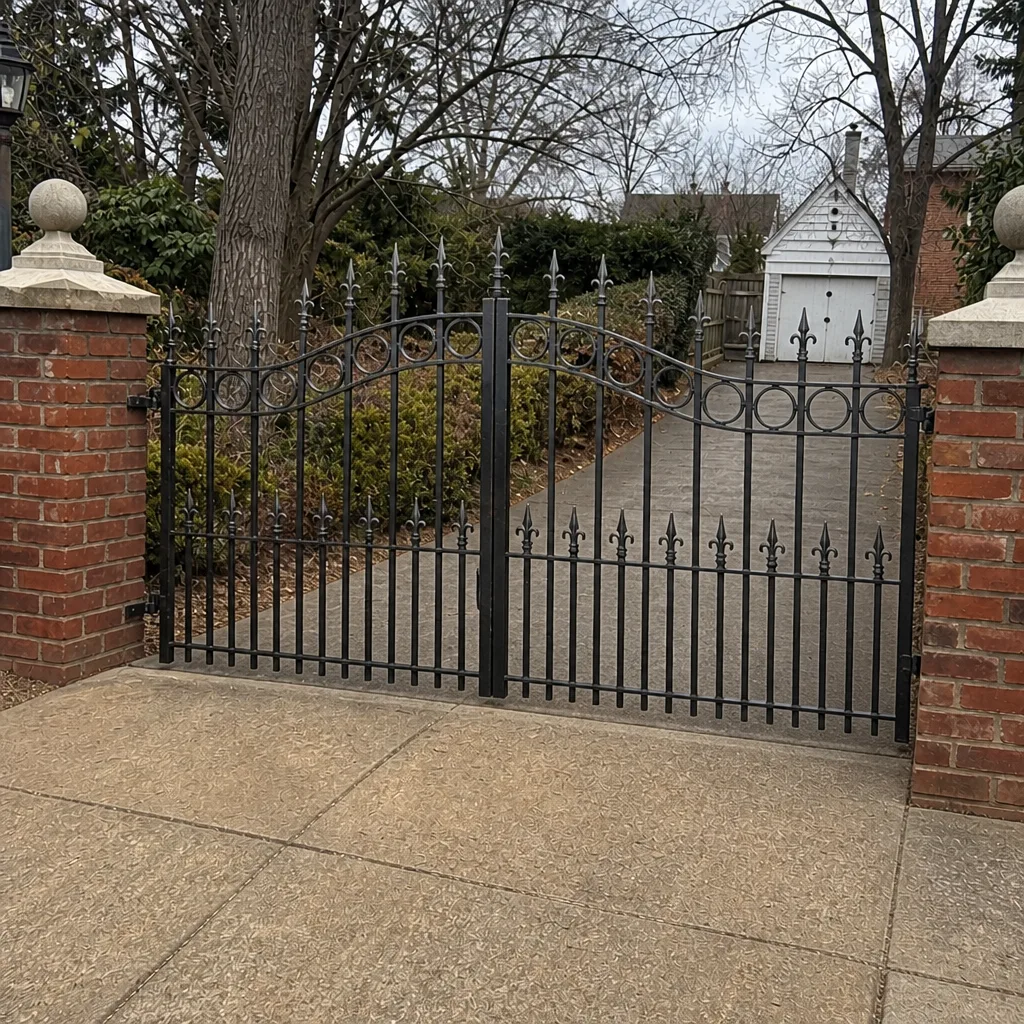
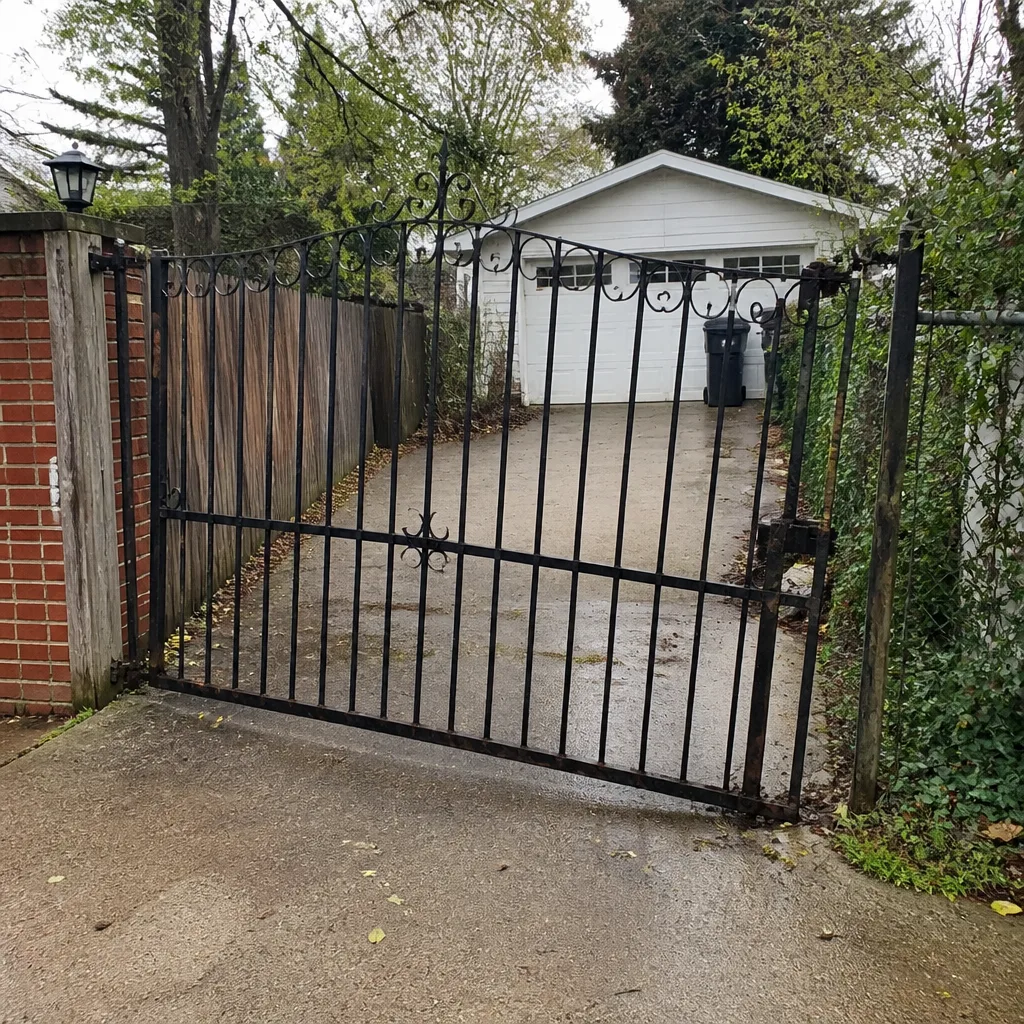
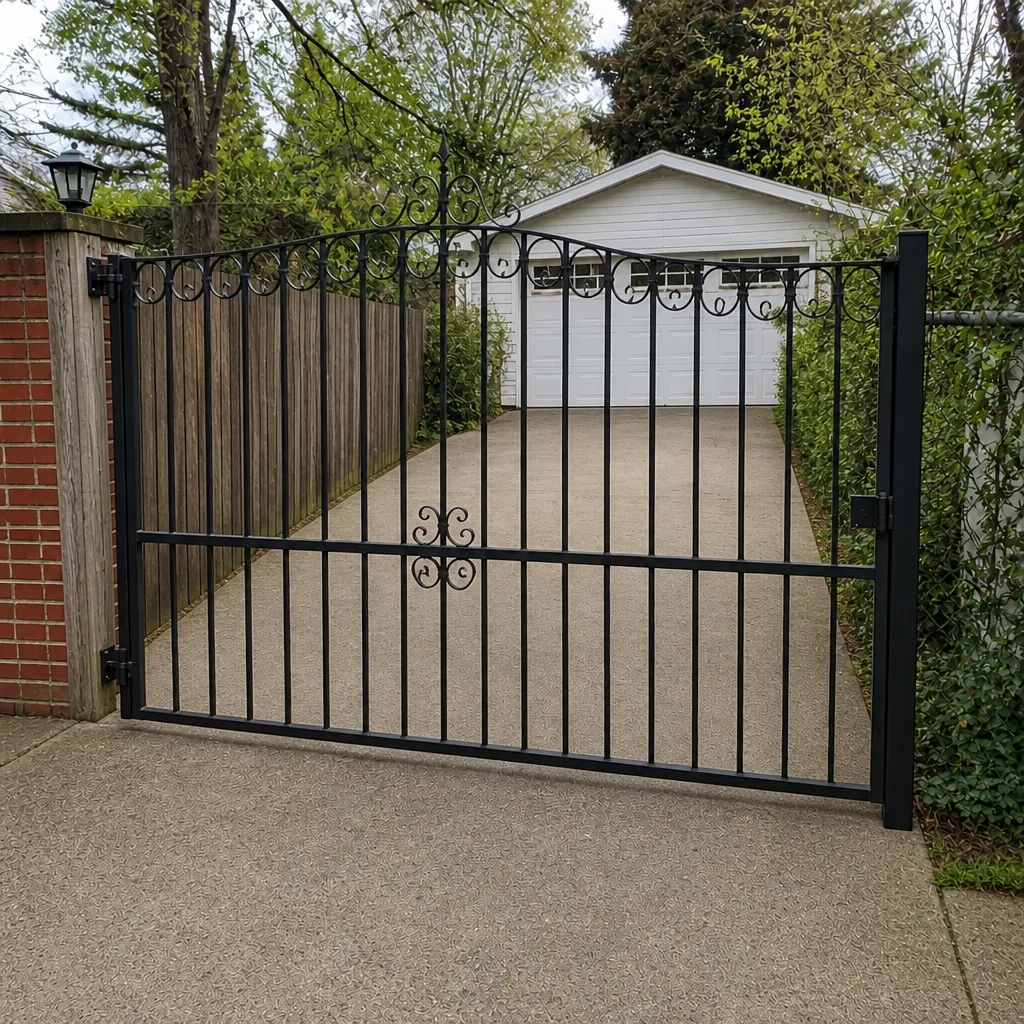
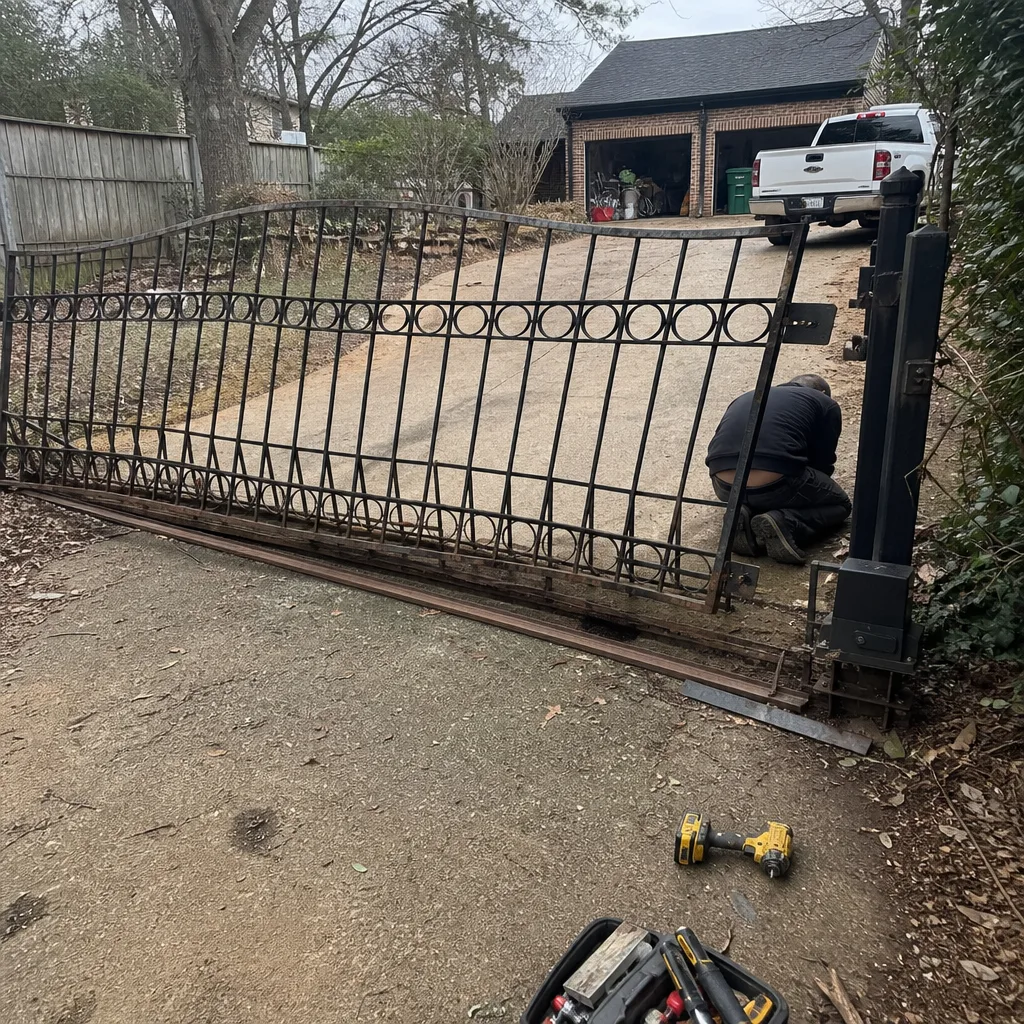
See the difference
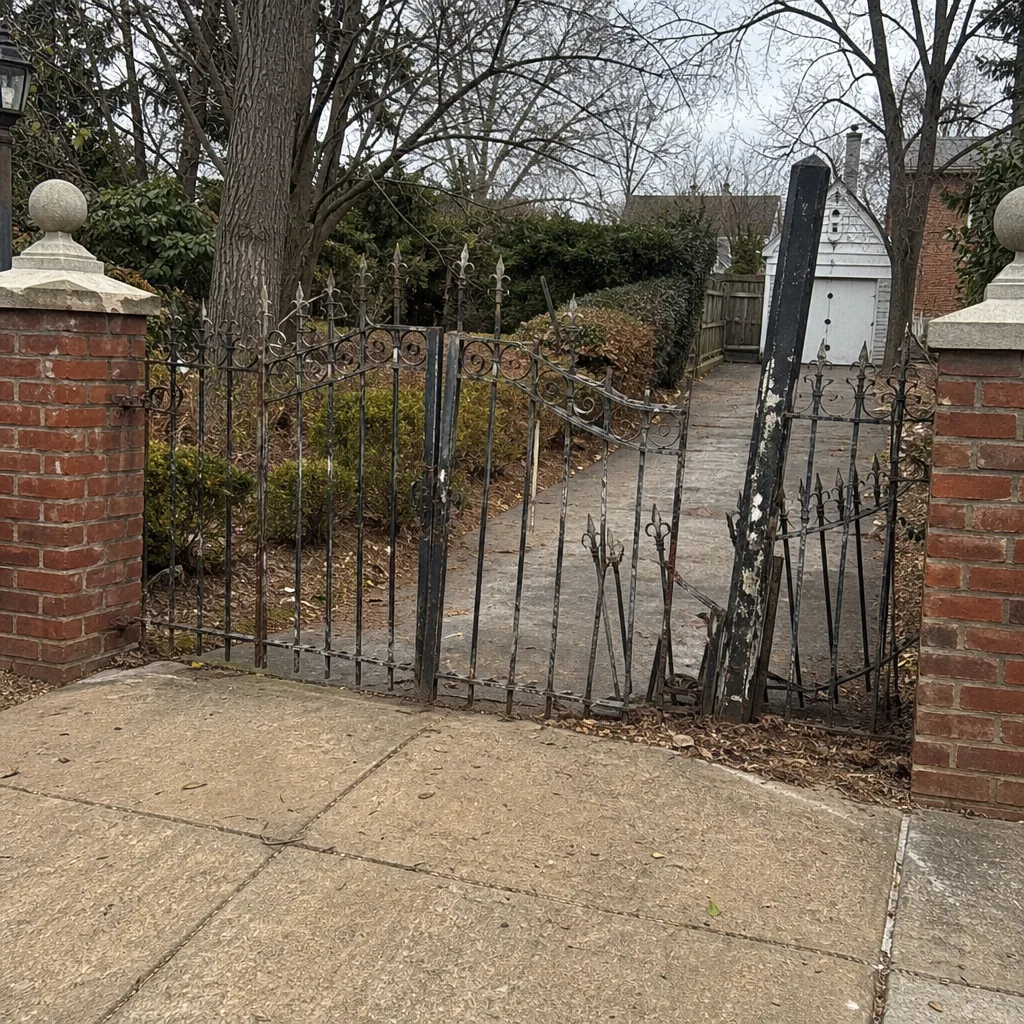 Before
 After
 Before
 After
 Before
 After
When to Call a Professional
Most of this schedule is within reach for a homeowner or a property manager with a grease gun and a checklist. Call a specialist when any of the following shows up: the operator is drawing noticeably more current or the gate feels “heavier” than it usually does, the safety edges fail to reverse on contact, the gate is visibly straining at a weld or post, or the gate has hit a fixed replacement window (battery at 3 to 5 years, loop insulation at 7 to 10 years, weld stress points at 20,000 cycles). Call if you don’t know your operator brand or model and want the right protocol for it, and call if a gate in Alexandria has been sitting with a known problem and you want a proper diagnosis rather than a symptom patch.
We work on the brand you already have, across LiftMaster, FAAC, BFT, Linear, Viking, Ghost Controls, DoorKing, Elite, and Mighty Mule. Alexandria Gate Repair offers free estimates in Alexandria – call (888) 356-9186. We answer 24/7. Fast dispatch from 7am to 7pm.
Frequently Asked Questions
Service the moving parts every 5,000 open/close cycles and inspect the operator and safety devices every 20,000 cycles or annually, whichever comes first. For a residential gate that opens six times a day, that’s roughly every two to two-and-a-half years for the moving-parts service. Call (888) 356-9186 for an exact quote; estimates are free.
Alexandria adds three environmental triggers to the standard schedule: post-winter sand and salt on bottom rollers and track, summer vegetation pushing into swing arcs, and fall leaf debris in loop detector recesses. The cycle-based and time-based tasks are the same as anywhere else – the environmental tasks are what Alexandria specifically adds. Call (888) 356-9186 if you want us to look at yours.
Yes, replace the battery on the 3-to-5-year window rather than waiting for it to fail. The battery doesn’t announce its decline; it simply reaches a point where it can’t hold the gate open through a power cut. Scheduled replacement is a minor task; failure during a power interruption is a much worse one. Call (888) 356-9186 to schedule it.
Lithium grease on chain drives and silicone on rubber seals and weather stripping. They are not interchangeable: silicone is too thin for a chain under load, and petroleum-based grease hardens rubber seals over time. Use the wrong product and you shorten the life of the component instead of extending it. Call (888) 356-9186 if you want the right product confirmed for your gate.
Yes, in interval terms – the same 5,000- and 20,000-cycle thresholds apply. The difference is the clock: at commercial traffic, that’s roughly quarterly for the 5,000-cycle service and annually for the 20,000-cycle inspection. The schedule is the same; the frequency is not. Call (888) 356-9186 if you’re managing a commercial or multi-unit entrance.
Keep a one-page record per gate with the cycle counter reading, service dates, battery install date, loop detector install date, seasonal checks, and photos of the operator and battery labels. That covers what an insurer or warranty adjuster will likely ask for. Call (888) 356-9186 and we can talk through what your property needs to track.
The Bottom Line
Gate maintenance isn’t a season, it’s an interval. Track cycle count to schedule the mechanical work, respect the fixed replacement windows on batteries, loop insulation, and weld stress points, and let Alexandria’s post-winter sand, summer vegetation, and fall leaf debris trigger the environmental checks. Get those three layers into a single-page record and you’ll never again grease a hinge that didn’t need it while the operator quietly wears out. If your gate is past a window or showing early signs of strain, Alexandria Gate Repair handles both the mechanical gate and the automation that runs it, from the motor to the hinge. One call covers it: (888) 356-9186. We answer 24/7, with fast dispatch from 7am to 7pm.
Written by the team at Alexandria Gate Repair.